


Success Music Studio

What on Earth Exactly Is Vibrato - Violinist

What on Earth Exactly Is Vibrato?

Facebook
Twitter

Estimated reading time 3 minutes

Table of Contents

Introduction

“What on earth exactly is vibrato?” It’s a pulsating sound that musicians use to make their music more engaging. Views on vibrato have varied through the centuries. However, currently it’s felt that it adds warmth to the notes, and by extension, it adds more emotion to your playing. Keep reading to learn what it is and how it works.

This article uses musical terms. For definitions, see the Glossary at the end of the post.

Can I Learn Sight-Singing if I Haven't Learned an Instrument -Jazz Singer - Is There a Difference in Difficulty for Singing Specific Vowels - Do You Need Help Learning How to Harmonize - How Do I Switch from Singing Shaped Notes to Standard Notation - How to Figure Out Your Voice Type

What on Earth Exactly Is Vibrato: What Is It?

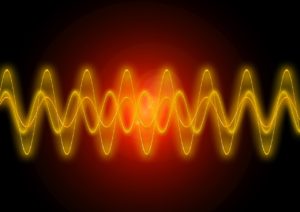
Vibrato is, well, a note that sounds like it’s vibrating. It swings above and below the melody note at a rate of about five to seven times per second.

Why is it an essential skill for Western musicians?

  • Musicians add it to notes to warm them up, while also varying the frequency associated with each note, making the sound more interesting.
  • It makes the music more expressive, giving your song a human quality that electronic keyboards have a difficult time recreating.
  • However, some styles of music try to keep vibrato to a minimum, so learning to control it can help you achieve authentic performances.
Learn the Secret of How to Play Guitar Trills - Guitarist with Les Paul

What on Earth Exactly Is Vibrato: How Is it Performed?

Exactly how it’s produced varies from instrument to instrument.

  • For the voice, it tends to emerge naturally in singing lessons. It comes from the vibration of your vocal cords. Singers learn to control their voices as they learn to control both their larynx muscles and the air stream from the diaphragm as they sing.
  • For violin and guitar, you’d splay out fingers 2, 3, and 4 on the left hand and use the mass of the spread-out fingers to rock back and forth on the first finger like a fulcrum. You can also execute it with the other fingers in a similar manner.
  • Plus, rock guitar often bends the string to create a rock version.
  • For brass players, they make controlled movements of their lips and jaw. In addition, trumpet players will often shake the instrument to facilitate vibrato production.
  • Woodwind players will likewise make controlled movements of their lips and jaw but also need to exercise breath control. This is especially important for the flute, where it’s all about breath control.
Video: Voice
Video: Violin
Video: Rock Guitar
Video: Trumpet
Video: Sax
Video: Flute

What on Earth Exactly Is Vibrato: When Do You Use It?

In current practice, it’s most often applied to long held notes at phrase endings.

  • However, even as recently as the mid-20th century, heavy vibrato was used pervasively.
  • These days, instrumentalists will usually add it at the beginning of the note at phrase endings. Conversely, singers usually establish the pitch before warming it up with vibrato, especially when singing harmonies.
  • Why? Because vibrato covers over the beating between notes, taking away a major tuning cue. For this reason, in pop music the lead vocals will usually employ it, but the backing vocals often won’t. (See the Bohemian Rhapsody video below.)

For more information on how vibrato effects tuning for your voice

Video: Bohemian Rhapsody

Final Thoughts

Takeaway points:

  1. Musicians add vibrato to notes to warm them up, while also varying the frequency associated with each note, making the sound more interesting.
  2. Exactly how it’s produced varies from instrument to instrument.
  3. Instrumentalists will usually add it at the beginning of the note at phrase endings, whereas singers will usually establish the pitch before warming it up with vibrato, especially if there are any vocal harmonies.

Have fun playing!

Related Posts

© 2025 Geoffrey Keith

Glossary

Tune your ukulele like a Hawaiian - girl and ukulele - What Are Some Signs of a Twice Exceptional (2E) Child - Tune the Ukulele with a Free Online Tuner

Tune Your Ukulele Like a Hawaiian

Do you want your ukulele to sound like the Hawaiian players? How you tune impacts your ukulele’s sound. Read more to learn how to tune your ukulele like a Hawaiian. You will also learn the song “Aloha 'Oe (Farewell to Thee).” Estimated reading time 6 minutes.

Read More
The 5 Best Effortlessly Easy Metronome Practice Tips - Metronome Face - How to Play Musical Tempos from Adagio to Allegro

The 5 Best Effortlessly Easy Metronome Practice Tips

Do you want to know the best way to practice with a metronome? Do you want to know what a metronome even is? A metronome is one of the best practice tools invented for musicians, because it helps you play with a steady beat. Nothing will make you sound like a professional faster than playing with a steady beat, and nothing will make you sound terrible faster than playing with a choppy beat. Keep reading “The 5 Best Effortlessly Easy Metronome Practice Tips" to learn how to play with a steady beat. Estimated reading time 2 minutes.

Read More