
Success Music Studio

What’s the Key Difference Between Trills and Tremolo - Sheet Music

What’s the Key Difference Between Trills and Tremolo

Facebook
Twitter

Estimated reading time 3 minutes

Table of Contents

Introduction

Do you want to know what the difference between a trill and tremolo is in music? The two terms sound alike, and superficially they have some things in common. However, they produce very different results. This is particularly true when you consider that tremolo picking on guitar and orchestral tremolo are two different things. Keep reading What’s the Key Difference Between Trills and Tremolo to learn how they’re similar and how they differ.

This article uses musical terms. For definitions, see the Glossary at the end of the post.

What Is Your Definition of a Good Musician - Woman Playing Violin

What’s the Key Difference Between Trills and Tremolo: Trills

Trills quickly alternate between neighboring notes in a scale:

  • For instance, the example below alternates between C and Bb.
  • Trills can be measured or unmeasured. This means that they can have a set rhythmic value (thus measured), or the player can just trill as fast as they’re able (thus unmeasured).
  • In sheet music, a trill is indicated by a “tr” printed above the written note (see the first example below).

Mobile users: for best results reading the music, rotate your screen 90o to the right.

What’s the Key Difference Between Trills and Tremolo - Trill Transcription (Notation) line 1
What’s the Key Difference Between Trills and Tremolo - Trill Transcription (Notation) line 2

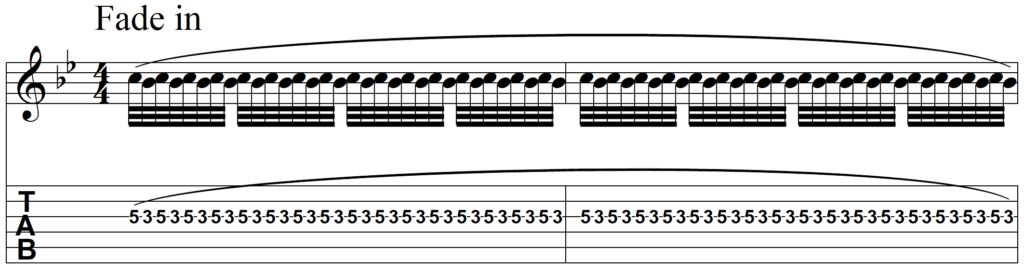
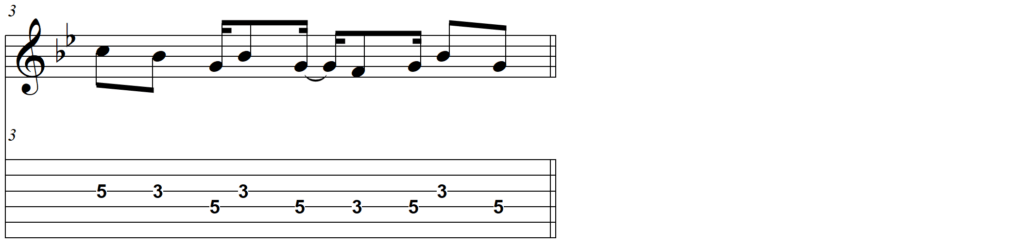
That’s what it looks like in a score, but this is how you’d actually play it:

Learn the Secret of How to Play Guitar Trills - Trill Transcription line 1
Learn the Secret of How to Play Guitar Trills - Trill Transcription line 2

Soundtrack Example:

If you want to learn this riff:

Video: Violin Example

Video: Piano Example

Video: Guitar Example

What’s the Key Difference Between Trills and Tremolo: Tremolo Picking

Tremolo picking is a fast repetition of the same note:

  • This has been widely used in heavy rock and heavy metal guitar solos featuring fast alternate picking.
  • You can hear this in Van Halen’s iconic guitar solo Eruption.
  • Tremolo is also a classical guitar technique. However, instead of using alternate picking, it features a rotating cycle of right-hand fingers plucking the strings.

Video: Rock Guitar Example

Video: Classical Guitar Example

What’s the Key Difference Between Trills and Tremolo: Classical Tremolo

Like tremolo picking, orchestral tremolo can feature the rapid repetition of a single note:

  • This can be heard in the video below of Debussy’s La Mer (in the string section – time stamp 0:19 – 1:38).
  • However, the effect is different than what we heard with the guitar because all the instruments playing a part (e.g., violins, violas, cellos, or double basses) play the same tremolo note. This creates a lush, susurrating sound.
  • In addition, orchestral tremolo also has the option of quickly switching between chord tones. This is widely used for background string parts in orchestral music.

The following example shows what it looks like in a classical piano score:

  • The half and whole notes tell you how long you play the tremolo for.
  • The two lines above the staff imply that you’ll be alternating between the C and E in the treble staff and the C and G in the bass staff (in the first and last chords) at about the rate of a sixteenth note. (Likewise, you’d play the second chord in the first measure in the same manner.)
  • However, you’ll play the notes unmeasured, so you’ll be alternating them quickly without counting the exact number of repetitions.
What’s the Key Difference Between Trills and Tremolo - Sheet Music

Video: Strings Example

Video: Orchestral Example (La Mer)

Video: Piano Example (at the end)

Final Thoughts

Takeaway points:

  1. Trills decorate a melody, adding flash and sparkle. In classical music, you’ll often add them to your melodies on the second repetition of a section of music.
  2. Tremolo picking quickly repeats a note.
  3. Likewise, classical tremolo can repeat a note but can also alternate between chord tones, creating a susurrating background harmony.

Have fun playing!

Related Posts

© 2025 Geoffrey Keith

Glossary

Do I Really Have to Learn Music Theory to Learn How to Play Piano - Learn the Elements of Songwriting Construction - Songwriter at a Computer - after they can sight-read what’s left for musicians to learn - What is a Parallel Mode and How Does it Work - How Can I Learn the Basics of Music Theory - The Top 5 Best Drake Sheet Music Gift Ideas

Learn the Elements of Songwriting Construction

Not sure about how to write a pre-chorus or a bridge? Are you confused about how to shape the form of your song? Look no further! Read more to learn the elements of songwriting construction. Estimated reading time 5 minutes.

Read More
Basic Arpeggios Explained in Less Than Three Minutes - Harp

Basic Arpeggios Explained in Less Than 3 Minutes

Are you clueless about arpeggios? An arpeggio, or broken chord, is a basic musical figuration that’s used in multiple musical genres and playing styles. It adds grace and elegance to your music, allowing you to achieve a lighter and more sophisticated sound. Keep reading “Basic Arpeggios Explained in Less Than 3 Minutes” to learn what they are and how they work. Estimated reading time 2 minutes.

Read More
50 Essential Music Symbols Explained in Less Than 5 Minutes - Sheet Music and Rose

50 Essential Music Symbols Explained in Less Than 5 Minutes

Do you get confused when you look at sheet music? Do you want to know what the music symbols mean? The visual-score-guides paired with quick explanations will help you understand the music notation. Keep reading “50 Essential Music Symbols Explained in Less Than 5 Minutes” to find the symbols listed by notation category. Estimated reading time 4 minutes.

Read More