Success Music Studio

Advanced Tone Color Concepts for Playing Pipe Organ Music - Organ Keyboard and Stops

Advanced Tone Color Concepts for Playing Pipe Organ Music

Facebook
Twitter

Estimated reading time 3 minutes

Table of Contents

Introduction

Do you want to know what the best organ sound is for performing baroque vs classical and romantic period organ music? Not all pipe organ music is the same, so the optimum sound you can use will differ from one style to another. Keep reading Advanced Tone Color Concepts for Playing Pipe Organ Music to learn how to get the best organ sound you can.

This article uses musical terms. For definitions, see the Glossary at the end of the post.

Explore Bach’s Epic Orchestral Music in Less Than Four Minutes - Pipe Organ

Advanced Tone Color Concepts for Playing Pipe Organ Music: What Is Spatial Line Strength vs Harmony Strength?

Spatial line strength helps linear melodies to hold together, but harmony strength allows chord tones to fuse.

  • We saw something like this in the post Advanced Heterophony Concepts. North African heterophony works best when using instruments with very different tone colors.
  • In addition, the tone color of the individual instruments doesn’t lend themselves to harmony, which isn’t a feature of Tunisian heterophony.
  • Likewise, even though the tone of the rabab sounds strident to Western ears, its tone color is a critical element of making the style work.

Conversely, most Western instruments lend themselves to harmonic fusion.

  • This means that there is an esthetic built into different types of instruments.
  • This can vary from one society to another. However, it can also shift over time.
  • In the next section, we’ll see how this has impacted organ music.
Advanced Heterophony Concepts - Man Playing Oud

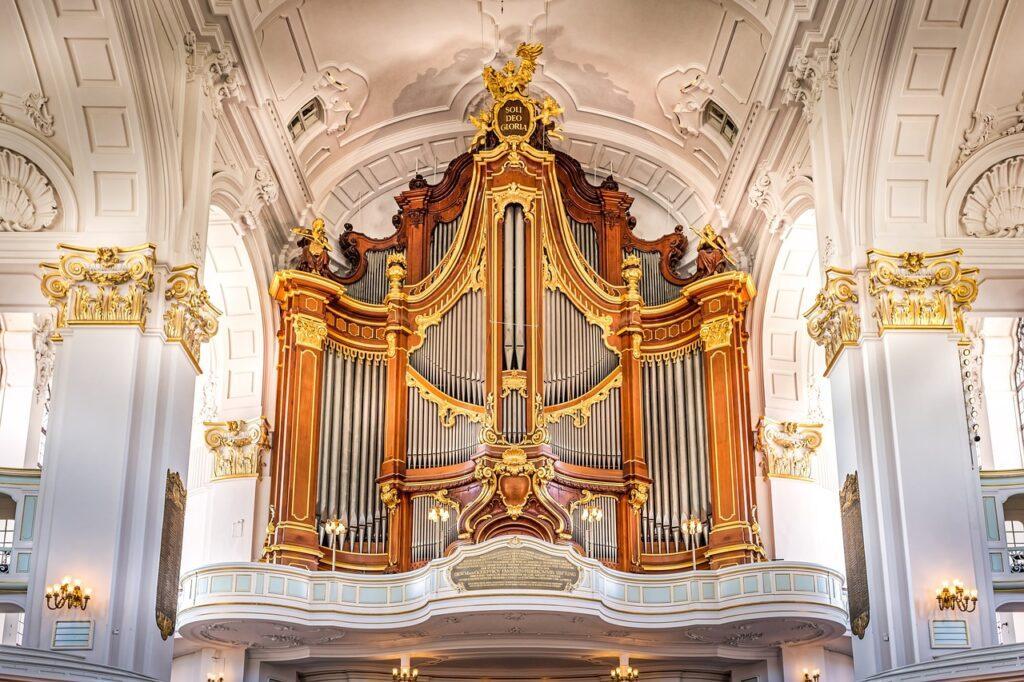
Advanced Tone Color Concepts for Playing Pipe Organ Music: Does the Design of the Organ Effect the Kind of Music You Can Play?

We also find spatial line strength and harmony strength in Western organ music.

Pipe organs have been designed so that the tone color facilitates the type of composition being played. Sundberg explains:

In Baroque organs the stops tend to have high spatial line strength. Therefore, they are apt to keep melodies together even when the music contains rather wide intervals. Further, such stops treat contrapuntal music in a friendly way, because they make the different simultaneously playing voices easy to track for the ear.

In romantic music from the late 19th century, it is often much more rewarding to pay attention to the harmonies than to look for the often-nonexistent counterpoint. Hence, the organ stops of the romantic organs were given great harmony strength, furthering fusion of simultaneous tones to chords.

Harmony strength and spatial line strength are opposites. Therefore, harmony strength produces melodic fission when wide intervals appear in a melody. And if one plays a simple four-voice chorale on an organ with great spatial line strength, the risk is that, for example, the alto voice jumps out of the harmonic structure, presenting itself as a solo voice, just to reveal, without shame or mercy, its lack of contrapuntal excitement. (Science of Musical Sounds 215)

Since spatial line strength and harmony strength are opposites, you can optimize an instrument for one kind of music or the other, but not both.

Harmony is Tone Color - pipe organ - Meantone Tuning (Simple Instructions)

Advanced Tone Color Concepts for Playing Pipe Organ Music: What’s the Practical Application?

The practical takeaway is that you need to understand your music.

  • Whether you’re composing or performing, you need to be aware if the music leans toward polyphony (like in the baroque period) or harmony (like in the classical and romantic periods).
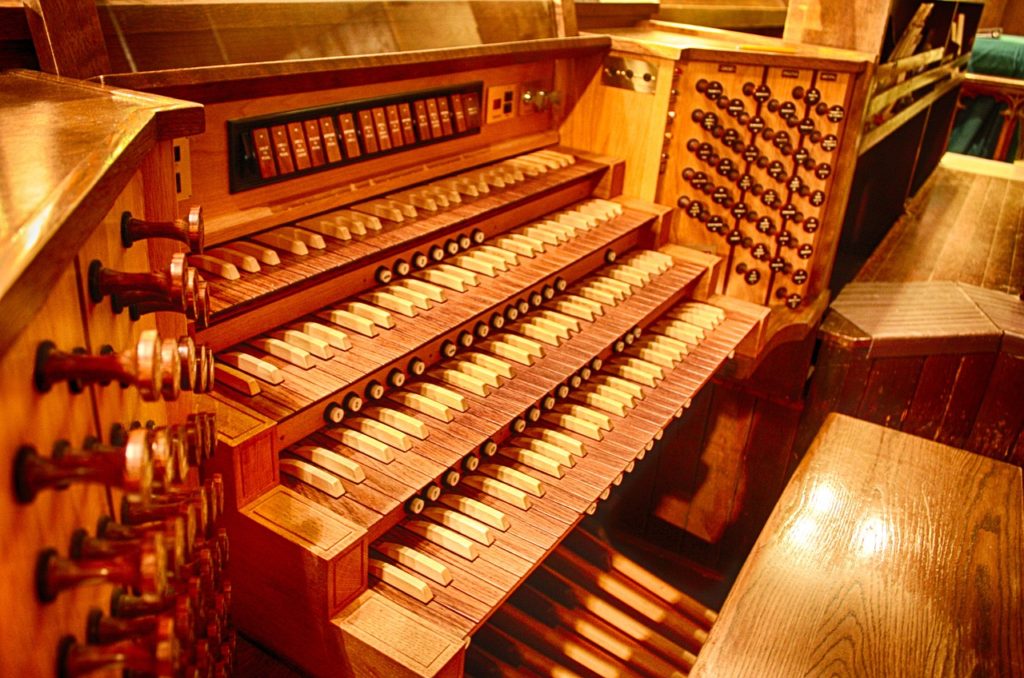
  • Therefore, when thinking about the tone color of your instrument (whether you’re using a synth or an actual pipe organ), you need to test sounds/stops to see which ones work best.
  • Specifically, you need to listen to see if a sound lends itself better to one type of music over another.
  • In other words, is it primarily harmonic or is it primarily contrapuntal?
  • Thus, tone color is an important factor when writing and interpreting different styles of music.

The temperaments you use will also be an important factor in your sound and its impact on your instrument’s tone color.

Video: Bach D minor Toccata and Fugue (Meantone Temperament)

Final Thoughts

The takeaway points:

  • Spatial line strength helps linear melodies to hold together, but harmony strength allows chord tones to fuse.
  • Since spatial line strength and harmony strength are opposites, a pipe organ can optimize for one kind of music or the other, but not both (unless you use a synth).
  • This means that there is an esthetic built into each instrument.

Have fun composing and performing!

Related Posts

© 2025 Geoffrey Keith

Glossary

Can I Learn Sight-Singing if I Haven’t Learned an Instrument? - How Intervals Affect Singing in Tune - Female Singer with mic - Sing Perfectly in Tune All the Time with Touchstone - How Can I Tell When I’m Singing in Key

How Can I Tell When I’m Singing in Key?

Do you ever ask yourself, “How can I tell when I’m singing in key?” or “How do I know if I’m singing in tune?” If you happen to be one of those people who has an innate sense of pitch, count yourself lucky. For everybody else, take heart! Performing in key is a skill that you can learn, and the sing-along soundtracks will help. Read more to learn what you need to listen for to be able to sing in key. Estimated reading time 3 minutes.

Read More
How Common are Mistakes While Practicing and Playing Guitar: Smokey Guitar - 10 Amazing Elite Virtuoso Guitarists

How Common are Mistakes While Practicing and Playing Guitar?

Do you worry about making mistakes when you perform? Do you want to be able to fix errors quickly during your practice time? Everyone slips up, at least occasionally. Don’t worry about it. Errors have an important role to play in the process of learning. Click to answer the question, “How common are mistakes while practicing and playing guitar?” Estimated reading time 3 minutes.

Read More
What’s Dynamic Range Compression and How to Use It - Rack Mount Effects - How to Master Reverb (3 Tips to Tweak Your Mix)

How to Master Reverb (3 Tips to Tweak Your Mix)

Do you need to know what reverb is? Want to know how to use it in a mix? Understanding what reverb is and how to use it effectively is critical for creating a good mix. Keep reading “How to Master Reverb (3 Tips to Tweak Your Mix)” to learn what it is and how it works. Estimated reading time 3 minutes.

Read More