Success Music Studio

Learn How to Read Piano Notes (Free Resource) - Piano with Sheet Music

Learn How to Read Piano Notes (Free Resource)

Facebook
Twitter

Estimated reading time 2 minutes

Table of Contents

Introduction

Do you want to know how to read the notes in your piano music? Are you confused about why the right hand and left hand play different musical notes? Reading sheet music for piano is more difficult than for other instruments. Why? Because piano music uses two different clefs. Keep reading Learn How to Read Piano Notes (Free Resource) to learn how it works.

This article uses musical terms. For definitions, see the Glossary at the end of the post.

How to Read Piano Sheet Music for Beginners - Piano with Sheet Music and Roses

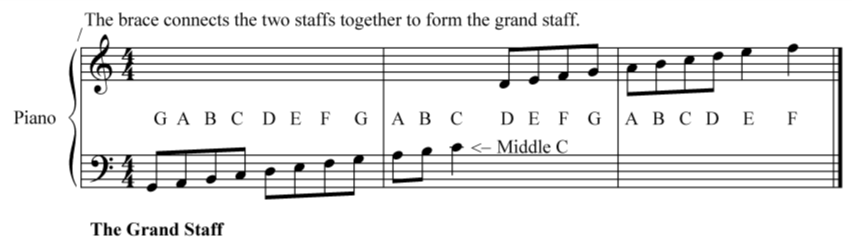
Learn How to Read Piano Notes (Free Resource): What’s the Grand Staff?

Mobile users: for best results reading the examples, rotate your screen 90o to the right.

Do I Really Have to Learn Music Theory to Learn How to Play Piano - Why Do Minor Keys Sound Sad to Me - Color Code Key Signatures - Keyboard Accidentals - What is a Parallel Mode and How Does it Work - What Purpose Do Accidentals Serve in Reading Sheet Music - Reading Music (A Quick Guide to How to Read Music) - How Can I Learn the Basics of Music Theory - What Exactly Do I Do with the Circle of Fifths - An Easy How to Guide to Understanding Triads - 50 Essential Music Symbols Explained in Less Than 5 Minutes - What Exactly Do I Do with The Circle of Fifths - Circle of Fifths - How to Learn Music Theory with a Learning Disability - How to Effectively Use Music Theory to Transpose Music

To access an online keyboard: click here.

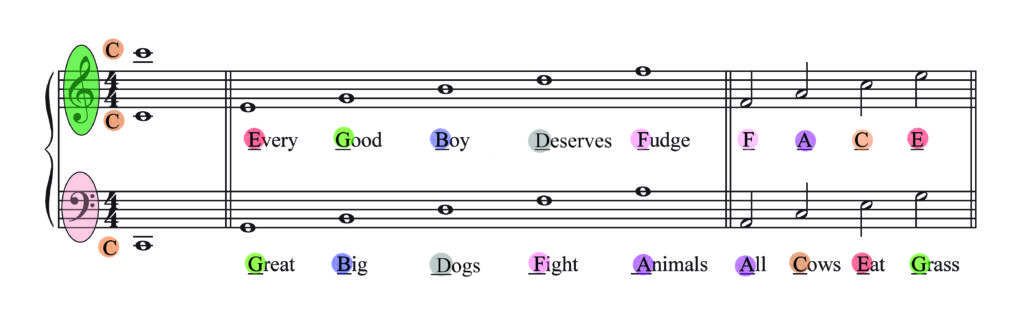
Piano uses two different clefs:

  • Each clef is associated with a staff that has five lines and four spaces.
  • However, when you put the two clefs together, connected by middle C, you get an 11 line staff called the grand staff.
  • It allows you to play the piano notes through three octaves of the musical alphabet.

For more information:

Reading Music (A Quick Guide to How to Read Music) - Grand Staff - Making Sense of Why Treble and Bass Clef Are So Different - How to Color Code the Elusive Alto Clef - 50 Essential Music Symbols Explained in Less Than 5 Minutes - Basic Music Notation Explained in Less Than 4 Minutes

Learn How to Read Piano Notes (Free Resource): How Do I Remember the Musical Note Names?

Typically, music teachers teach students to read using clef mnemonics. What’s a Clef Mnemonic? Clef mnemonics help you to remember the notes on the staff:

  • In other words, you’ll use memorable phrases to remember each key on the piano.
  • There’s one mnemonic for the line notes and another for the spaces.
  • However, since the musical notes associated with each clef are different, you’ll need separate mnemonics for the treble and bass staves.
How to Graduate from the Color Coded Sheet Music - Part II - Grand Staff Clef Mnemonics - How to Graduate from the Color Coded Music Notation - Reading Music (A Quick Guide to How to Read Music) - Making Sense of Why Treble and Bass Clef Are So Different - 50 Essential Music Symbols Explained in Less Than 5 Minutes

Learn How to Read Piano Notes (Free Resource): Which Hand Plays Each Staff?

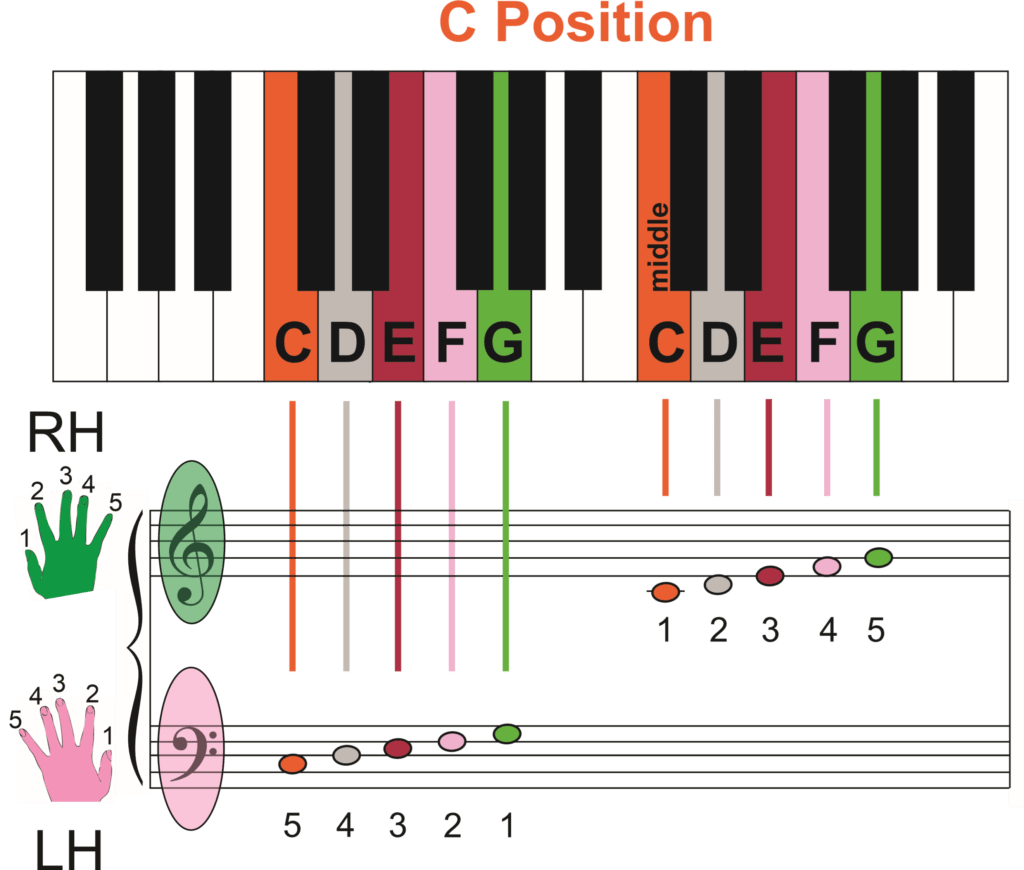
Playing the Piano with Color Coded Rhythm, Fingering, and Notes - C Position - Playing Piano with Color Coded Left Hand Notes and Rhythm - Piano Major Scales (Basic Fingering Concepts)

Each hand will mostly stick with one staff:

  • The right hand plays the treble (color coded green in the example above).
  • And the left hand plays the bass (color coded pink).
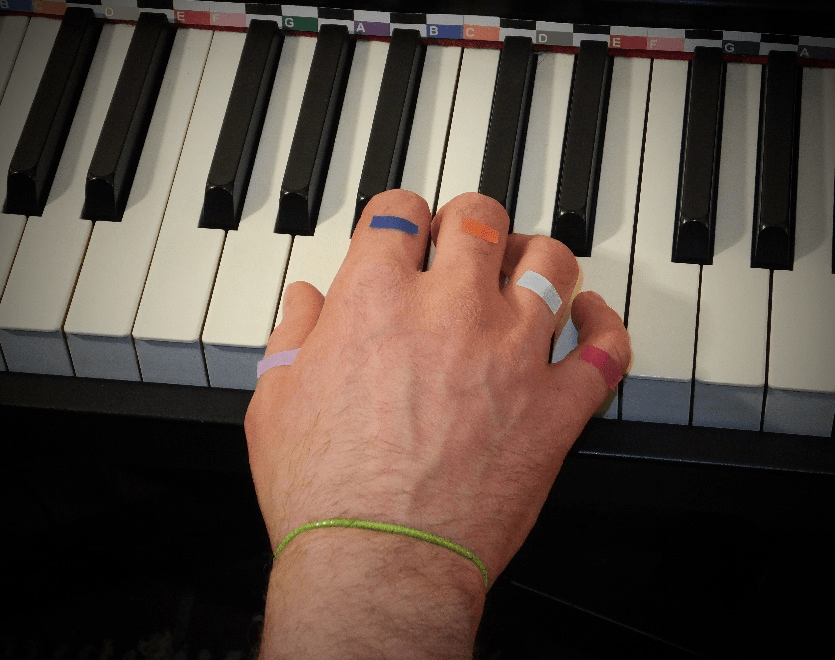
  • Hand positions (such as A position shown below), help you to know which finger you’d use to play a key.
Color coding fingers for music - RH piano - color coding musical instruments - Color coding the hand RH

Final Thoughts

Takeaway points:

  1. When you put the two clefs together, connected by middle C, you have an 11 line staff called the grand staff.
  2. It allows you to play the piano notes through three octaves of the musical alphabet.
  3. Clef mnemonics help you to remember the musical notes on each staff.
  4. The treble is usually played by the right hand, and the bass by the left hand.
  5. The hand positions help you to know what finger you should use to play a piano key.

Have fun playing!

Related Posts

© 2025 Geoffrey Keith

Glossary

What Are Some Elegant Examples of Polyphony - Score with Rose - The 5 Best Free Music Notation Apps

What Are Some Elegant Examples of Polyphony?

Are you confused about what polyphony is? Do you want to know how to write counterpoint? Elegant can mean tasteful, but it can also mean well-designed, which these example pieces are. Counterpoint and polyphony appear in arrangements in many different styles and will enhance your writing skills no matter what type of music you write. Keep reading “What Are Some Elegant Examples of Polyphony” to learn what it is and how it works. Estimated reading time 3 minutes.

Read More
Reading Music (A Quick Guide to How to Read Music) - Sheet Music

Reading Music (A Quick Guide to How to Read Music)

Do you want to know how to read sheet music? It doesn’t matter whether you’re talking vocal sight reading, reading classical music, or understanding guitar tab, basic music reading will remain mostly the same. In some way, shape, or form all music notations track notes and rhythms, but how they do so will sometimes be different. Read more of "Reading Music (A Quick Guide to How to Read Music)" to get an overview of how to read sheet music. Estimated reading time 5 minutes.

Read More
Singing Shape Notes Solfege Ionian Melodies - Women's Choir

Singing Shape Notes Solfege Ionian Melodies

Want to be able to sing modes? I can help. You’ll see the Ionian mode more often than any other type of mode. It’s used extensively in pop, jazz, classical, and even folk music. In “Singing Shape Notes Solfege Ionian Melodies,” you’ll be singing the last mode we’ll look at in the modes series. Keep reading to learn more. Estimated reading time 2 minutes.

Read More