
Estimated reading time 4 minutes
Table of Contents
Introduction
Have you ever wondered what you could do to better sing in tune? Knowledge is power. Read more to find out how vibrato impacts singing in tune.
- In the post 10 Elements that Impact Singing in Tune, we looked at ten factors that affect harmonic tuning. The sixth tuning element highlights how vibrato gets used differently in traditional choral music versus in a cappella vocal music.
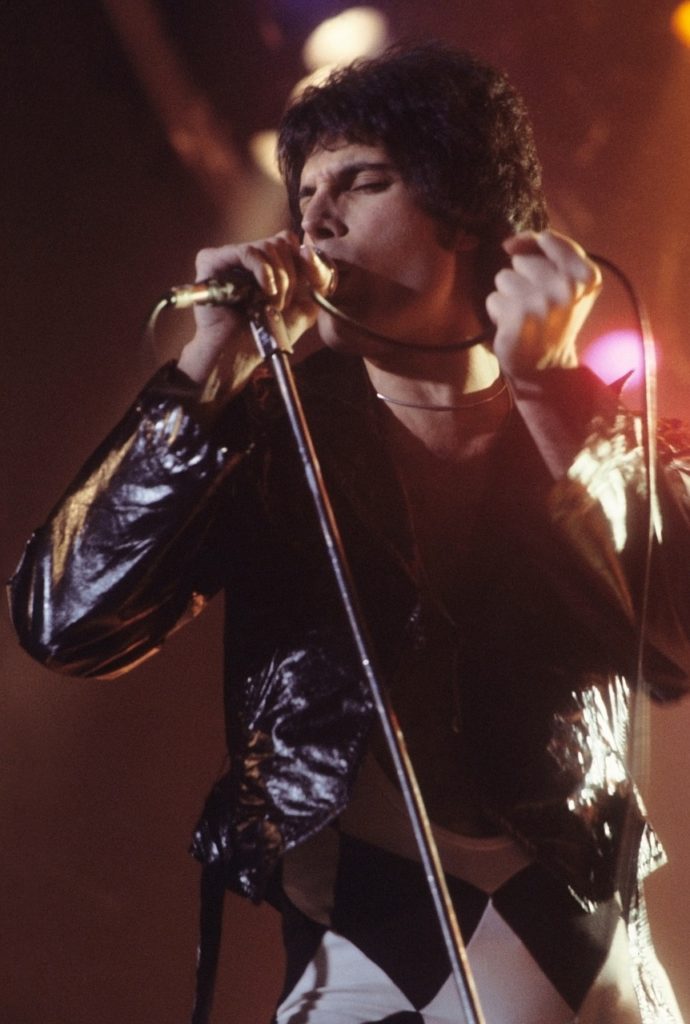
- In this post, we will go into more detail on the sixth factor from 10 Elements. In particular, you’ll see a Queen video that shows how vibrato commonly gets used in rock.
- For practical exercises with sing-along songs, see: The Intonation Flight Simulator.
This post uses musical terms. For definitions, see the Glossary at the end of the article.
Pink Floyd’s Division Bell Album
Musical Styles and Vibrato's Impact on Singing in Tune
- What is vibrato? Sundberg offers a technical description: “Vibrato corresponds to a small, quasiperiodic fundamental frequency variation, which does not change the perceived pitch of the tone” (1991).
- Sounds complex doesn’t it? Ever noticed how the English word vibrate sounds similar to the word vibrato? Basically, the wavering pitch you make as you sing a note defines the vibrato sound.
- Not only does vibrato impact singing in tune, but it can also help create the sound of a style of music. Namely, vibrato gets used in some types of singing styles, but not others.
- Think about the wide, heavy vibrato used in opera or heavy metal, such as Luciano Pavarotti or Ronnie James Dio. Then, think about some types of rock that have virtually no vibrato, such as the Dave Matthews Band.
- Alternately, you can have a mix. As an example, the a cappella group Rockapella has vibrato on the lead singer, but no vibrato on the backing singers. Conversely, Pink Floyd has no vibrato on the lead singer and vibrato on the backing singers on the song “Time.”
- Vibrato’s presence or absence has more to do with shaping the sound of a musical style than most people realize. Because you control when you sing with and without vibrato, you can develop the ability to sing in many different styles.
- As you listen to music, realize that awareness is one of your most powerful skills as a musician. So, pay attention to vibrato as you listen. Also, pay attention to the way you sing vowels and its impact on your tone.
Vibrato Impacts Singing in Tune: Its Effect on Melody Versus Harmony
- Whether vibrato impacts singing (or playing) in tune depends on the type of music. If the music features an unaccompanied melody, vibrato has no impact. However, if the music has harmony, vibrato has a large impact.
- Paul C. Greene found that vibrato had no impact at all on the intonation of solo violinists. He asserts, “Performer 4 was asked to play the Keutzer study without the use of vibrato. The data have not shown that any systematic effects differentiating this from his other performances, or from those of the other players, as to intonation, resulted” (233).
- However, beating remains one of the larger harmonic tuning cues. Vibrato covers over the beating between out of tune notes, making harmonies harder to tune.For a review of how beating impacts tuning: 10 Elements that Impact Singing in Tune: Beating
- Ternstrom and Sundberg state, “[Vibrato] will blur the beats/roughness of a slightly mistuned interval” (64, 66-67). With beats covered over by vibrato, the precision of the harmonies drops.
- Think about both sides of this statement for a moment. On the one hand, vibrato-free playing tends toward better tuned harmonies. On the other hand, vibrato can cover over tuning issues, at least to a degree.
- Also, vibrato frees up the singer to focus on melodic tuning. Listen to popular music, many arrangements have the background vocals singing vibrato-free while the lead usually sings with vibrato, as happens in “Bohemian Rhapsody.”
- When you view the video in the next section, notice how vibrato gets used by the lead singer versus the backing singers. Also, listen to how this affects the tone color of the harmonies.
Bohemian Rhapsody Video
Concluding Thoughts to Vibrato Impacts Singing In Tune
- Even though vibrato impacts singing in tune, do not take this as advice either for or against singing with vibrato. Really, it depends on the style how much vibrato you will use.
- However, whether you perform with vibrato or not, always practice harmonizing without vibrato. This will help you to learn how to tune your chords more precisely.
- I will leave you with some advice from Eskelin, “Go slowly, sing with a straight vibratoless tone, and listen closely to the acoustical relationship[s] …” (110).
© 2021 Geoffrey Keith
Join me for in-person or online lessons today!
Glossary
Color Coded Eighth Note Clapping
Does reading eighth note rhythm notation give you fits? (Or do your students struggle with eighth notes?) Many musicians have trouble reading rhythm, especially ADD, ASD, LD, and special needs students. Read more to learn color coded eighth note clapping. Estimated reading time 3 minutes.
Read MoreWhat’s the Basic Difference Between Drop D vs Open D Tuning?

“What’s the basic difference between Drop D vs Open D tuning?” Both are popular alternate guitar tunings. However, which string notes you alter, and how you play them once you’re done, will give them very different sounds. As a bonus, I’ve also added sections on Double Drop D and DADFAD tuning. Keep reading to learn what they are, and how you play them. Estimated reading time 3 minutes.
Read MoreColor Code Key Signatures for LD Students
What are sharps and flats, where did they come from, and how can we make it easier to read them? Read more to learn how to color code key signatures. Estimated reading time 3 minutes.
Read MoreLearn How to Get a Killer Sound for Your Band
Do you want your band to sound better? Have you ever been frustrated that your guitar or keyboard sounds out of tune when you play chords? Learn how to get a killer sound for your band by retuning your keyboards and guitars using Supplemented Equal Temperament. Supplemented Equal Temperament works with equal tempered instruments. It also works with variable pitch instruments such as voices, violins, and winds. Estimated reading time 5 minutes.
Read More