




Success Music Studio

How to Effectively Use Music Theory to Transpose Music - Sheet Music

How to Effectively Use Music Theory to Transpose Music

Facebook
Twitter

Estimated reading time 4 minutes

Table of Contents

Introduction

Do you want to know what the word transpose means in music? Do you need to know how to change the key of a song? There are a bunch of reasons you might need to change the music’s key: 1) it’s the wrong range for your voice, 2) you need to make it fit your instrument’s range, 3) or you may play a transposing instrument (such as Bb trumpet) but need to read some music written at concert pitch. Keep reading How to Effectively Use Music Theory to Transpose Music to learn how to do it.

This article uses musical terms. For definitions, see the Glossary at the end of the post.

Do I Really Have to Learn Music Theory to Learn How to Play Piano - Understanding Prosody in Your Songwriting - piano - Learn How to Play Beethoven’s Beautiful Fur Elise

How to Transpose Music Using Music Theory: How Does It Work?

When you transpose music, you’re sliding all the notes in a song up or down by the same sized interval.

First, you need to be able to figure out what key the song is currently in. For more information on how to find a key:

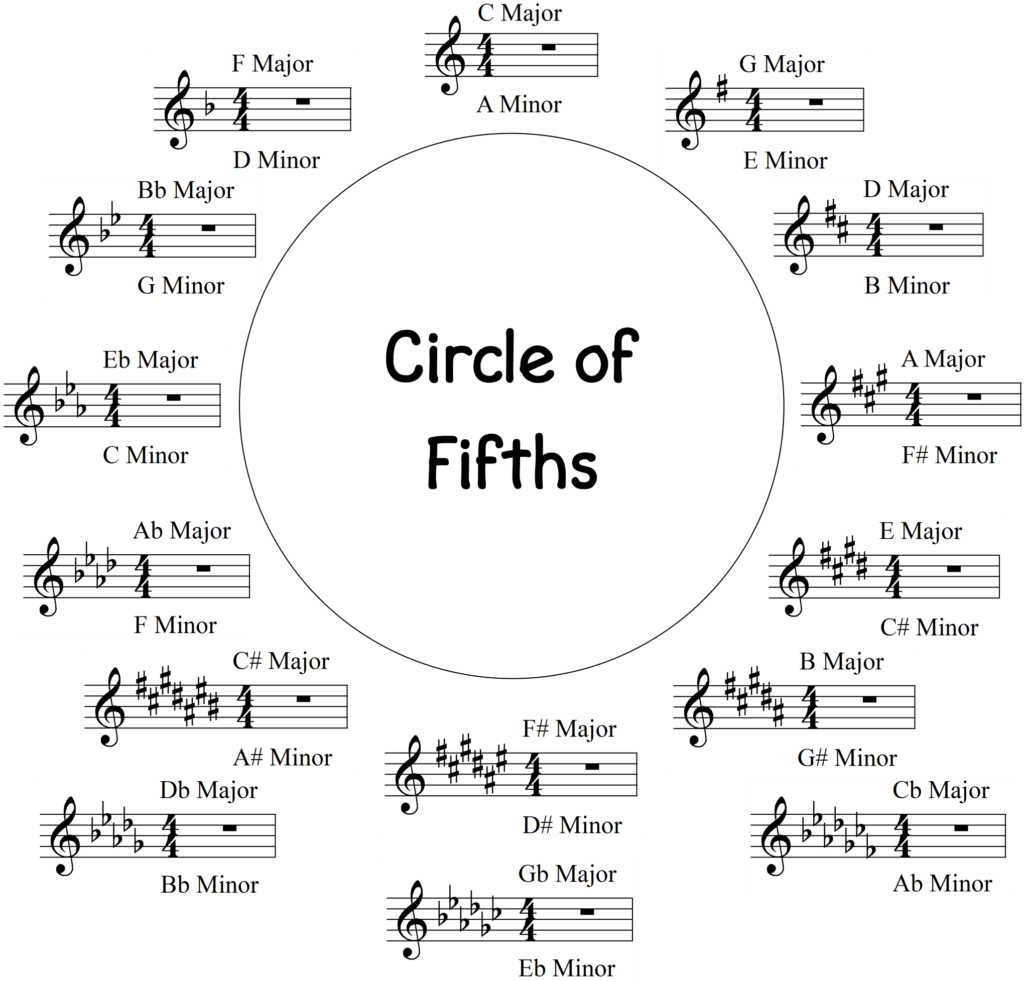
Next, you need to figure out what key you’re transposing to. When transposing, it’s helpful if you know how to use the circle of fifths:

Mobile users: for best results reading the examples, rotate your screen 90o to the right.

What Exactly Do I Do with The Circle of Fifths - Circle of Fifths - How to Learn Music Theory with a Learning Disability - How to Effectively Use Music Theory to Transpose Music

How to Transpose Music Using Music Theory: Changing from C to D Major

Do I Really Have to Learn Music Theory to Learn How to Play Piano - Why Do Minor Keys Sound Sad to Me - Color Code Key Signatures - Keyboard Accidentals - What is a Parallel Mode and How Does it Work - What Purpose Do Accidentals Serve in Reading Sheet Music - Reading Music (A Quick Guide to How to Read Music) - How Can I Learn the Basics of Music Theory - What Exactly Do I Do with the Circle of Fifths - An Easy How to Guide to Understanding Triads - 50 Essential Music Symbols Explained in Less Than 5 Minutes - What Exactly Do I Do with The Circle of Fifths - Circle of Fifths - How to Learn Music Theory with a Learning Disability - How to Effectively Use Music Theory to Transpose Music

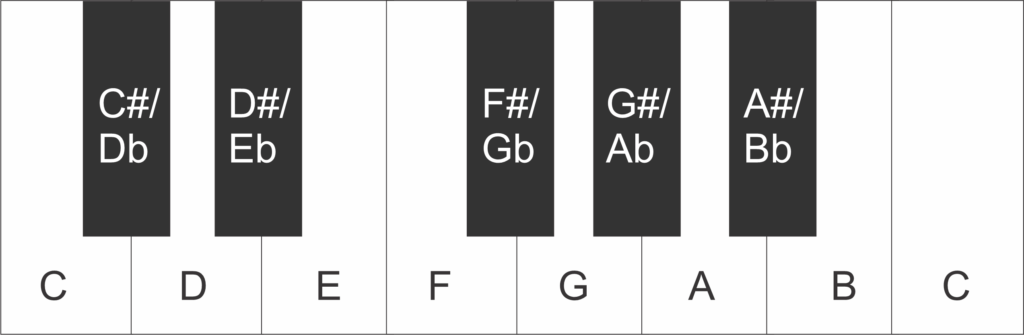
To access an online keyboard: click here.

Let’s look at an example:

  • If you need to change a piece of music from C to D major (see the examples below), the tonic of the key will move up by the interval of a major second from C to D.
  • Also, you’ll gain two sharps (F# and C#) when you change to D.
  • Thus, C major has the notes C D E F G A B C, and D major has the notes D E F# G A B C#.

This means that in the transposed melody from C to D major:

  • All the Cs become Ds (two notes up if you count the C)
  • All the Ds become Es (two notes up if you count the D)
  • All the Es become F#s (two notes up if you count the E)
  • All the Fs become Gs (two notes up if you count the F)
  • All the Gs become As (two notes up if you count the G)
  • All the As become Bs (two notes up if you count the A)
  • All the Bs become C#s (two notes up if you count the B)

In other words, when transposing from C to D you’ll count up two notes from each melody note in the original key and add the appropriate sharps and flats from the new key (see the circle of fifths chart).

Notice that even though the notes change, the solfege syllables in the examples remain the same:

  • Why? Because the sound stays the same.
  • Listen to the soundtracks below. The notes are higher in the second soundtrack, but the melodies are recognizably the same.
  • That’s how transposing works.
Sight Singing with Solfege - Merrily We Roll Along in C Major

Merrily We Roll Along in C:

Sight Singing with Solfege - Merrily We Roll Along in D Major

Merrily We Roll Along in D:

How to Transpose Music Using Music Theory: C to G Major Example

By extension, when transposing between any two keys, you need to count the appropriate number of notes up and add the correct number of sharps or flats:

  • You’ve seen one example of how to transpose. Now let’s look at another one to make sure you’ve got the pattern. (Once again, the circle of fifths is an invaluable resource when transposing.)
  • If you transpose from C to G major, you’ll count five notes up (an interval of a fifth) and add one sharp: F#.
  • In other words, C major has the notes C D E F G A B C, and G major has the notes G A B C D E F#.

This means that when transposing a melody from C to G major:

  • All the Cs become Gs (five notes up if you count the C)
  • All the Ds become As (five notes up if you count the D)
  • All the Es become Bs (five notes up if you count the E)
  • All the Fs become Cs (five notes up if you count the F)
  • All the Gs become Ds (five notes up if you count the G)
  • All the As become Es (five notes up if you count the A)
  • All the Bs become F#s (five notes up if you count the B)

It must be emphasized that you need to have the correct number of sharps or flats. If you don’t, you’ll end up in a different mode rather than a different key.

Changing Keys in Your Songwriting - pencil, eraser, and sheet music - Singing Shape Note Harmonic Minor Melodies - Learn the Elements of Songwriting Construction - Can Someone Explain Roman Numeral Analysis in Layman's Terms for Me - How Can I Learn the Basics of Music Theory - Song Structure, Musical Phrases, Musical Structures and Forms - What Exactly Do I Do with the Circle of Fifths - Do I Really Have to Learn Music Theory to Learn How to Play Piano - Why Do Minor Keys Sound Sad to Me - Color Code Key Signatures - Keyboard Accidentals - What is a Parallel Mode and How Does it Work - What Purpose Do Accidentals Serve in Reading Sheet Music - Reading Music (A Quick Guide to How to Read Music) - How Can I Learn the Basics of Music Theory - What Exactly Do I Do with the Circle of Fifths - An Easy How to Guide to Understanding Triads - 50 Essential Music Symbols Explained in Less Than 5 Minutes - What Exactly Do I Do with The Circle of Fifths - Circle of Fifths - How to Learn Music Theory with a Learning Disability - How to Effectively Use Music Theory to Transpose Music

Final Thoughts

Takeaway points:

  1. When transposing between any two keys, you need to count the appropriate number of notes and add the correct number of sharps or flats.
  2. There are a bunch of reasons you might need to use music theory to change the key in a piece of music, such as:
  3. It’s the wrong range for your voice.
  4. You need to make it fit an instrument’s range.
  5. You play a transposing instrument and need to read concert pitch sheet music.

Have fun!

Related Posts

© 2025 Geoffrey Keith

Glossary

How Do I Switch from Singing Shaped Notes to Standard Notation - Boys Choir - How Do I Switch from Minor Key Shaped Notes to Standard Notation - Singing Shape Notes Solfege Ionian Melodies - What Exactly Is a Chord and What Does the Term Harmony Mean - What Exactly Is a Chord and What Does the Term Harmony Mean

How Do I Switch from Singing Shaped Notes to Standard Notation – Part 1

“How do I switch from singing shaped notes to standard notation?” Because they’re easy to read, shape notes will always be a good choice for struggling readers, and it makes a great introduction to solfege too. However, the limited shape note repertoire means that shape note singers may want to learn to read standard notation as well. Click to learn how to transition from shaped notes to standard notation. Estimated reading time 3 minutes.

Read More

Harmony Singing Examples for Children - girl with mic - Please Explain Vowel Modification to Me Like I'm a 5 Year Old

Harmony Singing Examples for Children

Don’t you think kids need to develop harmonizing skills too? Yes! Does "Harmony Singing Examples for Children" have to be limited to children only? No! However, children especially need good harmonic sound models to train their ears to hear how well-tuned harmony should sound. The post’s sound tracks contain specially tuned sing-along songs that balance harmonic and melodic tuning. Thus, they help develop a cappella level intonation. Estimated reading time 2 minutes.

Read More
How to Micro Tune the Keyboard to Make the Chords Sound Awesome - a Red Keyboard - Can I Learn to Play Piano with a Mini Key Keyboard - What Does Intonation Mean and Why Is It Essential in Music - How to Best Use Family Chords

How to Micro Tune the Keyboard to Make the Chords Sound Awesome

Does it ever bother you that the piano chords sound out of tune? The guitar is not the only instrument that can be retuned. Retuning the keys to Supplemented Equal Temperament (SET) yields chords that sound better than equal temperament - the standard piano tuning. In SET, the triads sound incredible. Learn how to micro tune the keyboard using SET for awesome chords! Estimated reading time 4 minutes.

Read More

How Long Do You Take to Memorize a Piece of Piano Music - a Rose on Sheet Music - Singing Shape Notes Solfege Lydian Melodies - How to Play Your $@?% Clarinet in Tune

How Long Do You Take to Memorize a Piece of Piano Music?

“How long do you take to memorize a piece of piano music?” It’ll vary from person to person how long it’ll take. I’ve known musicians who can memorize a piece of music after just one listening. For most of my students, it takes a half-dozen to a dozen listenings to just start learning a piece, much less memorize it. This means that for most musicians, memorizing a piece of music will be a process. Keep reading to get tips to help you memorize your music better and more quickly. Estimated reading time 2 minutes.

Read More