

Success Music Studio

How Easy Is It to Play Renaissance Lute?

Facebook
Twitter

Estimated reading time 3 minutes

Table of Contents

Introduction

Are you a guitarist who wants to try playing the lute? Do you want to know how difficult it is compared to guitar? The Renaissance lute is a pear-shaped instrument with a swept back headstock that harkens back to another age. Keep reading How Easy Is It to Play Renaissance Lute? to learn more.

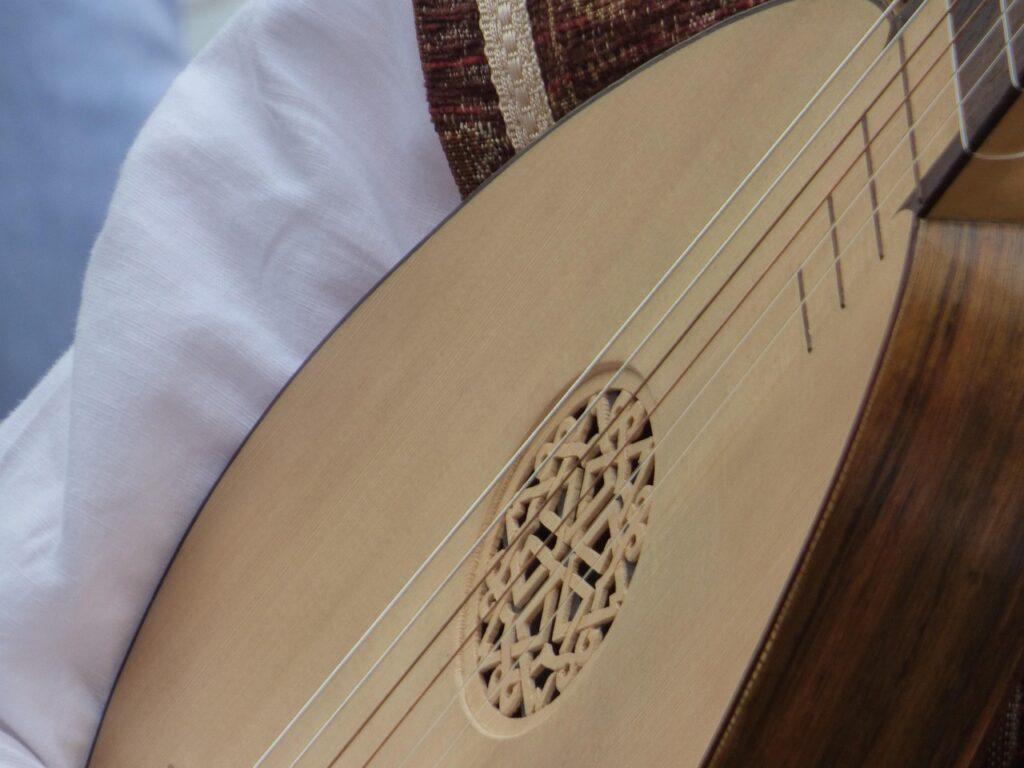
How Easy Is It to Play Renaissance Lute – Lute Rosette

How Easy Is It to Play Renaissance Lute: What’s a Course and How Many Should I Get?

When you buy a lute they generally come with 6,7, or 8 courses.

  • A course is a pair of strings that are tuned to the same note or to octaves.
  • Thus, a 6 course lute would be roughly equivalent to a 12 strings guitar, which also has 6 courses.
  • Therefore, playing a 6 course lute is somewhat like playing a 12 string guitar combined with a short, fat classical guitar neck.

Therefore, it’s more challenging than classical guitar because of the courses.

  • This becomes even more so as you add in more courses.
  • That’s why I named the post How Easy Is It to Play Renaissance Lute? because this version of the instrument generally has a reasonable number of courses.
  • Conversely, in the baroque period, they started to add a ridiculous number of courses (basically by adding lots of bass strings).

If you want an easier playing experience, go with a 6 course instrument.

How Easy Is It to Play Renaissance Lute: Is It Hard to Read the Music?

How easy it is to read depends on the type of notation.

  • If you’ve ever tried to read a guitar alternate tuning in standard notation, you’ll know that it’s a pain in the neck to sight read.
  • Likewise, because the lute’s open strings have different notes from the guitar’s open strings, reading standard notation for it is challenging if you’re a guitarist.
  • However, like alternate tunings for guitar, reading tablature is easy, so make sure that all your music has tablature.

This is appropriate, because Renaissance lute music was originally notated using tablature.

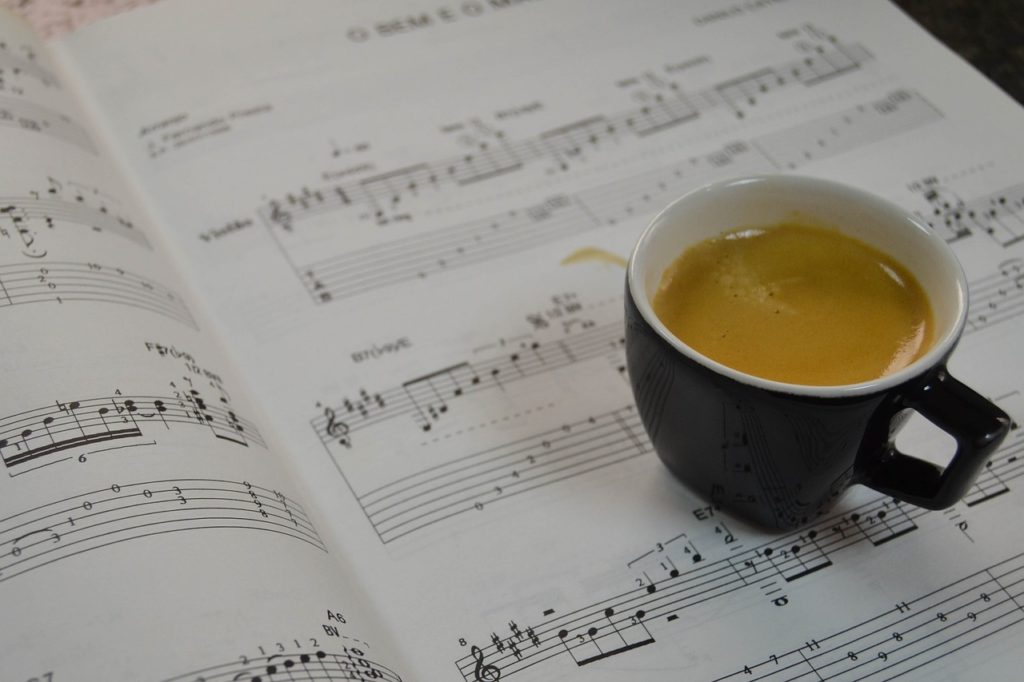
How to Color Code Guitar Tab to Empower LD Achievement - Guitar Tab and Coffee Cup

How Easy Is It to Play Renaissance Lute: How Do I Tune It?

Like guitar, the lute has many alternate tunings.

However, unlike guitar, Renaissance lute doesn’t have fixed frets.

  • Instead, you tie strings around the neck, which means you must tune your frets as well as your strings.
  • Having said that, some instruments come with fixed frets, but they aren’t as authentic.
  • See the following video to learn how to tie frets.
Video: Tying Frets
Video: How to Tune the Instrument

As you can see from the above video, tuning the instrument can be challenging.

  • Not only do you need to tune your strings, but you must also adjust your frets.
  • As you do both, you’ll need to keep in mind the scales and chords you’re playing, because it affects your fret placement.
  • Tuning is one of the most challenging aspects when learning the instrument, but it’s well worth it.

Since the lute isn’t in equal temperament, it’s technically a microtonal instrument.

  • The video above adjusts the frets so that the instrument is in a meantone temperament.
  • This is a historical temperament that was popular from the Renaissance straight through the classical period.
  • It favors the major thirds over the perfect fifths.

Final Thoughts

The takeaway points:

  1. A course is a pair of strings that are tuned to the same note or to octaves.
  2. If you want an easier playing experience, go with a 6 course instrument.
  3. Like alternate tunings for guitar, reading tablature is easy, so make sure that all your music has tablature.
  4. Like guitar, the lute has many alternate tunings.
  5. Since the frets aren’t fixed, you’ll have to learn how to tie the frets and adjust the fret placement (see the videos above).

Have fun performing!

Related Posts

© 2025 Geoffrey Keith

Singing Beethoven’s Beautiful Ode to Joy - Joy Tiles and a Rose

Singing Beethoven’s Beautiful Ode to Joy

Are you looking for the beautiful song “Ode to Joy?” In this post, you’ll get the essentials: 1) a sing-along video of the song, 2) a popular version of the lyrics in English, 3) and sheet music with easy-to-read shape notes and a sing along soundtrack. Keep reading “Singing Beethoven’s Beautiful Ode to Joy” to learn more. Estimated reading time 2 minutes.

Read More


Anyone Can Learn to Sing, Including You - Woman Singing into a Firey Mic - What's The Basic Difference Between Falsetto and Chest Voice

Anyone Can Learn to Sing, Including You

Anyone can learn to sing, including you. An old Zimbabwe proverb says, “If you can walk, you can dance. If you can talk, you can sing.” So, if you can talk, why don’t you give singing a try? Read more to find out how it works. Estimated reading time 3 minutes.

Read More
Tune the Ukulele with a Free Online Tuner - Ukulele

Tune the Ukulele with a Free Online Tuner

Do you want to tune the ukulele with a free online tuner? If you’d like to get your ukulele into the standard ukulele tuning in equal temperament, don’t worry, I have what you need. However, did you know that the Hawaiians tune their instruments so that their ukes sound a lot better? Click to tune up the most common versions of the tuning. Estimated reading time 4 minutes.

Read More