
Success Music Studio

How to Record a Professional Quality Podcast - Podcasters

How to Record a Professional Quality Podcast

Facebook
Pinterest
LinkedIn

Estimated reading time 5 minutes

Table of Contents

Introduction

Do you want to start your own podcast? Do you need to know what stuff to get and how to use it? Podcasting is hot right now. I mean, I recently walked into Target, and they had podcasting pro audio gear on display – in Target! That means there are lots of people out there who want to share their views with the world. If you’re one of them, keep reading How to Record a Professional Quality Podcast to learn how to get a professional sound.

This article uses technical terms. For definitions, see the Glossary at the end of the post.

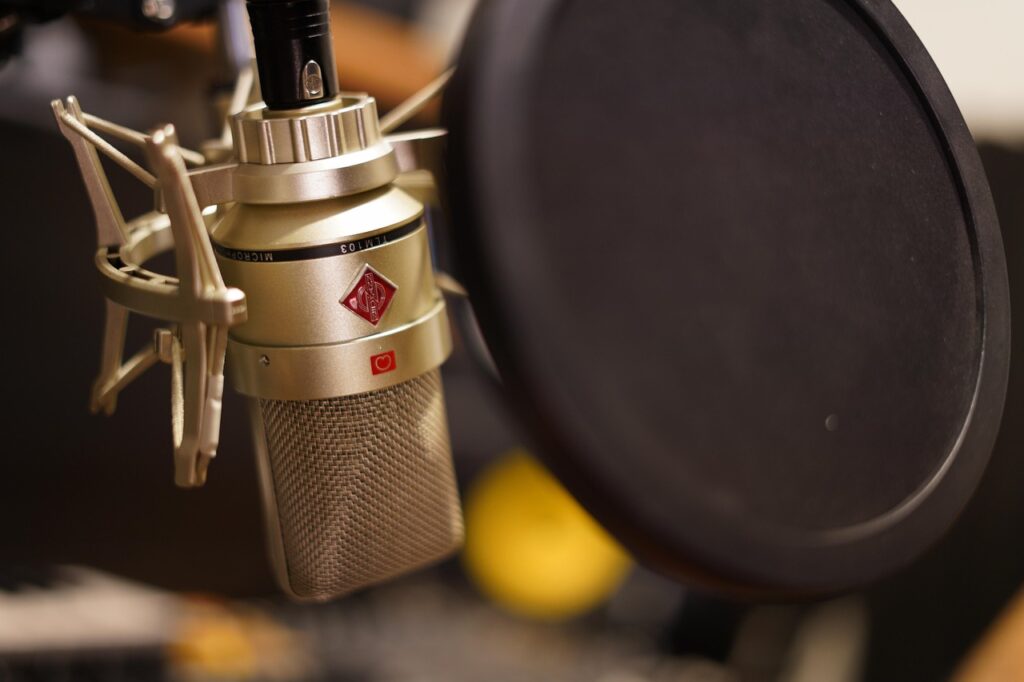
How to Record Vocals for a Professional Sound - Condenser Mic with Pop Screen - How to Figure Out Your Voice Type - How to Record a Professional Quality Podcast

This post contains affiliate links, which means I may receive a small commission from purchases made through the links. I’ll only recommend products I use, use in lessons, or ones my students or colleagues have recommended.

How to Record a Professional Quality Podcast: Selecting Your Gear and Mic Tips

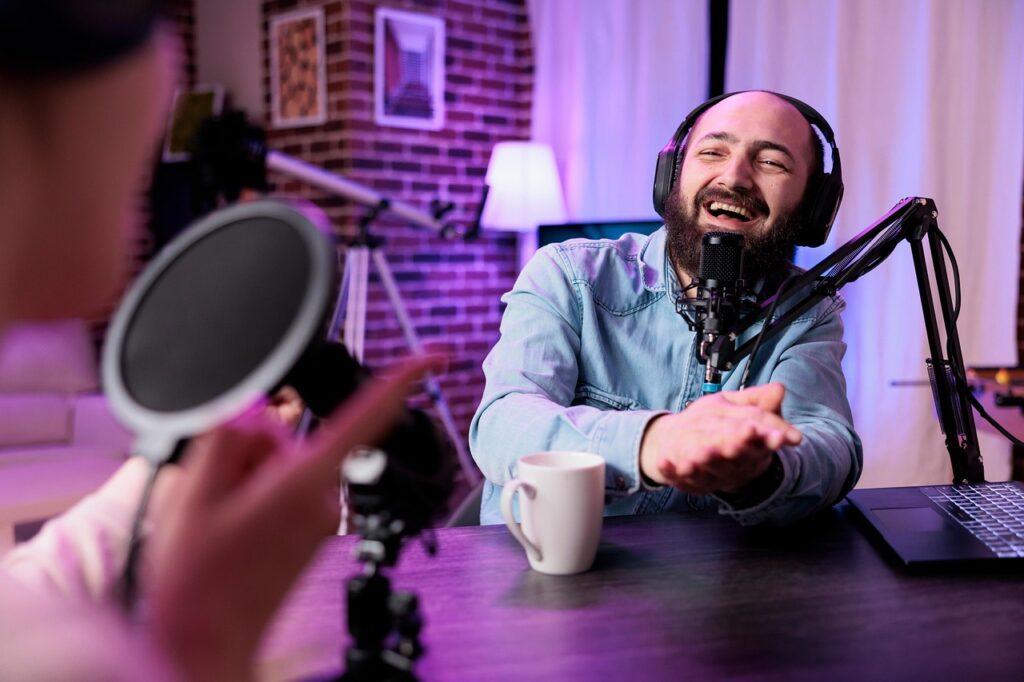
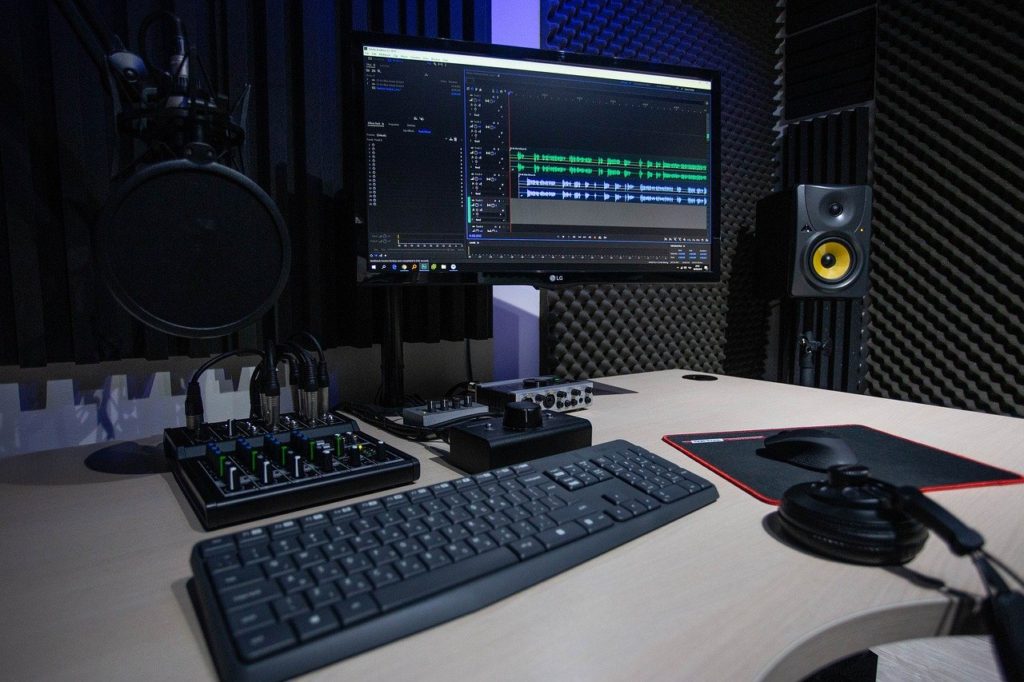
While you don’t need a full recording studio to record a professional quality podcast, you do need professional quality equipment and some knowledge of how to use it effectively.

First, you’ll need to get your audio equipment.

All your equipment must be professional quality if you want to create a good product for your audience.

Second, it’s better to have a condenser mic than a dynamic mic, because the condenser mic will better capture the nuances of your voice.

  • Even better still is a large diaphragm condenser mic, because it’ll color the sound of your voice in a pleasing way. However, they can be pricy.
  • On the other hand, dynamic mics are cheap. They’ll get the job done, but the sound quality of a condenser mic is far superior.

Third, you can save money by buying a podcast starter kit.

If you buy your equipment separately, it can add up quickly. However, a starter kit is much more affordable.

For example, PreSonus’ AudioBox Studio Ultimate gives you: 1) an audio interface, 2) recording software plus plugins, 3) studio quality headphones, 4) a large diaphragm condenser microphone, and 5) studio monitors (speakers) for way less than half the cost you’d run up assembling all this gear as separate pieces.

All that’d be left for you to buy would be a microphone stand and your acoustical treatment (see the Controlling Acoustics section).

For more information on how to get a professional sounding product.

In addition, you need to develop your microphone skills.

  • Speak about 6 to 12 inches away from your mic, or about the distance between your outstretched thumb and pinky.
  • Using a pop filter will help remove the puffs of air from your plosive consonants (e.g., p and b). However, it’s even better if you also speak perpendicularly across the mic rather than directly into it, because this minimizes the problem of recording pops.
  • Use a de-esser to remove sibilance from your s and z consonants.
  • Edit out imperfect sections of takes, and make sure you save your audio recording to a lossless file format (e.g., WAV) for editing, though your final recording will usually be saved in MP3 file format.
  • In addition, you need to learn how to speak clearly.

For more information on diction.

That post is slanted toward singers’ diction. However, it’ll still help you learn how to speak clearly so that people will understand what you’re saying.

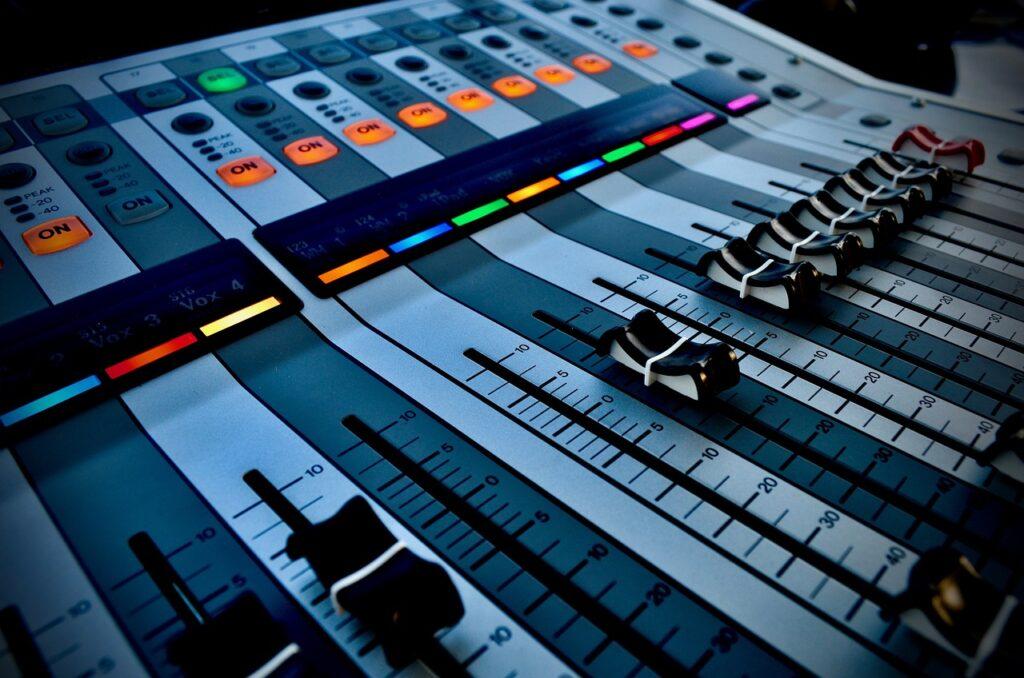
How Can I Write a Song Without an Instrument - Mixing Board

How to Record a Professional Quality Podcast: Controlling Your Acoustics

When recording a podcast, you need to avoid reverb.

Too much reverb will make it harder for people to understand what you’re saying.

  • The ideal is to go for the very dry sound you hear on talk radio.
  • You achieve this by using acoustic foam applied to your recording space.
  • You can either glue the foam to your walls, or you can staple them to drywall using a staple gun.
  • You don’t have to fully cover the walls – there can be gaps between panels to add some liveness to the sound. (You also should have carpet covering the floor.)
  • For example, to get a live but controlled sound, you can apply acoustic foam panels in a checkerboard pattern on all your room’s walls and on the ceiling above where you’re recording.
  • Just make sure that on parallel walls, a bare patch of wall faces an acoustic panel on the opposite wall.
  • This will help absorb mid and high frequency standing waves.
overcoming writer’s block in songwriting - studio and microphone - Is it Possible to Learn to Sing Harmony by Ear - 17 Songwriting Ideas to Get You Unstuck - What Exactly Does Beat Mean in Hip Hop?

How to Record a Professional Quality Podcast: Creating Quality Content

Not only do you need to pay attention to the technical aspects of recording your show, but you also need to put thoughtful effort into the content itself.

  • Make sure it contains information that’s entertaining and/or useful for your listeners.
  • Prepare your scripts ahead of time and practice what you’re going to say. If you have a spontaneous format while interviewing guests, at least make sure you have an outline of what you plan to say and do and have researched your questions for your guests.
  • Think about creating elements that make your brand unique: i.e., theme music, a logo to go on your artwork, recurring segments, and sound effects.
  • Search social media sites to get ideas of what people in your niche are interested in.
  • You’ll need to have a title for each audio file episode, create artwork for the podcast album, and upload it to a distribution website (e.g., Buzzsprout, Podcastle, or Tranistor) or to YouTube.
How to Use Hyperbole in Writing, Songwriting, and Poems - Songwriter Typing on a Notebook

Final Thoughts

Takeaway points:

  1. While you don’t need a full recording studio to record a professional quality podcast, you do need professional quality equipment and some knowledge of how to use it effectively.
  2. Avoid reverb and work on your diction to help make it easier to understand what you’re saying.
  3. Not only do you need to pay attention to the technical aspects of recording your show, but you also need to put thoughtful effort into the content itself.

Have fun recording!

Glossary

Do I Really Have to Learn Music Theory to Learn How to Play Piano - Learn the Elements of Songwriting Construction - Songwriter at a Computer - after they can sight-read what’s left for musicians to learn - What is a Parallel Mode and How Does it Work - How Can I Learn the Basics of Music Theory - The Top 5 Best Drake Sheet Music Gift Ideas

Learn the Elements of Songwriting Construction

Not sure about how to write a pre-chorus or a bridge? Are you confused about how to shape the form of your song? Look no further! Read more to learn the elements of songwriting construction. Estimated reading time 5 minutes.

Read More
Is the Suzuki Music Methodology Bad for Learning Piano - Little Girl at Toy Piano - Best Music Program for Three-Year-Olds

Is the Suzuki Music Methodology Bad for Learning Piano?

“Is the Suzuki music methodology bad for learning piano?” Well, it really depends on what you want out of lessons. Like with many things, Suzuki music does some things well, and others poorly. Keep reading to learn the pros and cons of the Suzuki methodology when teaching children music. Estimated reading time 3 minutes.

Read More

How Easy Is It to Play Renaissance Lute?

Are you a guitarist who wants to try playing the lute? Do you want to know how difficult it is compared to guitar? The Renaissance lute is a pear-shaped instrument with a swept back headstock that harkens back to another age. Keep reading “How Easy Is It to Play Renaissance Lute?” to learn more. Estimated reading time 3 minutes.

Read More
How to Graduate from the Color Coded Sheet Music - Part II - Girl Playing Flute - after they can sight-read what’s left for musicians to learn - What Does it Mean for Me to Interpret a Piece of Music - Music Therapy vs Music Lessons - BPM (Using the Metronome to Get the Music Beat) - What Does Intonation Mean and Why Is It Essential in Music

After They Can Sight-Read What’s Left for Musicians to Learn?

After they can sight-read what’s left for musicians to learn? Lots of thing spring to mind, such as: repertoire, memorized repertoire, interpretation, performance practice, improvisation, composition, music theory, and music history. Click to find out about what’s left for musicians to learn after they can sight-read. Estimated reading time 3 minutes.

Read More