
Success Music Studio

What Is the Basic Idea of Tempo in Music - Metronome

What Is the Basic Idea of Tempo in Music?

Facebook
Twitter

Estimated reading time 2 minutes

Table of Contents

Introduction

“What does the word tempo mean?” Tempo is critical for interpreting a piece of music. However, it’s a somewhat overlooked aspect of playing. Keep reading What Is the Basic Idea of Tempo in Music? to learn more about what it is and how it works.

This article uses musical terms. For definitions, see the Glossary at the end of the post.

color coded quarter note clapping - hands clapping - What Is the Basic Idea of Tempo in Music?

What Is the Basic Idea of Tempo in Music: What Does Tempo Mean?

According to The New Harvard Dictionary of Music:

Tempo [It., time] … The speed at which music is performed, i.e., the rate per unit time of metrical pulses in a performance… (838).

In other words, the tempo is how fast you play:

  • The metrical pulse refers to which note gets one beat in a time signature.
  • For instance, your speed in a 4-4 time signature is determined by how fast you’d play the quarter note.
  • Why? Because the quarter note gets one beat in 4-4.

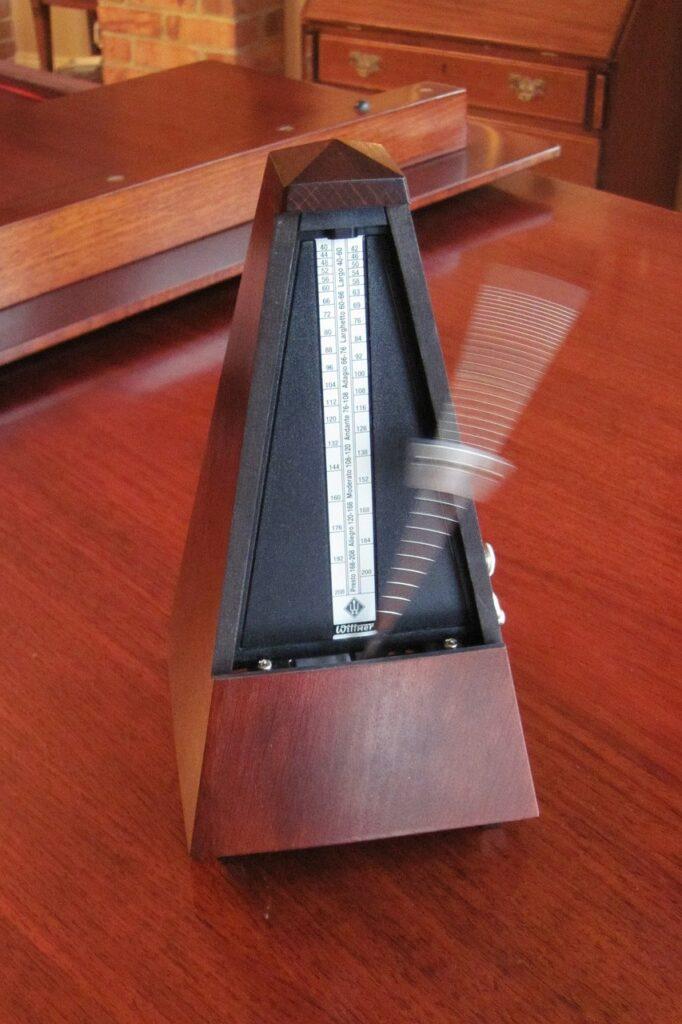
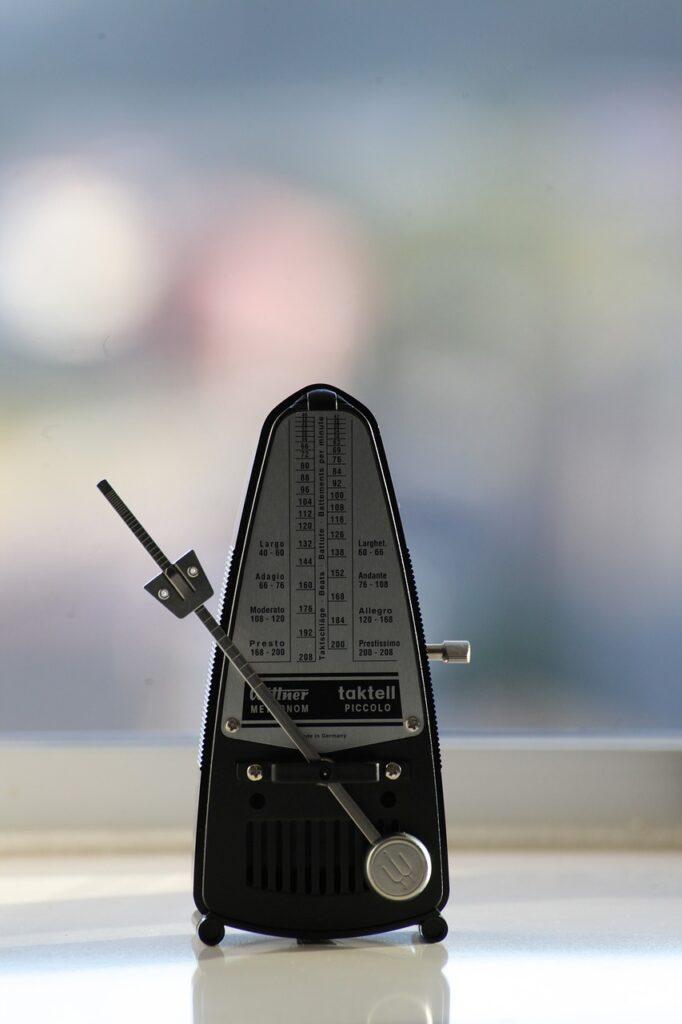
Musicians use metronomes to help them learn music at the right speeds:

  • The metronome’s clicks (or beeps) are measured in beats per minute (bpm).
  • For example, the second hand on a clock ticks 60 times in a minute.
  • Therefore, the musical speed of the clock’s second hand is 60 bpm.

For more information on time signatures:

For more information on playing with a steady beat:

BPM (Using the Metronome to Get the Music Beat) - Analog Metronome - What Is the Basic Idea of Tempo in Music?

What Is the Basic Idea of Tempo in Music: What Are Common Tempos?

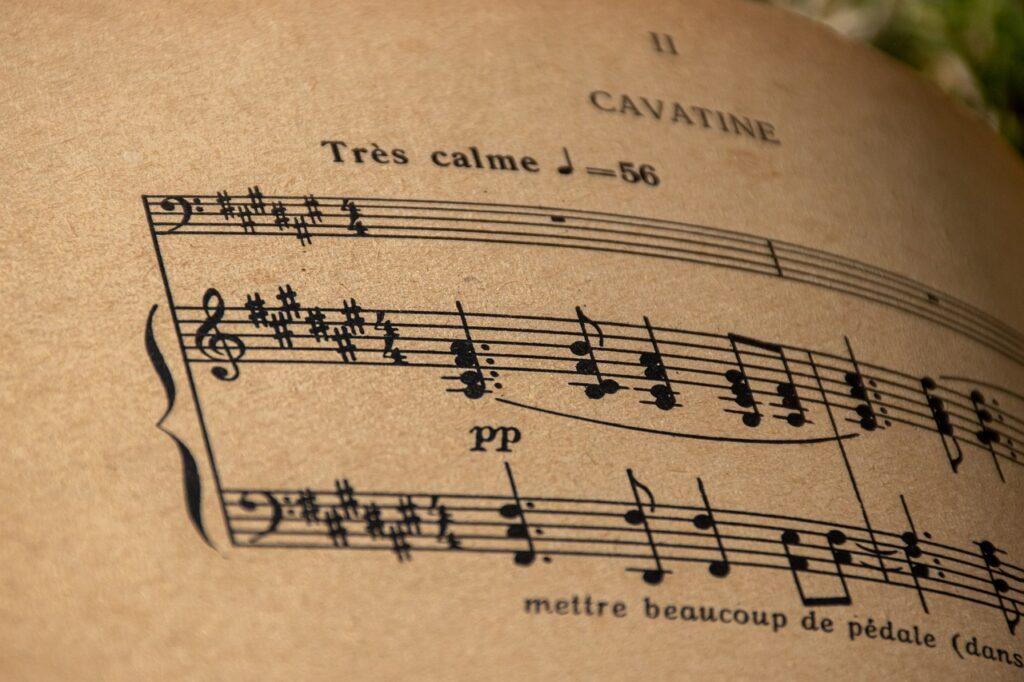
Tempo marks (found on the top left side of a score) indicate ranges for musical speed. The most common speeds are:

  • Largo: extremely slow (40 bpm or less)
  • Lento: very slow (40 – 60 bpm)
  • Adagio: slow (60 – 76 bpm)
  • Adagietto: between adagio and andante (76 – 82 bpm)
  • Andante: “walking” speed (82 – 108 bpm)
  • Moderato: medium (108 – 120 bpm)
  • Allegro: fast or happy (120 – 168 bpm)
  • Presto: extremely fast (168 – 200 bpm)
  • Prestissimo: as fast as you can play (200 bpm or more)

How fast you play impacts how your music will sound and feel:

  • Try imagining a fast rock song vs a slow ballad.
  • The speed of the song plays a huge role in how each style of music sounds.
  • Pick the right speed (say, allegro vs adagio) and the song will sound great. Pick the wrong speed, and it won’t work so well.
What Purpose Do Accidentals Serve in Reading Sheet Music - Key Signature with 6 Sharps - Improvising vs Composing Music - How Do I Find the Key of a Song with Accidentals - BPM (Using the Metronome to Get the Music Beat) - What Is the Basic Idea of Tempo in Music?

Final Thoughts on “What Is the Basic Idea of Tempo in Music?”

Glossary

Why Do Minor Keys Sound Sad to Me - Sad Emoji - How to Write Beautiful Sad Songs

Why Do Minor Keys Sound Sad to Me?

Have you ever wondered, “Why do minor keys sound sad and major keys sound happy?” Has this phenomenon been hardwired into us, or does culture impact how we perceive scales? In fact, it’s a little bit of both. Read more to learn how this works. Estimated reading time 3 minutes.

Read More

How to Play Your $@!% Cello in Tune - Cellist

How to Play Your $@!% Cello in Tune

Do you want to be able to play your cello or double bass in tune? Do you need help learning the necessary skills for accurate string intonation? The following post will give you bowing, fingering, and ear training tips that will help you master your instrument’s intonation. Click to learn how to play your cello in tune. Estimated reading time 4 minutes.

Read More
supplemented equal temperament minor keys - two curved keyboards.jpg

How Supplemented Equal Temperament Minor Keys Work

Frustrated with your out of tune synth chords? Do you want your brass, woodwind, and string programs to sound better? It’s not only the program you select which controls how your synth sounds, the tuning has an impact as well. I created Supplemented Equal Temperament (SET) to produce chords that sound better in tune than equal temperament (the piano’s tuning). Read more to learn how SET minor keys work. Estimated reading time 5 minutes.

Read More