



Success Music Studio

How to Color Code Music to Optimize the Steady Beat - Drummer Figurine

How to Color Code Music to Optimize the Steady Beat

Facebook
Twitter

Estimated reading time 2 minutes

Table of Contents

Introduction

Do you have a student who has a problem keeping the steady beat? Does your child struggle with rhythmic concepts? Color coding combined with physicalizing the beat makes for a powerful teaching aid. Keep reading How to Color Code Music to Optimize the Steady Beat to learn how it works.

This post uses musical terms. For definitions, see the Glossary at the end of the article.

Video: How Effective is Color Coding in Music Lessons?

How to Color Code Music to Optimize the Steady Beat: Why Use Footprint Silhouettes?

I started using the footprint silhouettes to help an autistic student who was entirely non-verbal:

  • I needed a way to teach the steady beat and basic rhythm concepts, and alternating between footsteps helped me turn them into concrete, physical actions.
  • I first learned about this from a special needs drum teacher who had a very complex system based on footsteps, which I’ll leave for him to teach.
  • However, I was fascinated by his assertion that groups like gospel choirs would organize the beat using alternating footsteps.

So, I took the gospel choir concept and combined it with my colored rhythmic notation.

Do You Need Help Learning How to Harmonize - Vocal Ensemble - How to Color Code Music to Optimize the Steady Beat

How to Color Code Music to Optimize the Steady Beat: How Does It Work?

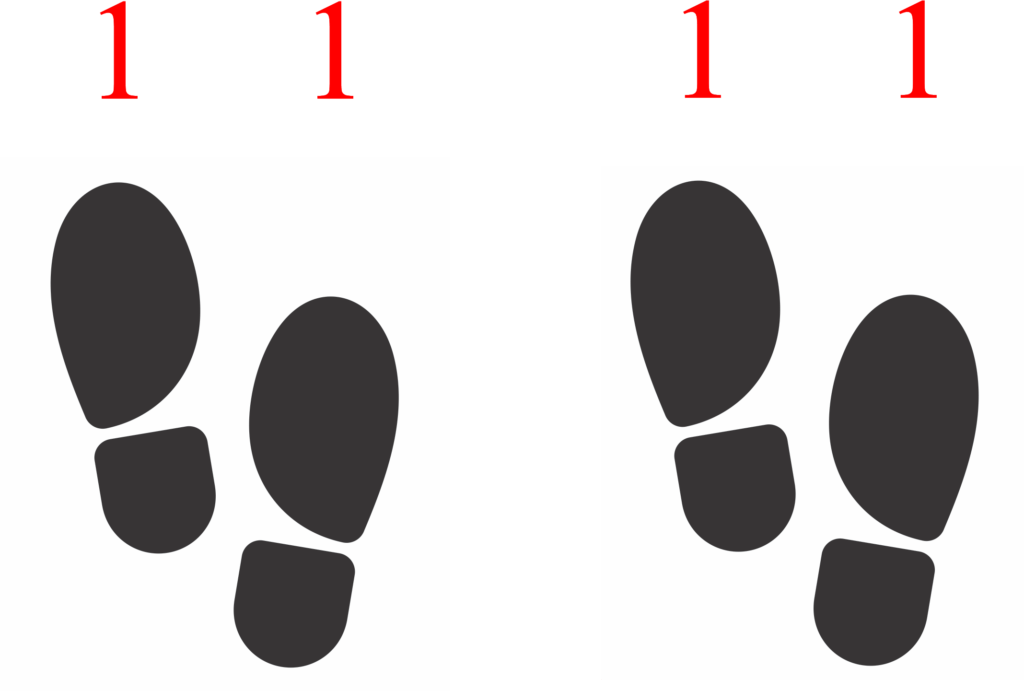
How to teach the first footprints diagram

  1. Show the student the footprints diagram and demonstrate rocking back and forth between the feet to a regular pulse.
  2. Explain that this is the steady beat and help the student to do it.
  3. Then, tell the student that each footprint gets one beat.
  4. Demonstrate alternating between feet while clapping, saying, “1, 1, 1, 1.”
  5. Next, help the student do it.
How to Color Code Music to Optimize the Steady Beat - Footprints - Quarter Notes (Color)

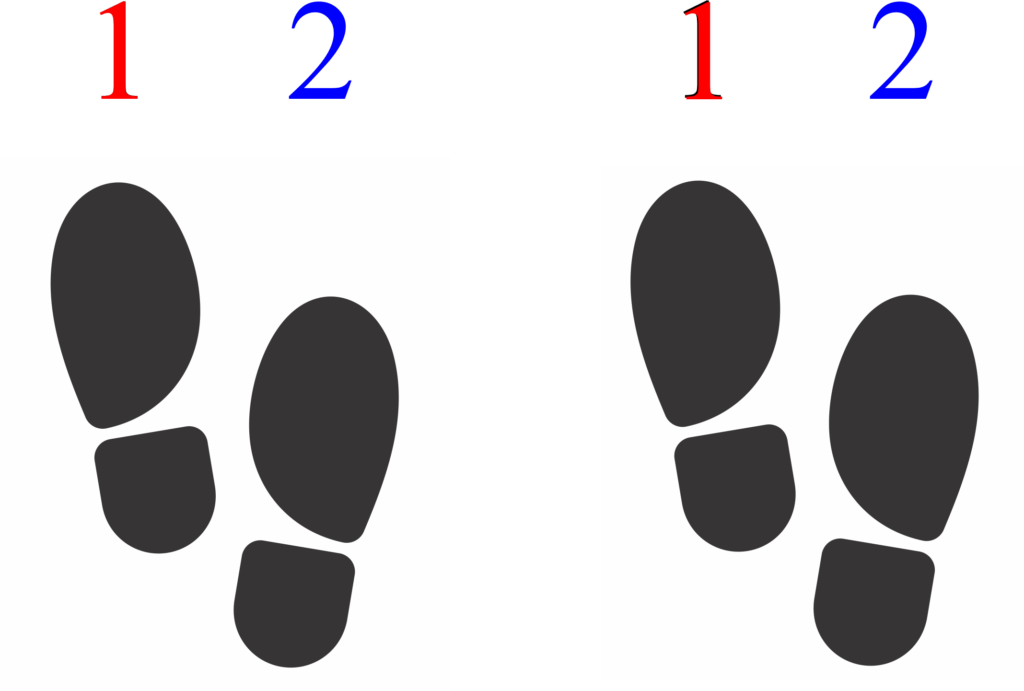
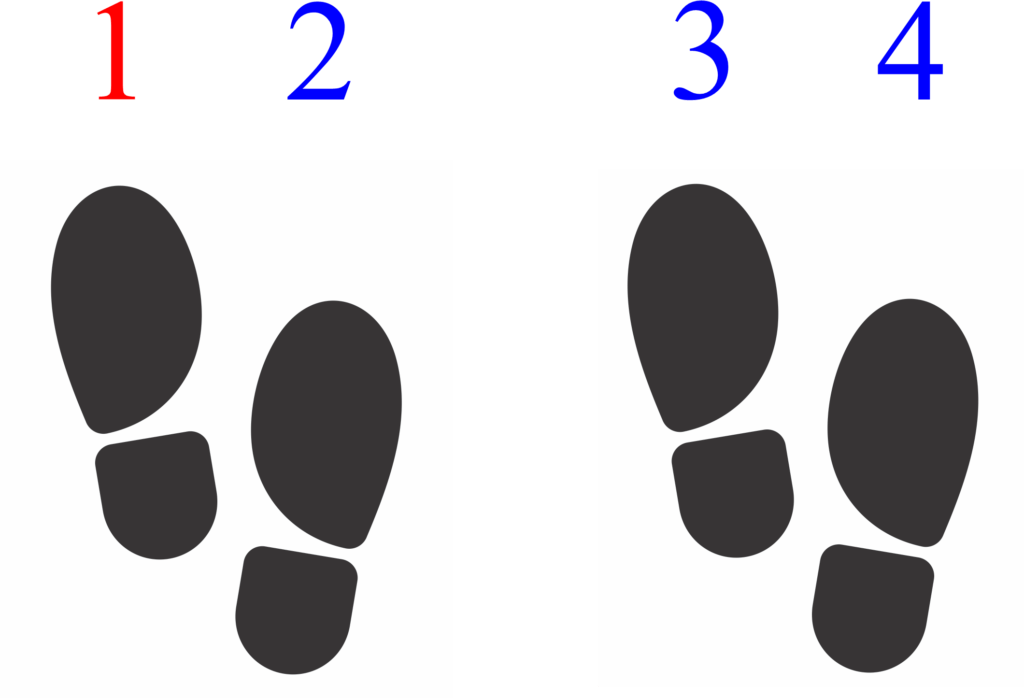
How to teach the second and third footprints diagrams

  1. Explain to the student that you don’t always clap on every beat.
  2. Next say, “When the number is red, you clap, but when it’s blue, you don’t clap.”
  3. Demonstrate alternating feet to the steady beat while clapping on every other footstep, saying, “1, 2, 1, 2.”
  4. When the student has successfully clapped the second diagram, try the third one.
  5. Clap saying, “1, 2, 3, 4.”

After this, you can create longer exercises if necessary, or you can progress to teaching the colored rhythmic notation if the student is ready for it.

Color Guide for Clapping:

  • Red = clap
  • Blue = do not clap
How to Color Code Music to Optimize the Steady Beat - Footprints - Half Notes (Color)
How to Color Code Music to Optimize the Steady Beat - Footprints - Whole Notes (Color)

For more information on colored rhythmic notation

Knowing how to color code music will help any child to learn but is particularly helpful for young students and students with ADHD, dyslexia, and autism. For information on music software that can color music notes:

Also, color coded music has been scientifically proven to help special needs students read music. For more information on the research:

Color Coded Eighth Note Clapping - Clapping Hands Cartoon - Color Code Rhythm - I’m Having a Hard Time Keeping a Steady Beat - Singing Rhythm - How to Color Code Music to Optimize the Steady Beat - The 5 Best Effortlessly Easy Metronome Practice Tips - How to Teach Music Students with Dyscalculia

Final Thoughts on “How to Color Code Music to Optimize the Steady Beat”

Takeaway points:

  1. The footprint silhouettes create a physical way of teaching the steady beat and basic rhythmic concepts.
  2. Color coding has been scientifically proven to be an effective teaching aid.
  3. Combining the two together gives you a powerful teaching tool for young children and developmentally delayed children

Related Posts:

© 2024 Geoffrey Keith

Newsletter Signup

Join me for in-person or online lessons today!

Back to the Color Coding category blogs page

Back to the Successful Music Student blogs page

Glossary

Do You Need Help Learning How to Harmonize - Vocal Ensemble - How to Color Code Music to Optimize the Steady Beat

Do You Need Help Learning How to Harmonize?

Have you ever marveled at how some people can easily sing with a beautiful tone? Do you need help learning how to harmonize in tune? Good news! Vocal harmonizing can be learned, and the sing-along soundtracks will help. Click to find out how it works. Estimated reading time 3 minutes.

Read More


How to Use Kinesthetic Learning in Music Lessons - Music Students

How to Use Kinesthetic Learning in Music Lessons

Do you need to know what kinesthetic learning is? Do you want to be able to integrate it into your music lessons? Kinesthetic learning uses physical activity to improve the learning experience. When done right, it’ll make your lessons more fun, engaging, and effective. Click to learn how to use kinesthetic learning in music lessons. Estimated reading time 3 minutes.

Read More
Learn Some Super Useful Beginner Ukulele Chords - Ukulele Player

Learn Some Super Useful Beginner Ukulele Chords

Are you learning the instrument for the first time? Do you want to know the best chords to learn first? The guitar was introduced to Hawaii by Spanish cowboys, and the ukulele developed from it. This means guitarists have an edge learning these chords. However, they’re still super useful for any beginner, and we’ll start with the easiest ones. Click “Learn Some Super Useful Beginner Ukulele Chords” to learn them. Estimated reading time 3 minutes.

Read More
How to Play the Easy Beginner Guitar F Chord Without a Barre - Acoustic Guitar - What’s the Basic Difference Between Drop D vs Open D Tuning?

How to Play the Easy Beginner Guitar F Chord Without a Barre

Do you want to know how to play the easy beginner guitar F chord without a barre? Learning F on the guitar has long been a rite of passage for guitarists. Why? The barre makes it difficult to play, keeping many beginner guitarists from being able to play many otherwise simple songs. Keep reading to learn how to play the easy F chord on guitar. Estimated reading time 2 minutes.

Read More