


Estimated reading time 2 minutes
Table of Contents
One of the Best Things You Can Do for Learning How to Keep a Steady Beat
“I’m having a hard time keeping a steady beat.” One of the best things you can do is get a teacher who can help you learn how to keep a steady beat. Also, I have specific strategies that you can use with or without a teacher. Keep reading to learn how it works.
Tips for Keeping a Steady Beat
“I’m having a hard time keeping a steady beat.” I’ve got some tips for you:
- Use your phone to create videos of your teacher playing your music so you can listen to it before you practice. (Or have the teacher make one and send it to you.) Listen to each track at least six times.
- Record yourself playing at home. That way you can hear how your video sounds different than your teacher’s video.
- I use a pointer to help students track the notes and to help them keep on the beat. Your teacher could do something similar.
- Keep at it! I have an adult student who had real problems with the steady beat, but he stuck with it and got results.
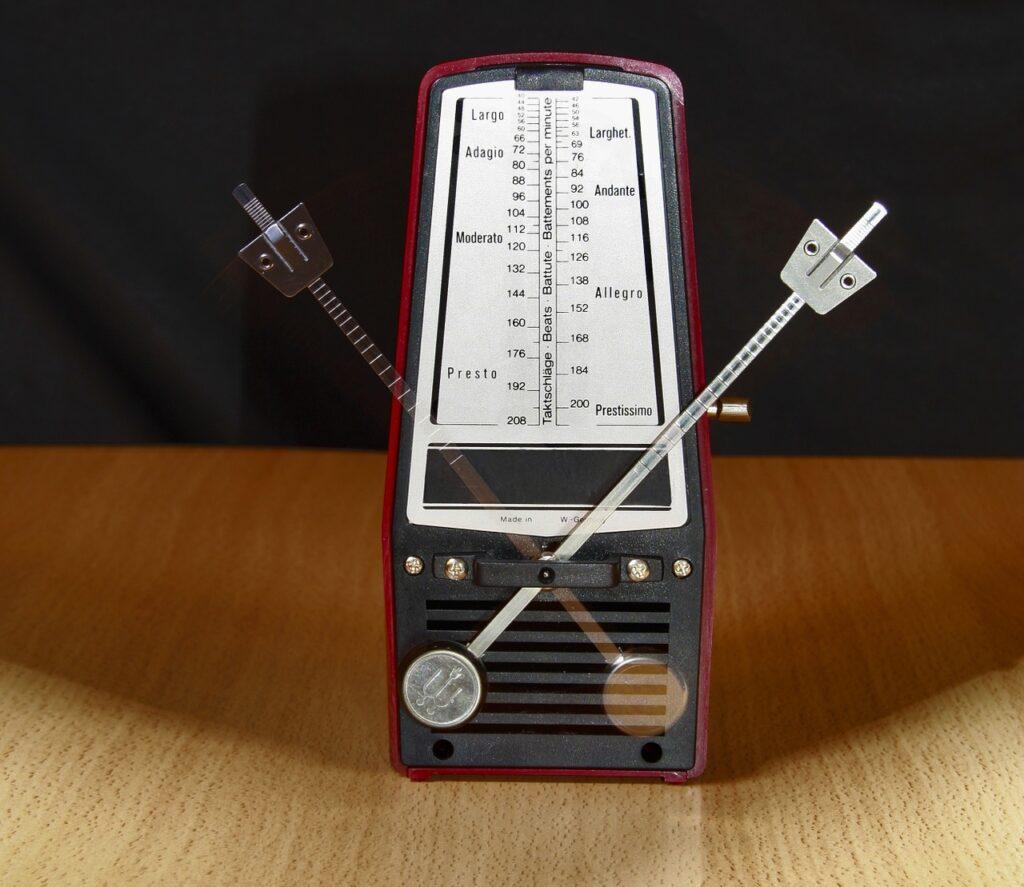
In addition, you can use a metronome to help you keep on beat. However, many musicians find them hard to use. Click here for an alternative:
I’m Having a Hard Time Keeping a Steady Beat: What Do I Do if I Don’t Have a teacher?
“I’m having a hard time keeping a steady beat.” When you play, you need to make your music sound like the song. This will be impossible if you can’t maintain a steady beat.
When you listen to a soundtrack, it’ll help you hear what the music should sound like, which’ll make it easier to play.
What do you do if you don’t have a teacher?
- See if your music book comes with a CD or a downloadable mp3 (often an option with guitar and keyboard music books).
- Search YouTube to find your song. Listen to (and play along with) the video. You can adjust the speed by clicking on the settings icon.
Have fun playing!
Related Posts
- What’s a Good Alternative to a Metronome for Practice Sessions?
- D’you Want Some Music Tips and Tricks I’ve Learned Over the Years?
- Color Coded Quarter Note Clapping
- Color Coded Eighth Note Clapping
- Color Coded Quarter Rest Clapping
- Lego Rhythm Manipulatives
© 2023 Geoffrey Keith
Join me for in-person or online lessons today!
Back to the All-Purpose Music Tips and Topics category blogs page
Tonic vs. Root in Music Theory: Are They the Same Thing? (Part 2)
Are you confused about the difference between the root and the tonic in music theory? Some musicians treat the terms root and tonic as if they were interchangeable. However, they have different, but equally important roles in music theory. Click to learn the difference between the tonic vs. root in music theory. Estimated reading time 3 minutes.
Read More12 Best Taylor Swift Sheet Music Gift Ideas

Do you love Taylor Swift’s music? Are you looking for gift ideas for a Swifty? Taylor Swift has dominated the pop music scene for the last couple of decades, garnering both accolades and a ridiculous amount of commercial success. Keep reading to learn the 12 best Taylor Swift gift ideas. Estimated reading time 4 minutes.
Read MoreThe 5 Best Free Music Notation Apps

Do you want to know what are the best free music notations apps? In our modern web-based world, there are many software options to choose from. They can help both novices and experts create professional looking scores. Keep reading “The 5 Best Free Music Notation Apps” to help you choose from the wide variety of free music notation software. Estimated reading time 2 minutes.
Read MoreHow Long Do You Take to Memorize a Piece of Piano Music?

“How long do you take to memorize a piece of piano music?” It’ll vary from person to person how long it’ll take. I’ve known musicians who can memorize a piece of music after just one listening. For most of my students, it takes a half-dozen to a dozen listenings to just start learning a piece, much less memorize it. This means that for most musicians, memorizing a piece of music will be a process. Keep reading to get tips to help you memorize your music better and more quickly. Estimated reading time 2 minutes.
Read More