





Success Music Studio

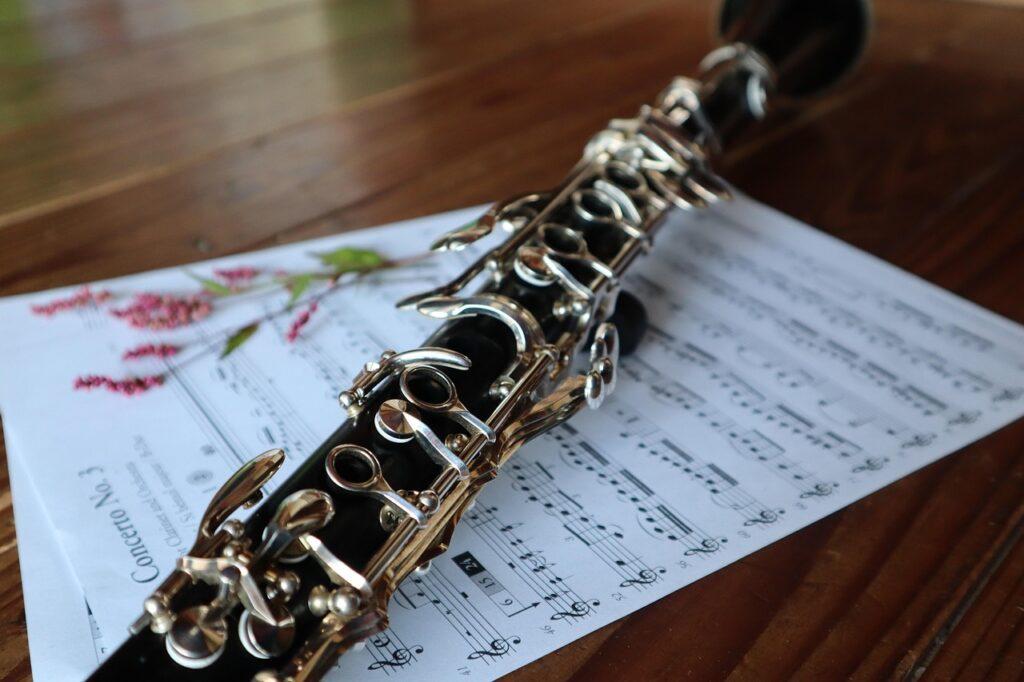
How to Play Your Clarinet in Tune - Clarinet and Sheet Music

How to Play Your $@?% Clarinet in Tune

Facebook
Pinterest
LinkedIn

Estimated reading time 4 minutes

Table of Contents

Introduction

Would you like to sound good when you play? Do you need help with your clarinet intonation? If you’ve ever had a hard time staying on pitch, or felt discouraged about bum notes, this post has you covered. Keep reading to learn how to play your clarinet in tune.

This article uses musical terms. For definitions, see the Glossary at the end of the post.

How to Play Your $@#% Trumpet in Tune - Marching Band - How to Play Your $@?% Clarinet in Tune

This post contains affiliate links, which means I may receive a small commission from purchases made through the links. I’ll only recommend products I use, use in lessons, or ones my students or colleagues have recommended.

How to Play Your Clarinet in Tune: Intonation Definition

The Essential Dictionary of Music defines intonation as…

Playing and singing in tune with other performers. (69)

How much flexibility do you have when tuning notes?

  • The intonation study Comparison of Solo and Ensemble Performances with Reference to Pythagorean, Just, and Equi-Tempered Intonations, by James A. Mason, investigated how wind ensembles tune.
  • Mason found that clarinets varied their pitch from +15 to -5 cents for an intonation range of 21 cents.
  • Be aware, though, that this was taken from a limited number of performances, so the potential range is likely to be bigger than the observed range.
How to Play Your $@?% Clarinet in Tune

How to Play Your Clarinet in Tune: Getting the Instrument Ready to Play

Warm up your instrument

  • Before you play, make sure you warm up your instrument, because a cold clarinet will go flat.
  • In fact, clarinets are made to play slightly sharp to help compensate for this tendency.
  • Warm it up for four to five minutes before you play.

Tuning your instrument

  • Make sure your reed is in good condition.
  • Also, be sure that the calibration of your tuner is set to 440.
  • When you play a low C, it’ll show up on the tuner (see the Korg CA-2 video below) as a Bb.
  • So, this means that when you read a C in the sheet music, a concert pitch Bb (the note that the piano plays) will come out of your instrument.
  • That’s because the clarinet is a Bb transposing instrument.
  • Transposing instruments allow you to change the size, and therefore the pitch, of your instrument while still using the same fingering to read your sheet music notes.

When you start, tune to open G.

  • First, adjust the space between the barrel and the joint below it.
  • Lengthening the instrument here will lower the sound of the whole instrument but especially the left-hand notes.
  • If the instrument is playing very sharp in a warm room, you can further lengthen the instrument by pulling out the middle joint. (As you do this, be sure that the bridge key is lined up correctly.)
  • This also helps adjust the notes for the right hand.
  • If you need to you can also pull the bell out a little further to lower the pitch. This helps with your pinky notes when you have most of your fingers down.

If, despite these adjustments, certain notes on your clarinet are still iffy, a good clarinet technician can adjust your instrument.

How Long Do You Take to Memorize a Piece of Piano Music - a Rose on Sheet Music - Singing Shape Notes Solfege Lydian Melodies - How to Play Your $@?% Clarinet in Tune

How to Play Your Clarinet in Tune: Tuning Harmonies by Ear

Ear training is the cornerstone of good intonation.

Melody and harmony tune differently, so you must train your ear in two different ways.

The following posts work on harmonic intonation.

The sing-along soundtracks were designed for singers, but they also work for improving clarinet intonation.

  • Start by singing along with the musical exercise soundtracks.
  • You can also play along with your clarinet. However, if you play along with the tracks using a Bb clarinet, you’ll have to transpose all your notes a whole step higher.
  • This will make the sound of your instrument match the soundtracks.
Video: Clarinet Intonation Tips

How to Play Your Clarinet in Tune: Using a Tuner to Check Your Melodies

Be consistent

  • Keep in mind that as you play you need consistent embouchure pressure, consistent tongue position (up vs down), and a consistent air stream.
  • If you aren’t consistent, you’ll have note issues across the whole instrument regardless of how well set-up your clarinet is.
  • However, you can use all three elements to make pitch adjustments on the fly.

Adjusting notes as you play

  • For example, the upper notes are designed to be sharp, but inexperienced performers will often play them flat. This is a result of the tongue position.
  • To fix this you form your lips into an “O” shape while saying the word “he” inside your mouth.
  • In other words, “he” adjusts your tongue height, and “O” shapes your lips (embouchure).
  • You can also use your embouchure pressure (jaw) and your air stream to make pitch adjustments.
  • An extreme example of this would be pitch bends/glissandos, but you can also use it to make smaller, more subtle pitch adjustments.
Video: Pitch Bends and Glissandos

When you’re working on your melodic intonation, a tuner will be helpful.

  • In the post, How to Play Your $@#% Trumpet in Tune, we discussed Ternstrom and Sundberg’s intonation study. They found that the acceptable pitch range was about +/-15 cents.
  • “What tuner should I use?” I like the Korg CA-2 Chromatic Tuner.
  • The Korg’s display has hollow triangles that mark where the +/-15 cent limit is.
  • Keep an eye on the tuner as you play a steady tone.
  • This gives you an idea of when you’re in the ballpark pitch-wise. However, this shouldn’t be used to replace your harmonic ear training – the two strategies complement each other.

The following video shows the Korg CA-2 being used by string players, but it works for any instrument.

Mobile users: for best results viewing the video, rotate your screen 90o to the right.

Video: The Korg CA-2 Tuner
Symphony Meaning (Definition, Videos, and a Quick Guide) - Symphony Orchestra - What Does the Exotic Sounding Word Bravo Mean at a Concert? - How to Orchestrate Enchanting and Powerful Music - How to Play Your $@?% Clarinet in Tune

Final Thoughts

Takeaway points:

  1. Keep in mind that as you play you need consistent embouchure pressure, consistent tongue position (up vs down), and a consistent air stream.
  2. However, you can use all three elements to make pitch adjustments on the fly.
  3. Ear training is the cornerstone of good intonation. Melody and harmony tune differently, so you must train your ear in two different ways.

Have fun playing!

Glossary

How to Sing Powerful Broadway Songs - Mamma Mia

How to Sing Powerful Broadway Songs

Do you love musical theatre? Do you want to sing Broadway theatre songs? If you do, you’ll need both crisp diction and good vocal technique. Click to learn how to sing powerful Broadway songs. Estimated reading time 3 minutes.

Read More
Insight Meaning and Examples of Insight Problem Solving - Woman

Insight Meaning and Examples of Insight Problem Solving

Do you naturally problem solve intuitively? Do you want to understand how insight problem solving works? Whether you’re in science, engineering, the arts, or business, those “eureka” moments can be game changers. Keep reading “Insight Meaning and Examples of Insight Problem Solving” to learn how it works. Estimated reading time 3 minutes.

Read More
A How to Guide for Incredibly Cool Guitar Distortion - Effects Unit - Hot Tube Amps Versus Cool Recording Studio Modelers

A How to Guide for Incredibly Cool Guitar Distortion

Have you ever wondered how professional guitarists get their sound? Do you want a how to guide for getting hot guitar distortion? More goes into amazing distortion than just what stomp box you buy. Keep reading “A How to Guide for Incredibly Cool Guitar Distortion” to learn the factors that will help you get the most out of your rig. Estimated reading time 5 minutes.

Read More


How to Graduate from Color Coded Music Notes - Part I – Woman with Mortarboard.jpg

How to Graduate from Color Coded Music Notes: Part 1

Has your student been playing color coded music notes and is ready to graduate? Have you wondered how to get to your student to play a color free score? The "How to Graduate from Color Coded Music Notes" series will show you how. Read more to understand contour lines and how to use them as the first step toward moving on from the colors. Estimated reading time 5 minutes.

Read More