


Success Music Studio

Best Practices: How to Play a Guitar A Chord

Facebook
Pinterest
LinkedIn

Estimated reading time 3 minutes

Table of Contents

Introduction

Do you need help learning open A? There’s more than one way to finger the chord. So, we’ll talk about how the context makes a difference and best practices for each fingering. Keep reading to learn how to play a guitar A chord.

How to Read Basic Guitar Tab for Beginners - Guitarists

This post contains affiliate links, which means I may receive a small commission from purchases made through the links. I’ll only recommend products I use, use in lessons, or ones my students or colleagues have recommended.

How to Play a Guitar A Chord (Best Practices): What Is It?

What’s a Chord?

  • It’s when you play more than one note at a time.
  • The word chord comes from middle English and means “accord.”
  • Like the (almost synonymous) word harmony, it implies that the notes will work well together.

What’s an A Chord?

  • There are many A major chords in many alternate tunings for guitar.
  • However, it commonly refers to the open A chord in standard tuning.
  • Standard tuning has the strings tuned (fattest to thinnest): E6, A5, D4, G3, B2, E1.
How Many of You Want to Know How to Tune with Guitar Harmonics - Solid and Hollow Body Electric Guitars - What’s the Catch with G Guitar Tuning? (Open G Tuning) - What Are the Best Easy Guitar Chords for Beginners to Learn?

How to Play a Guitar A Chord (Best Practices): Fingering

How to Play the Easy Beginner Guitar F Chord Without a Barre - Easy G Chord - Hand Icon LH (guitar) - What Are the Best Easy Guitar Chords for Beginners to Learn?

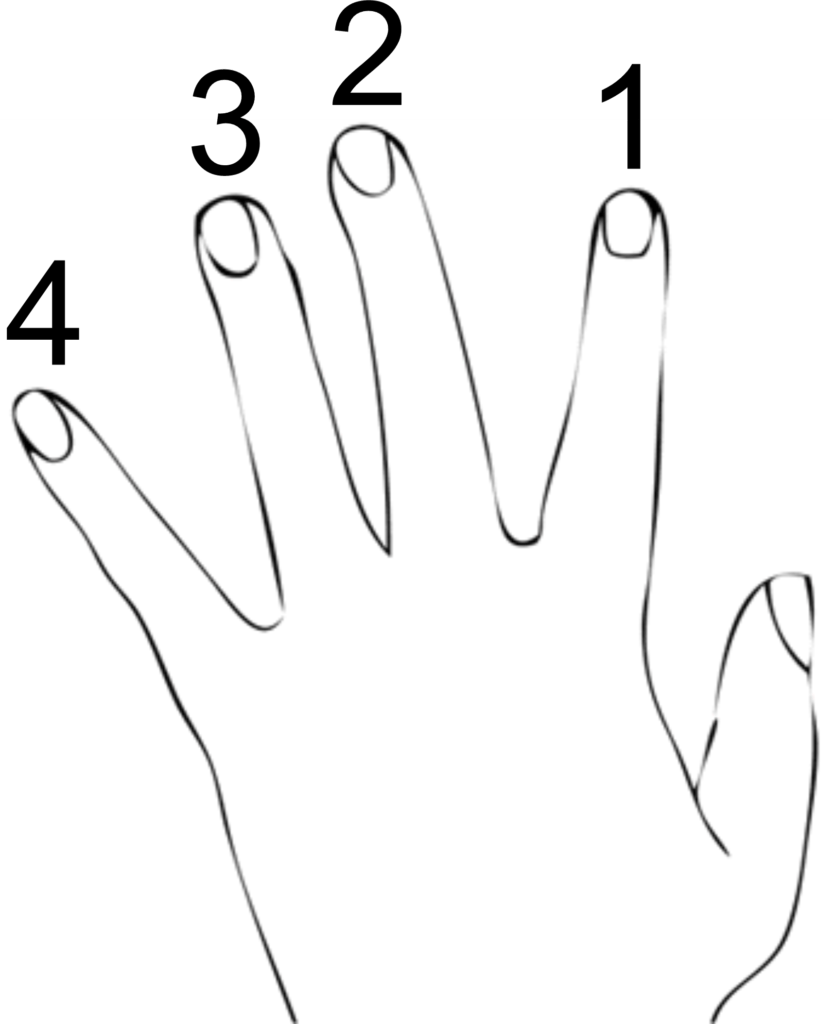
Hand Icon (churien.deviantart.com/art/hand-template-blank-272630198) by Unknown Author is licensed under CC BY (creativecommons.org/licenses/by/3.0). Modified by Geoffrey Keith.

Best Practices How to Play a Guitar A Chord - A Major Chord (213)
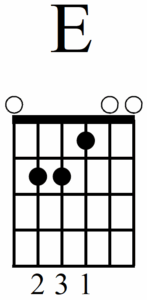
How to Play and Tune Authentic Blues Guitar Chords - E Major Chord
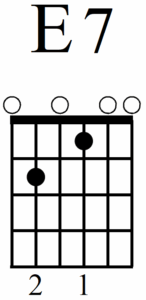
Best Practices How to Play a Guitar A Chord - E7 Chord

Guitar fingering

  • As you progress on guitar, you’ll find that there are different fingerings you can use for each chord.
  • Which fingering will be best? It depends on what key you’re in.
  • The guitar A chord is no exception.

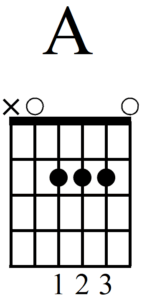
The first fingering of the guitar A chord (shown above) is often used in guitar method books

  • Advantage: It’s easier for new guitarists to manage.
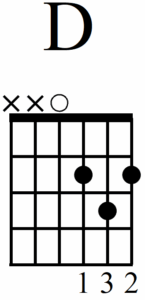
  • Disadvantage: It doesn’t use the conservation of finger motion concept. This means that it’s not very efficient when you switch between A, D, E, and E7.

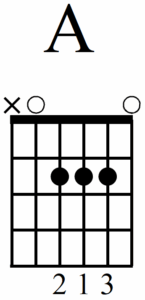
The second fingering is commonly used by experienced guitarists.

  • Advantages: This fingering uses a common finger when transitioning between A and D. Your 1 finger (see the hand icon diagram above) stays on the third string, second fret in both A and D. Also, it’s used as a guide finger when transitioning to E or E7. In other words, your 1st finger will slide down a fret when going from A to E or E7 and slide back up a fret when going back to A. (See the next section to learn a song using these chords.)
  • Disadvantage: It’s a little harder and less intuitive, making it more difficult for beginning guitarists.

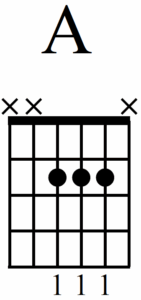
You’ll sometimes find the third fingering used in rock songs.

  • Advantage: It’s easier to play when you want to use parallel chord voicings higher on the neck. (See the next section for an example.) This voicing works because it’s related to the A barre chord with the root on the fifth string.
  • Disadvantage: It doesn’t sound as full as the open version because you’ll only strum three notes. However, if you use distortion and play with a bass guitarist, this won’t really be a big issue.

How to Play a Guitar A Chord (Best Practices): Songs

Song (click on the link for the lead sheet)

I Will Remember You

  • Key: A Major
  • A, D, E, E7
  • The chord diagrams at this link show the easier A (123) fingering.
  • If you’re new to guitar you can start with this.
  • However, you should eventually try the more efficient fingering (213) so that you can make your playing smoother and faster.

If you don’t know this song, go to YouTube and search for it. That way you can get the melody into your ear.

80s Hard Rock Riff

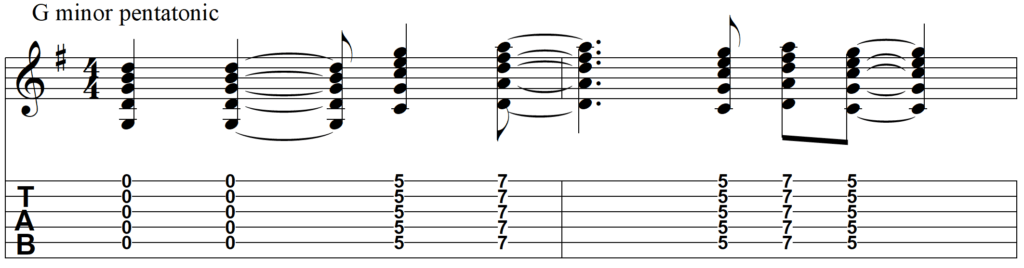
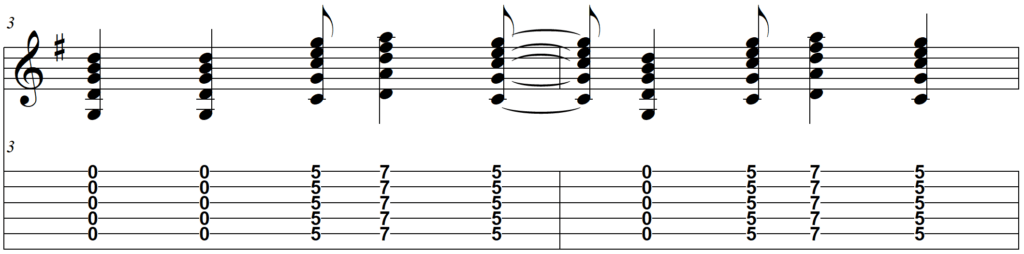
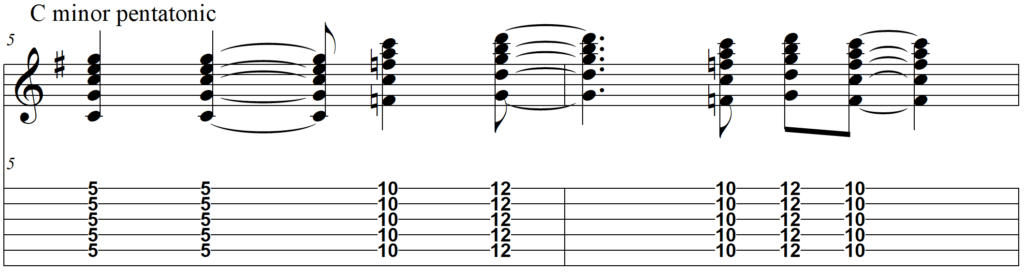
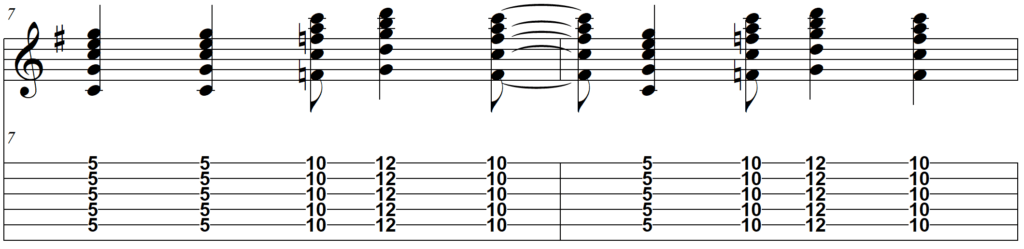
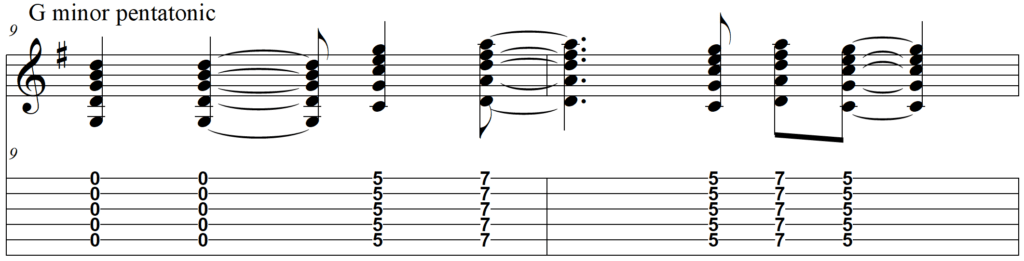
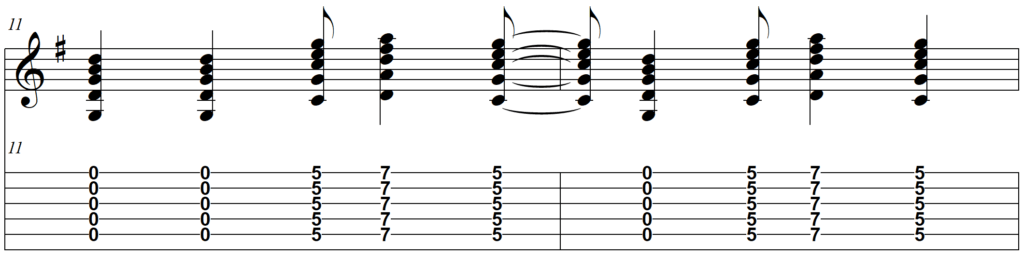
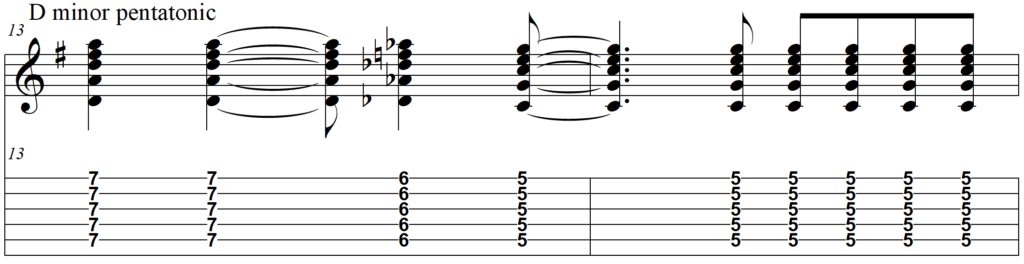
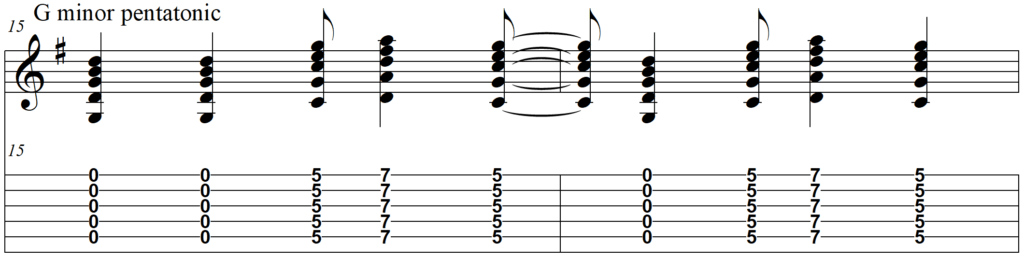
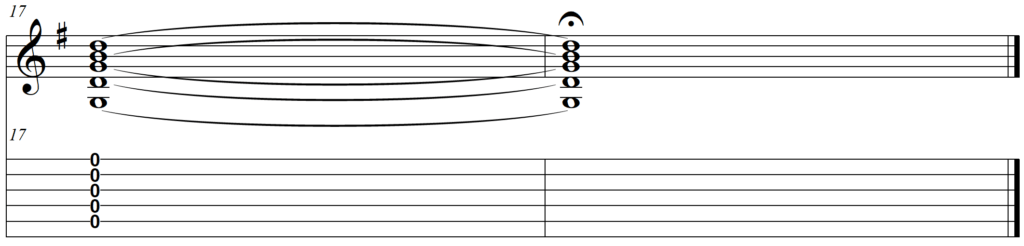
  • This is a riff that I composed for the website. It’s in open G tuning but it’ll have the same voicing as open A (minus the open strings) if you strum just the second, third, and fourth strings.
  • This will give you good practice playing with a 1 finger barre.
  • Having said that, I recorded it using both 1 and 3 finger barres (for example on frets three & five and ten & twelve), because that made it easier to perform at tempo.

For information on how to tune open G:

Mobile users: for best results reading the music, rotate your screen 90o to the right.

80s Hard Rock Riff:

Final Thoughts

Takeaway points:

  1. It’s good to learn alternate fingerings for commonly played chords because the best fingering will depend on the musical context.
  2. A has three commonly used fingerings: 123, 213, 1 (or 3).
  3. 123 is good for beginners.
  4. 213 is good for playing in the key of A.
  5. 1 (or 3) is sometimes used in a rock context.

Have fun playing!

success music studio celebrates 6 months of in-person lessons - girl with mask on

Success Music Studio Celebrates 6 Months of In-Person Lessons

Today marks 6 months since I reopened for in-person lessons. The combination of masks, air filtration, and social distancing allowed the studio to operate safely throughout the Delta and Omicron surges. We survived! As the numbers come down from the latest surge, I’m considering easing the mask policy. Having said that, students can always wear masks if they wish, and I will always wear a mask at the student’s request. Estimated reading time 4 minutes.

Read More

How to Play Your $@*% Viola in Tune

Do you need advice on how to get your viola to sound good? Traditional strings (e.g., violin, viola, etc.) have an edge on fretted strings (e.g., guitar, banjo, etc.), because they have flexible pitch and so can get their harmonies gorgeously in tune. However, this is only true if you have solid intonation skills. Click to learn how to play your viola in tune. Estimated reading time 4 minutes.

Read More
Singing Lip Vowels - Woman Singing with Band

Singing Lip Vowels

Do you have a hard time singing in key? Do you want strong vocal tone? Gaining control of your vowels will help you reach both goals. Today we'll deal with singing lip vowels, the second major vowel grouping in the vowel series. Read more to learn about singing lip vowels. Estimated reading time 3 minutes.

Read More

Singing Rhythm - Woman Singing

Singing Rhythm

Do you have a hard time singing rhythm? Would you like to be able to keep time? Music has many aspects, but none so fundamental as notes and rhythms. Without them, the music doesn’t go. However, many vocalists struggle with singing in time. In “Singing Rhythm” we’ll look at different ways to help train you to perform accurately. Estimated reading time 2 minutes.

Read More