

Success Music Studio

A How to Guide for Incredibly Cool Guitar Distortion - Effects Unit - Hot Tube Amps Versus Cool Recording Studio Modelers

A How to Guide for Incredibly Cool Guitar Distortion

Facebook
Twitter

Estimated reading time 5 minutes

Table of Contents

Introduction

Have you ever wondered how professional guitarists get their sound? Do you want a how to guide for getting hot guitar distortion? More goes into amazing distortion than just what stomp box you buy. Keep reading A How to Guide for Incredibly Cool Guitar Distortion to learn the factors that will help you get the most out of your rig.

This article uses musical terms. For definitions, see the Glossary at the end of the post.

Improvising vs Composing Music - Guitarist Improvising - How Do I Make ANY Progress and Have Fun in Music Lessons Again - Whats the Catch with G Guitar Tuning - A How to Guide for Incredibly Cool Guitar Distortion

A How to Guide for Incredibly Cool Guitar Distortion #1: Amp Overdrive vs Pedal Overdrive?

First, you’ll have to decide if you want to generate overdrive through your amp or an effects pedal.

If you decide to do it through your amp:

  • Turning the gain knob up will increase the overdrive while the volume knob keeps your amp from reaching deafening volume. (You only have one set of ears – keep the volume down or use ear protection!)
  • Then, adjust the amp’s built in EQ tone controls until they sound good. Each amp is different, but a good starting place is to have your high tone control on 5, the mid on 10, and the bass on 2 or 3.
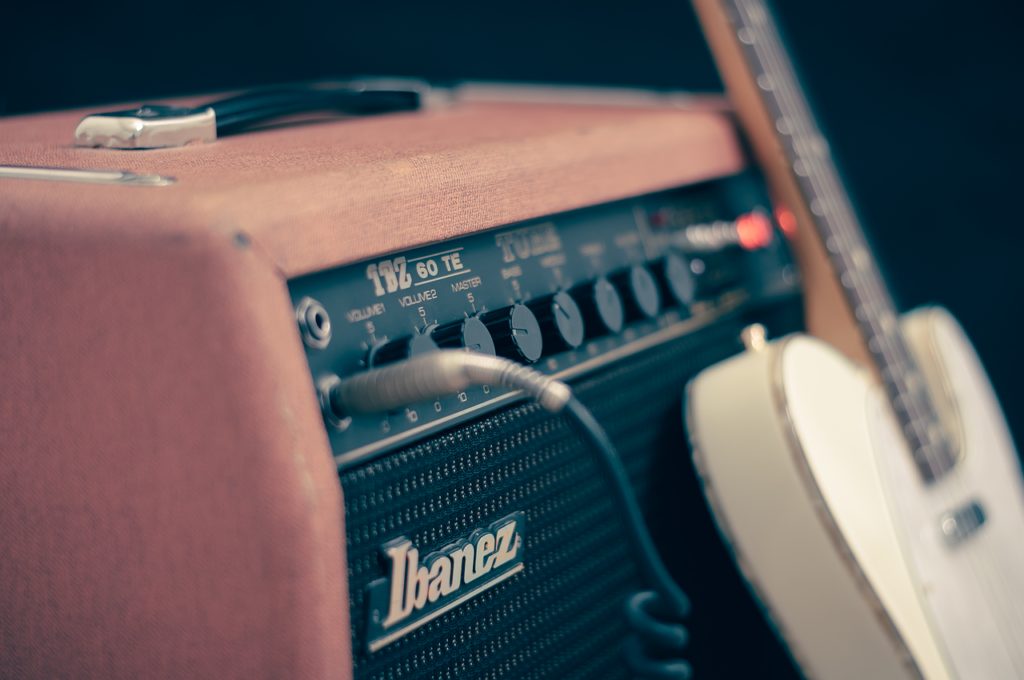
  • Tube amps are better for distortion than transistor amps, which have a harsher overdrive sound.

If you decide on an effects pedal:

  • You can go as simple as getting a basic overdrive or distortion stomp box where, once again, the gain (or sometimes distortion) knob controls the amount of overdrive. Try out different ones, because they will be optimized for various styles of music.
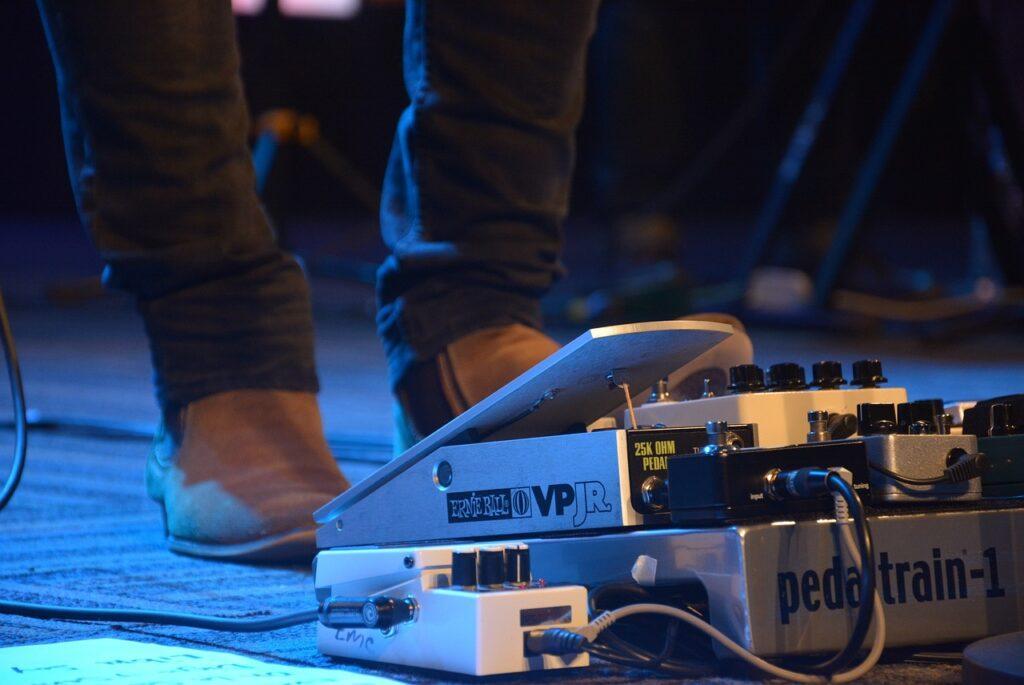
  • Or you can opt for a multi effects pedal that will have (you guessed it) multiple effects and can sometimes include amp modeling that will simulate tube amp distortion.
  • Depending on what you get for an amp, multi effects units sometimes come built in.

The amount of distortion you use will depend on the style of music you’re playing:

  • For example, blues will have very light overdrive that’ll sound like you’re pushing a clean (non-distorted) amp to the edge of distortion.
  • Conversely, metal will usually have very heavy distortion that’ll sound like every knob on the amp has been turned up to 10.
  • Most distorted rock and pop music will fall somewhere in between.

Do your homework. Visit music stores and hear what your options are before you buy.

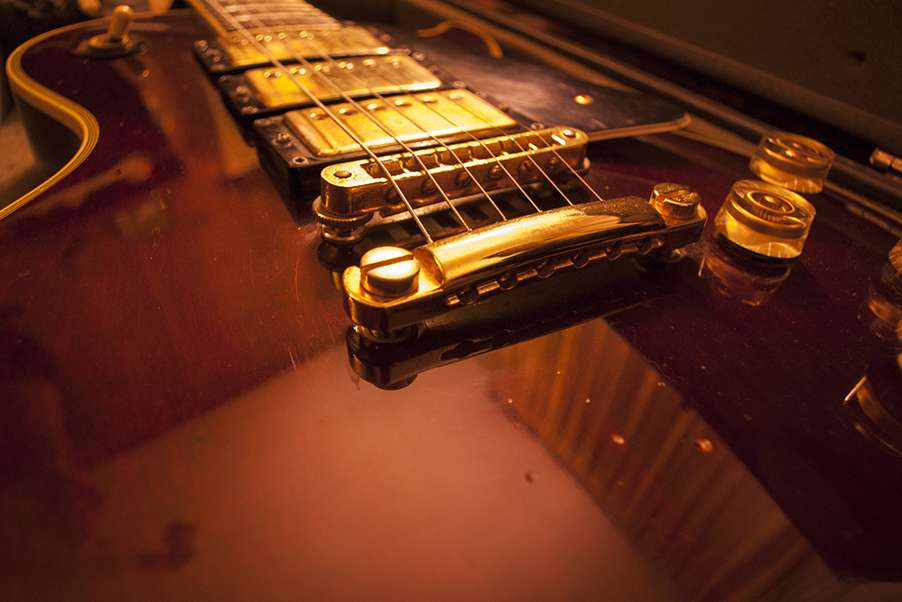
How to Tune the Blues Rock Open D Sound Using Harmonics - Picture of a Telecaster and an Ibanez Amp - A How to Guide for Incredibly Cool Guitar Distortion - Hot Tube Amps Versus Cool Recording Studio Modelers

A How to Guide for Incredibly Cool Guitar Distortion #2: How Do You Choose Your Pickups?

Also, you’ll need to think about what type of pickups you’ll have on your guitar:

  • Your basic options are single coil versus double humbucker pickups. Either pickup type can be effective when overdriven.
  • For example, Jimmy Page primarily used a 1959 Fender Telecaster with single coil pickups when he recorded Led Zeppelin I.
  • On the other hand, Van Halen created his iconic “brown sound” by slapping a double humbucker pickup on a Strat style body, which basically defined ‘80s rock guitar.

Some pickups will distort easily, and others won’t. Once again, you’ll need to try out different guitars to help you find your sound.

How Common are Mistakes While Practicing and Playing Guitar: Smokey Guitar - 10 Amazing Elite Virtuoso Guitarists

A How to Guide for Incredibly Cool Guitar Distortion #3: How to Choose Your Strings?

Not many people think about how their strings affect their amp distortion:

  • Back in the 1950s, rock n’ roll guitarists used pure nickel strings for a warm, mellow sound.
  • Conversely, many heavy metal guitarists use pure steel strings for their super bright sound.
  • Many rock styles use nickel coated steel strings for a bright but balanced sound.

Every time you change your strings, try out a new set with a different gauge and alloy balance:

  • Keep a string journal so you can track how this affects your sound.
  • You may not know what you’re looking for, but you’ll know it when you hear it.
  • In addition, the gauge can be important for not only the sound, but also for the playing feel and guitar intonation.

Be sure to change your strings regularly, because fresh strings will always sound better.

Tune Like a Rock Star - Les Paul Guitar - A How to Guide for Incredibly Cool Guitar Distortion

A How to Guide for Incredibly Cool Guitar Distortion #4: EQ, Compression, and Delay-Based Effects Pedals

Mobile users: for best results viewing the video, rotate your screen 90o to the right.

Video: Parametric vs Graphic EQ

We’ve already talked about how to set the EQ tone controls on your amp. However, applying just a little bit more EQ can really help you achieve cool distortion:

  • Giving your signal a 3 dB (decibel) boost in the 1 to 3 kHz (kilohertz) range can add presence and power to your distortion.
  • You can do this with a parametric EQ or a graphic EQ.
  • However, a parametric EQ is better because it’ll give you precise control of the center frequency and bandwidth (called the Q control), allowing you to dial into the specific frequency you want.

The above video will go into more detail about the differences between parametric and graphic EQs.

Video: How Compression Works

If you want to sound like a pro, you must compress your guitar signal:

  • Compression will even out the louds and softs in your playing, making your guitar sound more present in the mix. Also, compression will stabilize the sound, making it easier to listen to.
  • Compression is the effect most closely associated with a professional sound. However, you don’t want to overdo it, or you’ll squash the distortion, making it sound overproduced.
  • A 4:1 compression ratio is a good place to start.

The video above will explain what compression is and how it works.

Video: Flanger on Barracuda

Adding delay-based effects can be a nice complement to distortion:

  • Besides outright digital delays, you also have flangers, phasers, and chorus effects pedals.
  • The difference between them depends on the delay time, with flanger being the shortest delay and chorus being the longest.
  • Also, the amount of modulation you apply using the speed and width knobs will affect how subtle or in your face each type of effect will be.

The video above plays the song “Barracuda”, which uses both flanger and overdrive.

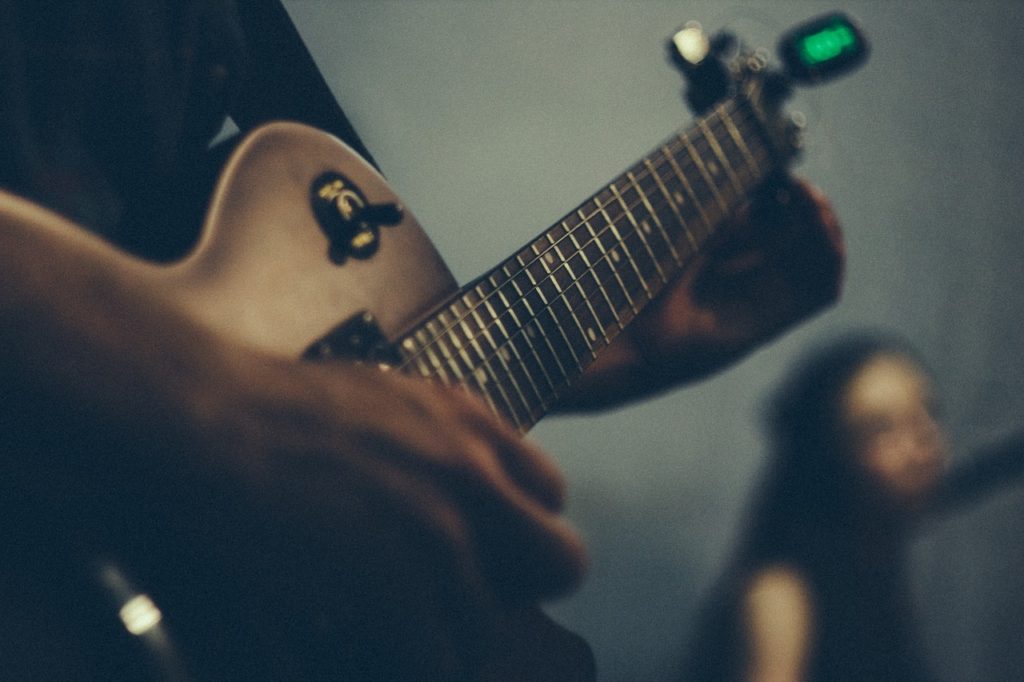
How to Use an Extremely Accurate Guitar Strobe Tuner to Make Your Guitar Sound Awesome - Guitarist Using a Tuner - What Common Mistakes Do People Make When Tuning Their Guitars - What’s the Difference Between Just Intonation and Equal Temperament - Why Does My Guitar Sound Off Tune

A How to Guide for Incredibly Cool Guitar Distortion #5: Tuning Up and Tuning Down

One cool trick is to simply tune all the strings down by a half or a whole step:

  • Van Halen would tune down a quarter step. He originally tried tuning down by a half step, but that created problems for Michael Anthony’s bass sound, so they compromised.
  • Motley Crue often tuned down a whole step to DGCFAD. DGCFAD creates a deeper, richer sound.
  • The following video shows several riffs in DGCFAD tuning.

Video: Guitar Tuned Down a Step

You can go a step further with this and use harmonics to adjust the open strings to a perfectly tuned chord:

  • This first track shows you a riff in perfectly tuned open G tuning. It takes a moment for the track to start, so please be patient. (Click here to learn the riff.)
  • The second track shows a sustained open chord that has been perfectly tuned. Notice that it has a strong, focused sound.
  • The third track has the same chord tuned using a standard electronic tuner. Can you hear that it sounds like curdled milk with a lot of beating between the chord tones.

Hard rock distorted guitar:

Chord tuned with harmonics:

Equal tempered chord:

Final Thoughts

The how to guide takeaway points:

  1. You’ll have to decide if you want to generate overdrive through your amp or a multi effects pedal.
  2. Also, you’ll need to think about what type of pickups you want on your guitar.
  3. Keep a “string journal” so you can track how your strings affect your sound.
  4. If you want to sound like a pro, you’ll need to add compression to your guitar signal while EQ and delay-based effects can add the final touches.
  5. How you tune is also a critical component to your sound.

Have fun playing!

Related Posts

Glossary

What Purpose Do Accidentals Serve in Reading Sheet Music - Key Signature with 6 Sharps - Improvising vs Composing Music - How Do I Find the Key of a Song with Accidentals - BPM (Using the Metronome to Get the Music Beat) - What Is the Basic Idea of Tempo in Music?

What Purpose Do Accidentals Serve in Reading Sheet Music?

“What purpose do accidentals serve in reading sheet music?” Sharps, flats, and naturals (collectively called accidentals) grew out of a problem that needed to be fixed in the mediaeval music notation. The music theorists of the time slapped their fix onto the preexisting notation system, and that fix is still with us to this day. However, having confused generations of budding musicians, the results of the fix leave a lot to be desired. Click to answer the question, “What purpose do accidentals serve in reading sheet music?” Estimated reading time 3 minutes.

Read More
How Can I Write a Song Without an Instrument - Music Laptop - The 5 Best Free Music Notation Apps

How Can I Write a Song Without an Instrument?

“Can I write a song if I don’t play an instrument? If I have a melody and lyrics in my head, how can I create backing tracks for my song?” Good news! You too can write songs, even if you can’t play an instrument. Click to read, “How can I write a song without an instrument?” Estimated reading time 2 minutes.

Read More
singing dotted eighth note rhythm - sheet music pattern - Singing Shape Notes Solfege Ionian Melodies - I’m Confused About What Precisely D.S. al Coda Means

Singing Dotted Eighth Note Rhythm

Have you mastered reading basic sixteenth notes rhythmic syllables and want to be able to perform dotted eight note/sixteenth note pairs? The more complex the rhythm becomes, the more fun you’ll have with the melodies. Read more to learn about singing dotted eighth note rhythm. Estimated reading time 3 minutes.

Read More
Singing 7th Chords in Tune - Singer with Piano - prosody in your songwriting

Singing 7th Chords in Tune

Do you have a hard time singing 7th chords in tune? Most vocalists do. Don’t worry, the sing-along song tracks can help! Read more to learn how. Estimated reading time 3 minutes.

Read More