


Estimated reading time 2 minutes
Table of Contents
Advice on Teaching a Music Student with ADHD #1: Not a Deficit of Attention
Do you teach music lessons? Do you want advice on teaching a music student with ADHD? Teaching music students with ADHD (attention deficit hyperactivity disorder) can be challenging. However, some basic information will make it much easier. Keep reading to get the teaching tips.
First, people with ADHD don’t have a deficit of attention. Ronald Davis states:
The child is more environmentally aware and more curious than other people. A child who is often bored may be easily distracted. But even when he isn’t bored, something new entering the environment will immediately draw his attention. (The Gift of Learning 45 – 46)
In other words, ADHD students have too much attention, not too little. This insatiable curiosity leads to the tendency to be distractible.
This article uses technical terms. For definitions, see the Glossary at the end of the post.
Advice on Teaching a Music Student with ADHD #2: The Big Trick…
Do you want advice on teaching a music student with ADHD? This tip also comes from Ronald Davis.
Because ADHD kids have an insatiable curiosity, the big trick is to be the most interesting thing in the room. How do you do this?
- Don’t be boring when you teach. Try to make the lessons fun and entertaining.
- Don’t lecture. Tell illustrative stories that provide context for the information you want to teach.
- Demonstrate your teaching points by playing musical examples. Also, use manipulatives and visual aids.
Divide up the lesson with micro-breaks.
- Otherwise, you’ll likely lose your student.
- The micro-breaks should be around 2 to 3 minutes long.
- With some of the micro-break activities below, the students can do them on their own as you work on adapting the score.
Micro-break activities:
- Play musical games.
- Sing fun songs using hand motions.
- Play with Boomwhackers.
- Explore different instruments (especially percussion).
- Take a YouTube “Field Trip” to listen to different types of music.
- Do fun theory book pages (the pages should be brightly colored and engaging).
- Ask students if they did anything fun during the week.
In addition, ADHD students have a visual and concrete learning style and will learn from personal experience.
- This means that multisensory strategies can be very helpful, not only for getting the students to learn, but also for keeping them engaged.
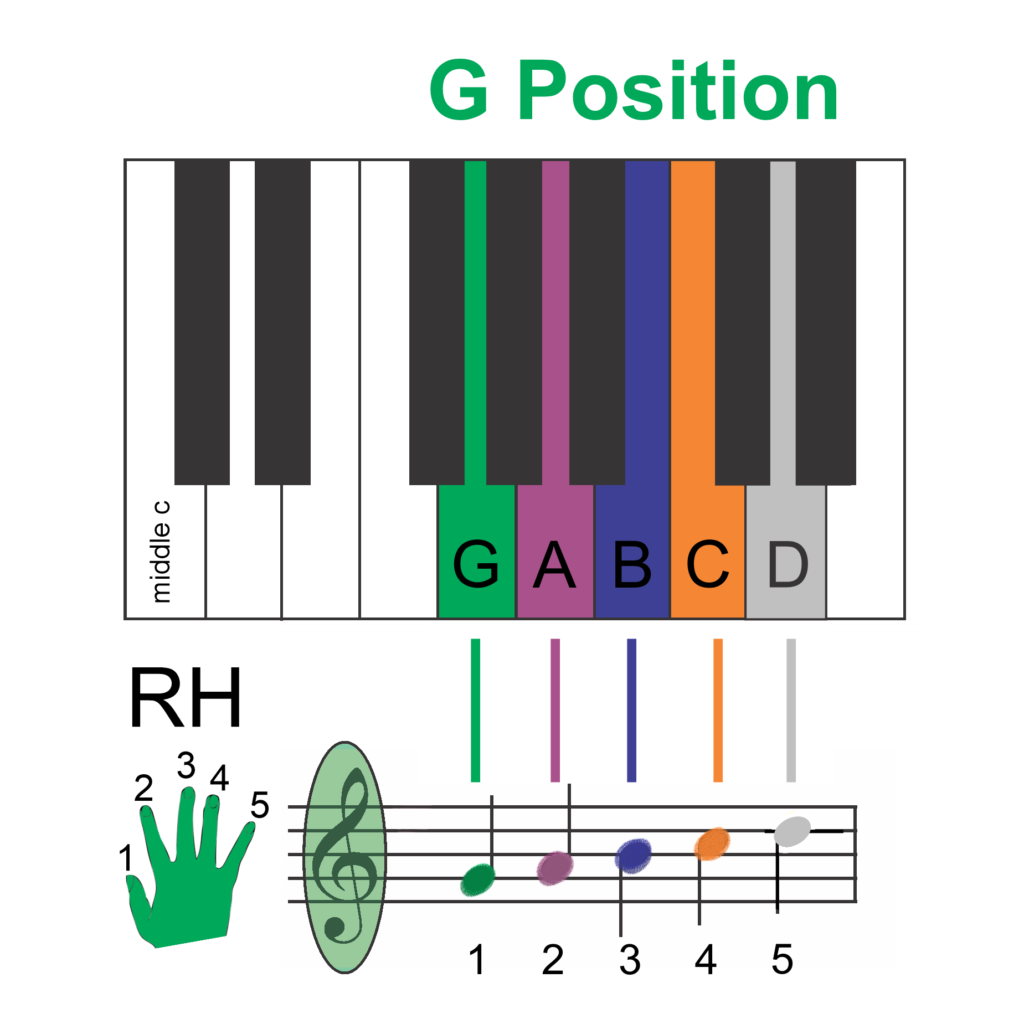
- I suggest you try color coding the sheet music. This usually makes a vast difference in the learning pace.
- However, it’s not just color coding the notes, but also the rhythm, fingering, hand positions, the instrument, and a whole lot more.
Color coding music:
Advice on Teaching a Music Student with ADHD #3: Summary
Here’s some final thoughts on Do You Want Advice on Teaching a Music Student with ADHD?
- Be the most interesting thing in the room.
- You do this by being fun and entertaining.
- Give periodic microbreaks.
- During the micro-breaks, do activities that will give the students’ attention a breather.
- You do this so the students will be ready to pay attention when you need them to.
- Also, this will keep the students interested and engaged in the lessons.
- Be sure to use a 4 to 1 praise to criticism ratio, because usually ADHD kids don’t get enough praise. For more information, click here.
Related Posts:
- Color Coding Music for Success
- Do People with ADHD Have Difficulty Playing from Sheet Music?
- The ADD Archive
© 2023 Geoffrey Keith
Join me for in-person or online lessons today!
Glossary
Choosing The Right Sound To Play With Just Intonation
Have you ever tuned your synth to just intonation (JI), then selected a piano sound, and thought it sounded odd as you played scales? The reason many people think JI sounds strange with a piano patch is tied to how people hear melody. Read more to learn about choosing the right sound to play with just intonation. Estimated reading time 2 minutes.
Read MoreHow Chords in Supplemented Equal Temperament Work

Are you frustrated that your synth chords sound out of tune? Supplemented Equal Temperament is designed to play chords that sound more in tune than the regular piano tuning: equal temperament. Learn how to better tune your chords in Supplemented Equal Temperament tuning. Estimated reading time 3 minutes.
Read MoreAlliteration Meaning: Examples of Alliteration in Poetry and Songs
Do you want to know the meaning of the word alliteration? In this post, we’ll discuss how it works, including examples of alliteration in poetry and songs. Keep reading “Alliteration Meaning: Examples of Alliteration in Poetry and Songs” to learn more. Estimated reading time 2 minutes.
Read MoreWhat’s the Key Difference Between Countertenor, Baritone, etc?
Do you want to know what voice type you are? All the voice types discussed in this post are from the pool of male singers used in chorus, opera, musical theatre, and pop music. Some of these male vocalists can sing very high, while others can sing very low. However, it’s the quality of his voice that makes a male singer one voice type versus another. Keep reading “What’s the Key Difference Between Countertenor, Baritone, etc?” to learn what makes a singer a countertenor, tenor, baritone, or bass and how to tell them apart. Estimated reading time 2 minutes.
Read More