
Success Music Studio

How Easy Is it to Teach a Down Syndrome Child an Instrument - Man

How Easy Is it to Teach a Down Syndrome Child an Instrument?

Facebook
Pinterest
LinkedIn

Estimated reading time 4 minutes

Table of Contents

Introduction

Do you need advice on how to teach a music student with Down syndrome? Teaching a Down syndrome (DS) kid an instrument can be a special, heartwarming experience. However, to be truly effective, you need to have effective teaching methods. Keep reading How Easy Is it to Teach a Down Syndrome Child an Instrument? to learn how to be effective.

This post uses musical terms. For definitions, see the Glossary at the end of the article.

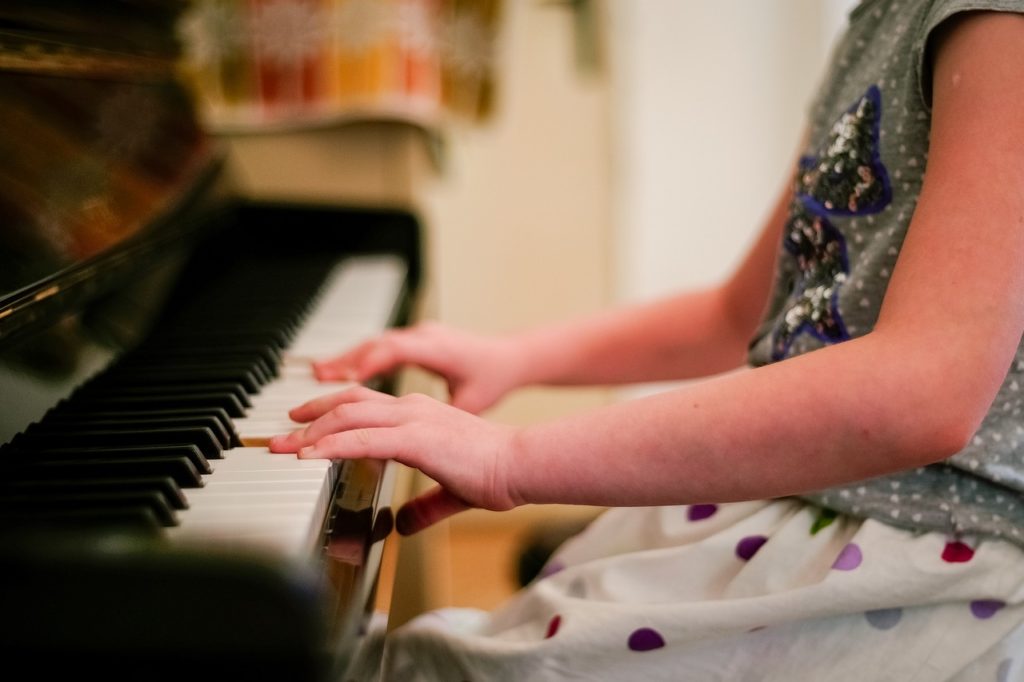
Success Music Studio - Girl Playing Piano - What Is a Good Instrument for a Dyslexic Child to Learn - How Easy Is it to Teach a Down Syndrome Child an Instrument?

This post contains affiliate links, which means I may receive a small commission from purchases made through the links. I’ll only recommend products I use, use in lessons, or ones my students or colleagues have recommended.

Teaching a Down Syndrome Child an Instrument: How Easy Is It?

“How easy is it to teach a Down syndrome child an instrument?” It can be challenging, but with the right teaching strategies it’s definitely doable.

Things to keep in mind:

  1. The best instruments for kids with Down syndrome will be either piano or percussion.
  2. DS kids can learn anything a typical learner can, it just takes more time.
  3. With many DS kids you’ll get about 20 minutes of focused time, so the remaining 10 minutes in the lesson should be spent on fun activities.
  4. Be flexible in how you structure the lessons.
  5. Particularly with younger DS students, you’ll need to teach in blocks by giving them options for the next activity from a list limited to two or three options.

Work with your student’s strengths:

  • Kids with Down syndrome often have good recall for sound and do well at echoing back what you’ve played.
  • You can use these abilities to teach your students by rote.
  • In other words, your students can work on rote learning before or concurrent with working on score reading skills.

Be patient and encouraging:

  • Being patient and encouraging are the most important attributes of a special needs music teacher.
  • Give high-fives when students complete a task.
  • When it’s age appropriate, give the student a sticker at the end of the lesson.

Video: How Effective is Color Coding in Music Lessons?

Teaching a Down Syndrome Child an Instrument: Musical Activities and Adapted Scores

“How easy is it to teach a Down syndrome child an instrument?” Musical activities and color coding the score will make your job much easier.

Musical Activities

Most graded music lesson books will move too fast for young DS students, at least at first:

  • Try beginning with basic tasks, such as activities that help the student to learn how to follow directions.
  • For instance, you can have your student play a drum.
  • Have them play when you say “play” and stop when you say “stop.”
  • Likewise, you can work on loud/soft dynamics in a similar fashion.
  • Musical activities for preschoolers work really well for young students with Down syndrome. Google “preschool music activities” for more ideas.

Collect a box of indefinite pitch percussion instruments, such as:

  • Bells
  • Boomwhackers
  • Castanets
  • Claves
  • Drums
  • Egg shaker
  • Finger cymbals
  • Guiro
  • Jingles
  • Tambourine
  • Triangle

Introduce the instruments to the student:

  • Your student can explore the instruments, which encourages creativity.
  • Plus, you can have fun playing together and echoing each other’s rhythms.
  • In the same way, your student can explore the sounds on an electronic keyboard.
Video: Musical Activities for Special Needs Kids

Color Coding Notes and Fingers

When your student is ready for it, you can create a color coded score with enlarged quarter notes:

  • When first beginning, stick with just quarter notes so you can focus on the note labeling without having to deal with rhythm.
  • Also, you can color code your students’ fingers to help them play with accurate fingering.
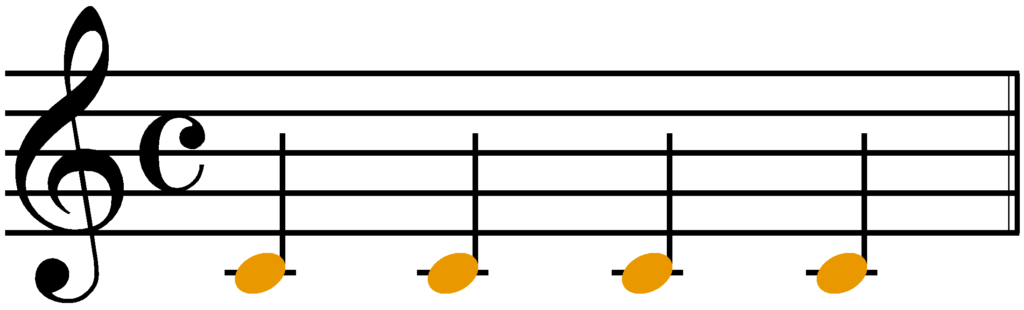
  • Start by color coding a single note and having the student play it four times: e.g., 4 Cs (orange), then 4 Ds (gray), then 4 Es (red), etc. (See the example below.)
  • Gradually progress to the point where your student can play melodies that contain multiple notes.
  • Make sure the melodies are short and avoid skips.
  • Use a pointer to help the student keep the steady beat. Keep the tempo moderate to slow.
  • Have your student learn the notes on the right hand first, and then progress to learning the left hand notes.

Once your student has mastered these exercises, you can transition into a traditional method book:

  • Be sure to pick material that is well paced for your student.
  • In addition, you can adjust the pace of the student’s progress through the lesson books by assigning fun song graded to work with the method book.
  • You can also adjust the pace by supplementing with fun activities.

These links show you different ways you can color code the score:

This link talks about the science behind color coded music:

How Easy Is it to Teach a Down Syndrome Child an Instrument - Enlarged, Color Coded Cs

Music Lesson Resources

Musical Activities for Rhythm

For rhythm, start with scarf dancing and songs with hand motions, such as:

  • Itsy Bitsy Spider
  • Hokey Pokey
  • The Grand Old Duke of York

These work on gross motor skills, following directions, and the steady beat.

Once the student is comfortable with these activities, you can try transitioning to color coded rhythm. These links show you how to work on the steady beat and color code the rhythm:

Video: Scarf Dancing

Final Thoughts on “How Easy Is it to Teach a Down Syndrome Child an Instrument?”

Takeaway points:

  • The best instruments for kids with Down syndrome will be either piano or percussion.
  • With many DS kids you’ll get about 20 minutes of focused time, so the remaining 10 minutes in the lesson should be spent on fun activities.
  • Musical activities and coloring the score makes your job much easier.

Glossary

What Does Decibel Mean (In Less than 3 Minutes) - Audio Meter

What Does Decibel Mean? (In Less than 3 Minutes)

Do you need to know what the word decibel (dB) means? Do you want a decibel chart so that you can know what noise levels are safe? Decibels are used in sound recording, radio, and live concert reinforcement. Keep reading “What Does Decibel Mean? (In Less than 3 Minutes)” to learn what it is and how it works. Estimated reading time 2 minutes.

Read More

What Exactly Does Onomatopoeia Mean in Writing

Do you want to know what in the world the odd sounding word onomatopoeia means? Do you need help learning how to write them? We’ll define the word and have examples from writing, songwriting, and poetry. Keep reading “What Exactly Does Onomatopoeia Mean in Writing” to learn what it is and how it’s used. Estimated reading time 2 minutes.

Read More
singing shape note harmonic minor melodies - singer

Singing Shape Note Harmonic Minor Melodies

Have you learned how to sight sing natural minor melodies, but want to be able to sing harmonic minor too? I can help. Read more to learn about singing shape note harmonic minor melodies. Estimated reading time 5 minutes.

Read More
How to Play Wheels on the Bus Easy Piano - School Bus

How to Play Wheels on the Bus – Easy Piano

Are you new to playing piano? Do you want (or do you want your child) to learn an easy version of the song? Written in 1939, "The Wheels on the Bus" is a beloved children’s standard that’s had popular staying power. Click to learn how to play "The Wheels on the Bus" - easy piano version. Estimated reading time 3 minutes.

Read More