
Success Music Studio

Basic Music Notation Explained in Less Than 4 Minutes

Facebook
Twitter

Estimated reading time 3 minutes

Table of Contents

Introduction

Does music notation seem to be one big mystery? Do you want to be able to read music? Music notation can sometimes seem counterintuitive. However, you too can learn to read music. This post will help give you a quick overview of how music notation works. Keep reading Basic Music Notation Explained in Less Than 4 Minutes to learn what it is and how it works.

This article uses musical terms. For definitions, see the Glossary at the end of the post.

How to Graduate from the Color Coded Sheet Music - Part II - Girl Playing Flute - after they can sight-read what’s left for musicians to learn - What Does it Mean for Me to Interpret a Piece of Music - Music Therapy vs Music Lessons - BPM (Using the Metronome to Get the Music Beat) - What Does Intonation Mean and Why Is It Essential in Music

Basic Music Notation Explained #1: How Do Notes Work?

Mobile users: for best results reading the music, rotate your screen 90o to the right.

Reading Music (A Quick Guide to How to Read Music) - Grand Staff - Making Sense of Why Treble and Bass Clef Are So Different - How to Color Code the Elusive Alto Clef - 50 Essential Music Symbols Explained in Less Than 5 Minutes - Basic Music Notation Explained in Less Than 4 Minutes

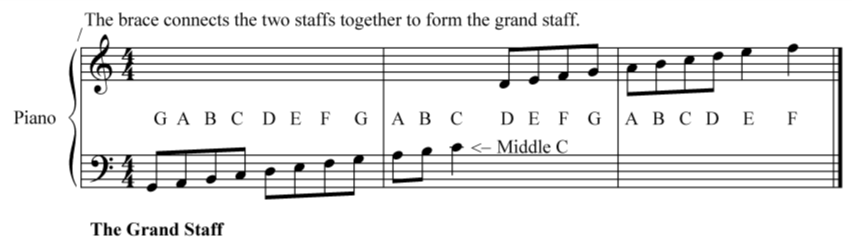
Musical notes are labeled using the first seven letters of the alphabet:

  • A note tells you which pitch to play on your instrument. They are written consecutively going up a staff of five lines and four spaces: A B C D E F G.
  • The grand staff (used by keyboard instruments) puts two staves together.
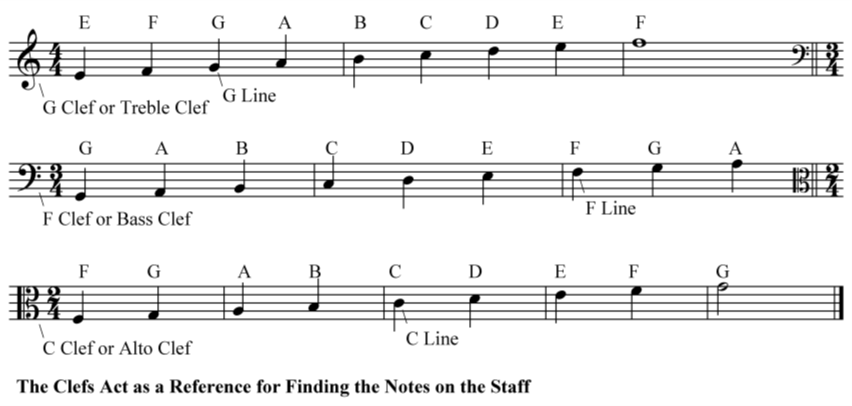
  • The clef on the left side of the staff gives you a reference so that you can know where the notes go on the staff.
Reading Music (A Quick Guide to How to Read Music) - Clefs - Making Sense of Why Treble and Bass Clef Are So Different - How to Color Code the Elusive Alto Clef - 50 Essential Music Symbols Explained in Less Than 5 Minutes - Basic Music Notation Explained in Less Than 4 Minutes

Basic Music Notation Explained #2: How Does Rhythm Work?

So, how do you know how long to hold your note?

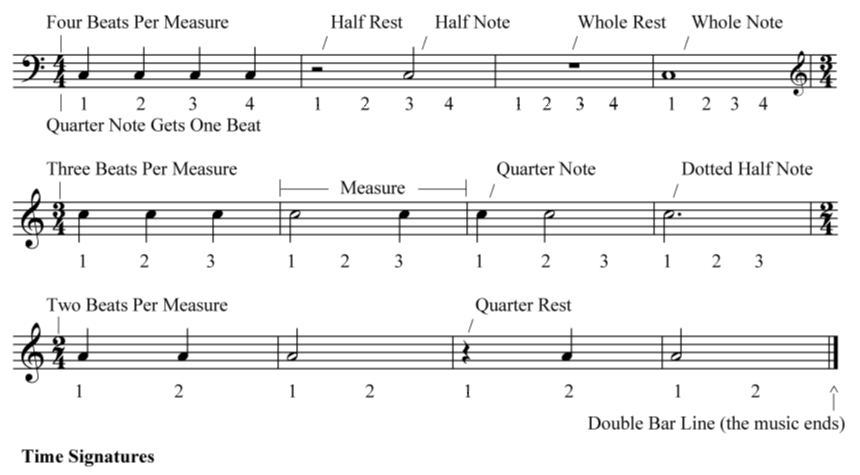
  • You’d need rhythmic symbols such as whole, half, and quarter notes for this.
  • If you want to insert a silence into your music, you’d need to use whole, half, and quarter rest symbols.
  • Each rhythmic symbol gets a specific number of beats.
Reading Music (A Quick Guide to How to Read Music) - Time Signatures - 50 Essential Music Symbols Explained in Less Than 5 Minutes - Basic Music Notation Explained in Less Than 4 Minutes - A How to Guide to Learning Conducting with Musicality

Bar lines help organize the rhythm into measures:

  • A measure is the distance between the bar lines.
  • Also, the time signature tells you how many beats there are in each measure.
  • For instance, the 3/4 time signature tells you that you have three beats in a measure and a quarter note gets the beat.

Basic Music Notation Explained #3: What’s a Key Signature?

Do I Really Have to Learn Music Theory to Learn How to Play Piano - Why Do Minor Keys Sound Sad to Me - Color Code Key Signatures - Keyboard Accidentals - What is a Parallel Mode and How Does it Work - What Purpose Do Accidentals Serve in Reading Sheet Music - Reading Music (A Quick Guide to How to Read Music) - How Can I Learn the Basics of Music Theory - What Exactly Do I Do with the Circle of Fifths - An Easy How to Guide to Understanding Triads - 50 Essential Music Symbols Explained in Less Than 5 Minutes - What Exactly Do I Do with The Circle of Fifths - Circle of Fifths - How to Learn Music Theory with a Learning Disability - How to Effectively Use Music Theory to Transpose Music

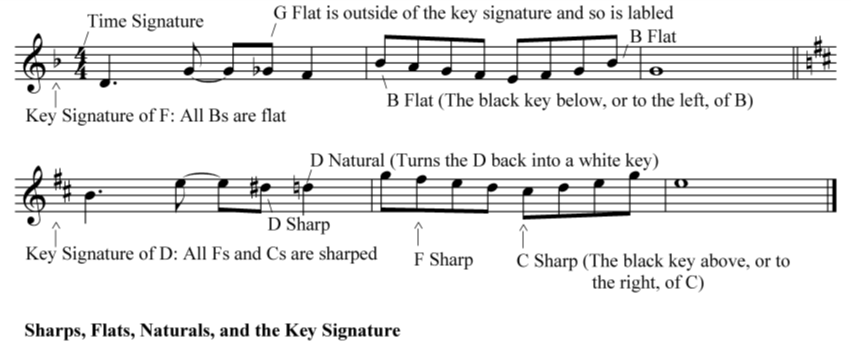
The key signature is located between the clef and the time signature:

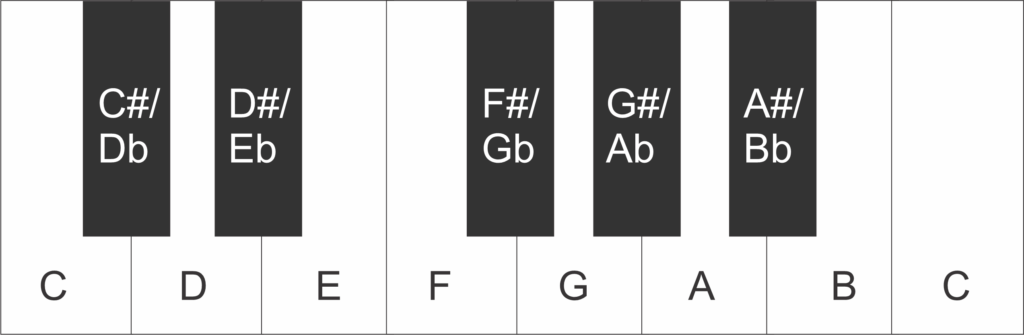
  • First, sharp and flat signs modify the line and space notes so that you can play notes on your instrument that are the same as the piano black keys. A natural sign cancels out a sharp or flat, giving you the equivalent of the piano white keys.
  • When a sharp is placed in the key signature, it tells you that that note is sharp for the whole song or until you see a new key signature.
  • Likewise, when a flat is placed in the key signature, it tells you that that note is flat for the whole piece or until you see a new key signature.
Reading Music (A Quick Guide to How to Read Music) - Sharps, Flats, Naturals, and Key Signatures - 50 Essential Music Symbols Explained in Less Than 5 Minutes

For more info on sharps and flats:

If you have a hard time reading music notation, you can try color coding the sheet music:

Basic Music Notation Explained #4: What’s Left?

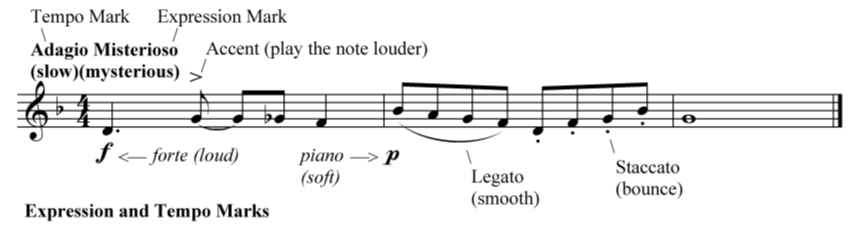
Mostly, music notation so far has dealt with rhythm or notes. However, articulations, expression marks, and tempo marks give you additional information to help you perform your music:

  • Articulations (e.g., staccato, legato, and tenuto) tell you how you should attack the note.
  • Expression marks (e.g., misterioso, risoluto, and espressivo) tell you the type of feel you should bring to your playing.
  • Tempo marks (e.g., allegro, andante, and adagio) tell you how fast to play while dynamic signs (e.g., forte, mezzo forte, and piano) tell you how loud or soft to play.

Many of these music terms are Italian words, because the Italians were very influential during the time when the sheet music was developing.

Reading Music (A Quick Guide to How to Read Music) - Expression and Tempo Marks - 50 Essential Music Symbols Explained in Less Than 5 Minutes

Final Thoughts

Takeaway points:

  1. These basics give you the big picture of how music notation works, but there are many more instrument specific notations to learn.
  2. Nevertheless, to really understand how music notation works, you need to learn how to read it on an instrument.
  3. For that there is no substitute for a good music teacher.

Related Posts:

© 2025 Geoffrey Keith

Glossary

Why it's so hard for someone with a good ear to learn sheet music - music stand - How to Graduate from the Color Coded Music Notation - How Do Musicians Find Enough Time to Practice Their Instruments

Why It’s So Hard for Someone with a Good Ear to Learn Sheet Music

Do you want to learn how to read music, but just can’t? Are you a teacher that has students with good ears who struggle with reading? Having a good ear can be a two-edged sword. The student can pick up music quickly by ear. However, the same strength can create challenges for score reading. Read more to learn why it’s so hard for someone with a good ear to learn to read sheet music. Estimated reading time 3 minutes.

Read More
How to Record Vocals for a Professional Sound - Condenser Mic with Pop Screen - How to Figure Out Your Voice Type - How to Record a Professional Quality Podcast

How to Record Vocals for a Professional Sound

Do you need to be able to record your vocals? Do you want to have them sound professional? Good recording skills are an essential part of creating a high-quality sound. Moreover, it’s basically the same process for recording your voice for speech or for singing. Keep reading “How to Record Vocals for a Professional Sound” to learn how to get the best sound possible. Estimated reading time 5 minutes.

Read More
Singing Shape Notes Solfege Lydian Melodies - Woman Singer

Singing Shape Notes Solfege Lydian Melodies

Do you want to be able to sing advanced modes? Are you confused about how the Lydian mode works? Modes are a feature of folk music around the world but are also both in jazz and 20th/21st century classical. Singing Shape Notes Solfege Lydian Melodies will help you master advanced modes. Keep reading to learn more. Estimated reading time 2 minutes.

Read More

Help Me! How Do I Improve My Touch on Piano?

Help Me! How Do I Improve My Touch on Piano? Part 4

Do you want to be better at piano touch? Do you need help learning how to interpret a piece of music? The term piano touch covers the different ways you strike the key to get certain effects. Carl Seashore, in Piano Touch, states, “The pianist has at his direct control only two of four factors in music: namely intensity and time” (360). Read more to answer the question, “How do I improve my touch on piano?” Estimated reading time 2 minutes.

Read More