


Success Music Studio

How to Play and Tune Authentic Blues Guitar Chords - Red ES 335

How to Play and Tune Authentic Blues Guitar Chords

Facebook
Pinterest
LinkedIn

Estimated reading time 3 minutes

Table of Contents

Introduction

Do you want to know how to play and tune authentic blues guitar chords? If you want an authentic rhythm and blues guitar sound, you’ll need the authentic tuning to enhance the chords you play. Keep reading How to Play and Tune Authentic Blues Guitar Chords to learn more.

How to Tune Country Blues Guitar - Blues Performance - What Is Your Definition of a Good Musician - Discover Which Notes Are Authentic Blue Notes

This post contains affiliate links, which means I may receive a small commission from purchases made through the links. I’ll only recommend products I use, use in lessons, or ones my students or colleagues have recommended.

How to Play and Tune Authentic Blues Guitar Chords: Electric Blues Guitar Chords

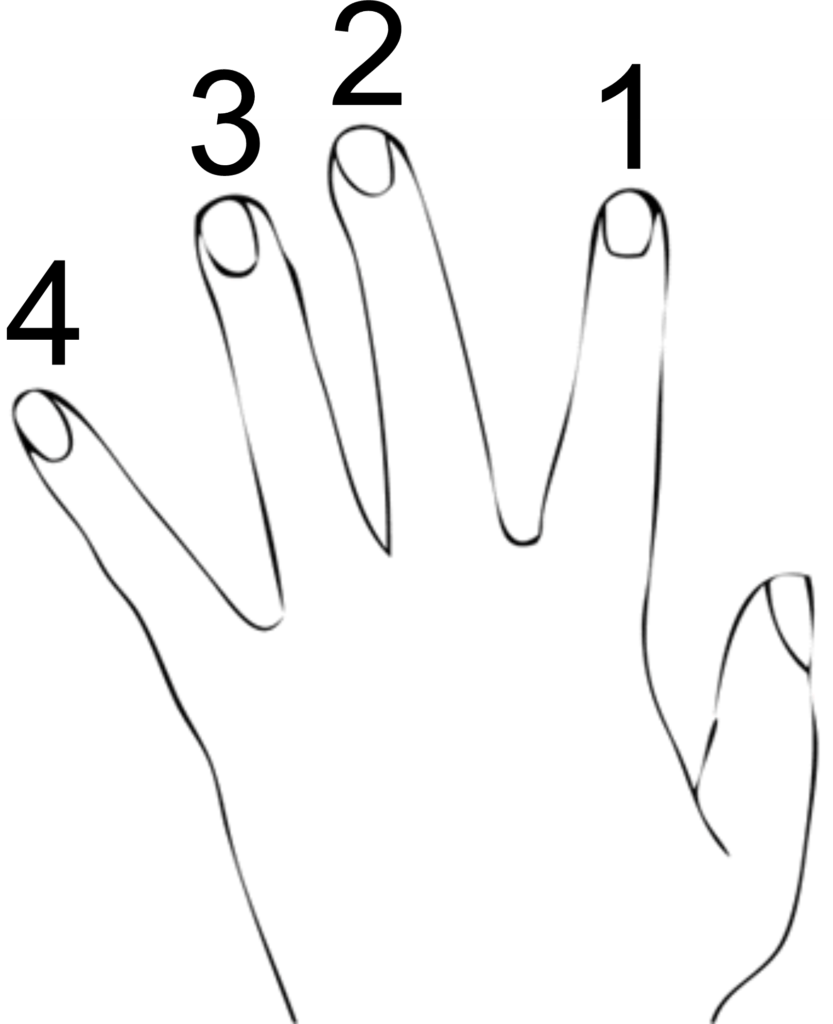
How to Play the Easy Beginner Guitar F Chord Without a Barre - Easy G Chord - Hand Icon LH (guitar) - What Are the Best Easy Guitar Chords for Beginners to Learn?

Hand Icon (churien.deviantart.com/art/hand-template-blank-272630198) by Unknown Author is licensed under CC BY (creativecommons.org/licenses/by/3.0). Modified by Geoffrey Keith.

Guitars sound great in the key of E, because the sound broad is built to resonate best in that key.

  • Because of this, it shouldn’t be a surprise that many rhythm and blues guitar songs are in the key of E.
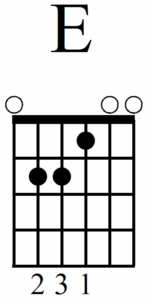
  • So, today you’ll learn these E blues guitar chords: E, A7, B7, E5, E6, A5, A6. Also, in the video, you’ll use a moveable version of B7 that uses fingers 1, 2, and 3, but not 4.
  • The numbers on the chord diagram below are finger numbers (see the hand diagram above).

Later in the post, you’ll learn a rhythm and blues song that uses all these chords.

Here are the E blues guitar chords.

How to Play and Tune Authentic Blues Guitar Chords - E Major Chord
How to Play and Tune Authentic Blues Guitar Chords - A7 Chord
How to Play and Tune Authentic Blues Guitar Chords - B7 Chord
How to Play and Tune Authentic Blues Guitar Chords - E5 Chord
How to Play and Tune Authentic Blues Guitar Chords - E6 Chord
How to Play and Tune Authentic Blues Guitar Chords - A5 Chord
How to Play and Tune Authentic Blues Guitar Chords - A6 Chord

How to Play and Tune Authentic Blues Guitar Chords: Authentic Tuning

What is the authentic tuning?

  • The song you’ll learn today is the Blues Brothers version of Sweet Home Chicago played by legendary guitarists Matt “Guitar” Murphy and Steve Cropper.
  • To give the guitar an authentic sound, we’ll use Robert “Wolfman” Belfour’s version of standard tuning.
  • Basically, Belfour strums an E chord, then adjusts his strings by ear without an electronic tuner or any references to fretted notes.

Is there an easier way to get into Belfour’s tuning?

  • Yes, there is. First, you’ll need a special electronic tuner that shows you how many cents (a cent is 1/100th of a semitone) sharp or flat your string is, such as the Korg CA-2 Chromatic Tuner.
  • In the video below, you’ll see that it’s used by string players to help them hit their notes accurately. (If they keep between the hollow triangles, they’ll be acceptably in tune.)
  • Because of this, the Korg displays a graduated scale that progresses from flat to sharp in 5 cent increments with -20 and +20 cents being marked on the display. The equal tempered note is marked by a black triangle.

This turner gives you the accuracy you’ll need to get the authentic R&B sound on your guitar.

Here is the tuning scheme.

  • Tune your E1, B2, D4, A5, and E6 strings normally.
  • Then, lower G3 down to about -15 cents. (-15 cents is marked by a hollow triangle on the display and is one increment higher than the -20 cents marker dot.)
  • This will make your E major chord sound fantastic but will also have subtle effects on the A7 and B7 chords.
  • In any case, this will give a good approximation of the rhythm and blues sound.
  • Once you’ve got the sound in your ear, you can try tuning using Belfour’s method.

Mobile users: for best results viewing the video, rotate your screen 90o to the right.

Video: Korg CA-2

If you tune G3 to -10 cents, this puts you in a version of Supplemented Equal Temperament, which allows both your guitars and keyboards to work together.

How to Play and Tune Authentic Blues Guitar Chords: Learning the Song

Mobile users: for best results reading the music, rotate your screen 90o to the right.

Chord Progression (Including the 12 Bar Blues) - 12 bar blues chord progression line 1
Chord Progression (Including the 12 Bar Blues) - 12 bar blues chord progression line 2
Chord Progression (Including the 12 Bar Blues) - 12 bar blues chord progression line 3
Chord Progression (Including the 12 Bar Blues) - 12 bar blues chord progression line 4
Chord Progression (Including the 12 Bar Blues) - 12 bar blues chord progression line 5
Chord Progression (Including the 12 Bar Blues) - 12 bar blues chord progression line 6

Sweet Home Chicago.

  • The lead sheet above gives you the basic chord progression for the song Sweet Home Chicago.
  • The first video shows you the Blues Brothers version of the song.
  • The second video demonstrates how to play the song using the above chords plus a few R&B licks.
Video: Listen to Sweet Home Chicago
Video: Learn Sweet Home Chicago

Here is the tab for Eric Clapton’s version of the song.

Final Thoughts

Takeaway points:

  1. If you want an authentic sound, you’ll need authentic tuning.
  2. First, you’ll need a special tuner that shows you how many cents sharp or flat your string is.
  3. Then, you lower G3 down about 15 cents. This will give a good approximation of the rhythm and blues sound. Once you’ve got the sound in your ear, you can tune using Belfour’s method.

Have fun playing!

Singing Tongue Vowels - Male Singer

Singing Tongue Vowels

Do you have a hard time singing with a strong vocal tone? Do you want to be able to sing in tune? Controlling how you sing vowels will help you get a stronger tone and give you the tools to sing in tune. We'll focus on tongue vowels today, because you'll find tongue vowels easier to produce than lip vowels. Read more to learn about singing tongue vowels. Estimated reading time 5 minutes.

Read More


How to Improve Your Choir Intonation - Church Choir

How to Improve Your Choir Intonation

Are you having issues with singing in tune? Do you want help improving your choir intonation? One of the main features of choir music is the beautiful harmonies. However, they only stay beautiful when you sing in tune. Click to learn how to improve your choir intonation. Estimated reading time 4 minutes.

Read More

Once Sheet Music is All Digital, Why Not Always Colour-Code Notes - Computer Power Symbol

Once Sheet Music is All Digital, Why Not Always Colour-Code Notes?

“Once sheet music is all digital, why not always colour-code notes?” Since most sheet music can now come in digital format, will there be any good reason not to color code the notes all the time? I’ve long advocated using color coding for helping special needs students to learn music from sheet music. However, the opening suggestion (by a person on social media) goes one step further. It proposes making a permanent change to how people read sheet music. Click to find out the arguments for and against adopting universal color coded music notation. Estimated reading time 2 minutes.

Read More

Explore Bach’s Epic Orchestral Music in Less Than Four Minutes - Pipe Organ

Explore Bach’s Epic Orchestral Music in Less Than Four Minutes

Would you like to explore Johann Sebastian Bach’s instrumental music but don’t have a lot of time to spend doing it? Bach is one of the most celebrated composers in classical music. He’s best known for writing delightfully complex polyphonic music. Keep reading to explore Bach’s epic orchestral music in less than four minutes. Estimated reading time 3 minutes.

Read More