




Success Music Studio

Whats the Secret of Practicing Arpeggios – Pianist

What’s the Secret of Practicing Arpeggios?

Facebook
Twitter

Estimated reading time 3 minutes

Table of Contents

Introduction

“What’s the secret of practicing arpeggios?” Arpeggios are both an important playing technique and a useful compositional device. They can add a flowing grace to your playing. Keep reading to learn more.

This article uses musical terms. For definitions, see the Glossary at the end of the post.

Art vs Commerce in Songwriting - classical sheet music - How to Extract a Melody from Your Lyrics - Should I Learn to Play the Piano One Hand at a Time or Simultaneously - What is Required of Me to Write a Good Song if I Have No Experience with Songwriting - Why is Classical Music Interpreted Differently from Pop Music? Part 3 - Whats the Secret of Practicing Arpeggios

The Secret of Practicing Arpeggios: What are They and What Can They Do for You?

“What’s the secret of practicing arpeggios?” Before we can answer that, we need to talk about what an arpeggio is:

  • An arpeggio is often called a broken chord because the notes of the chord are played melodically (one at a time instead of altogether).
  • They create a lighter, more elegant arrangement than block chords.
  • Also, they work well with imbedded melodies.

How you practice them depends on the instrument:

  • The secret of practicing arpeggios on stringed instruments, such as guitar and violin, is having arched fingers.
  • Alternatively, the secret of practicing broken chords for vocalists is having a supported tone and singing with a high soft pallet.
  • Likewise, the secret of practicing broken chords for brass and woodwinds will also be good fingering and breath support coupled with embouchure control.
  • Finally, the secret of practicing broken chords on piano is having consistent fingering.
  • Today I’ll be showing you the fingering for broken chords (triads) on the piano.

The Secret of Practicing Arpeggios: How Do I Practice Broken Chords?

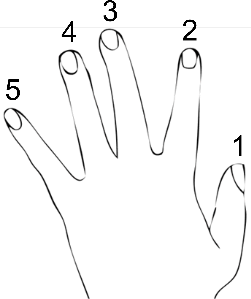
color coding fingers for music - LH piano hand icon with finger numbers
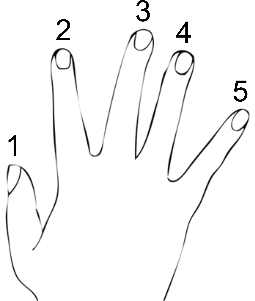
color coding fingers for music - RH piano hand icon with finger numbers

Hand Icons (churien.deviantart.com/art/hand-template-blank-272630198) by Churien is licensed under CC BY (creativecommons.org/licenses/by/3.0). Modified by Geoffrey Keith.

“What’s the secret of practicing arpeggios?” As I said before, on piano it’s practicing with consistent fingering:

  • The hand icons above show you the fingering for each hand.
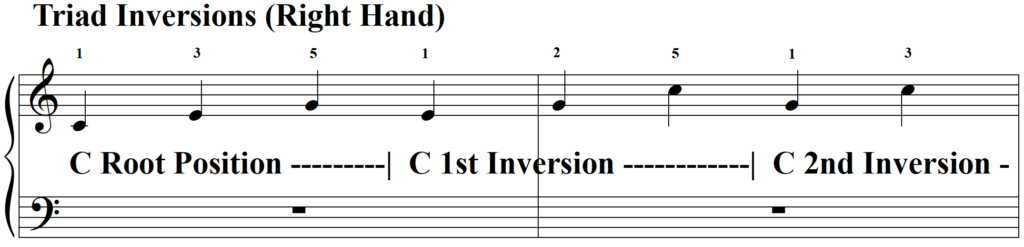
  • Below are the inversions for the C major triad.
  • When you practice these exercises, use the damper pedal.

Click the soundtrack buttons to hear each example.

Mobile users: for best results reading the music, tilt your screen 90o to the right.

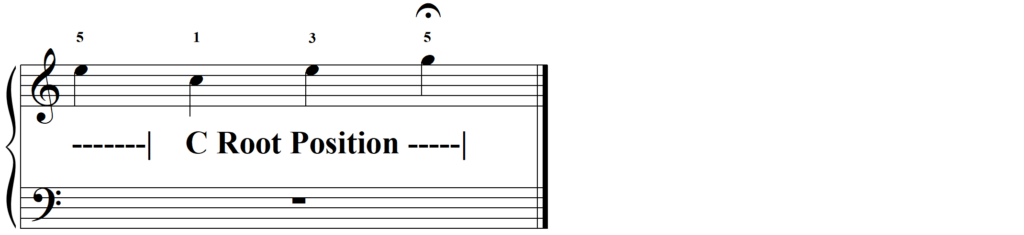
Whats the Secret of Playing Arpeggios - Triad Inversions RH line 1
Whats the Secret of Playing Arpeggios - Triad Inversions RH line 2

RH Triad Inversions:

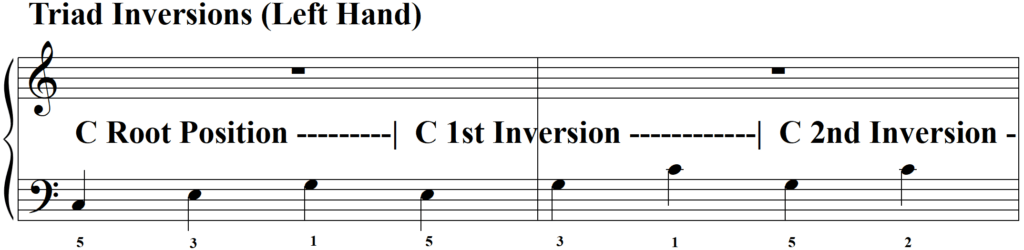
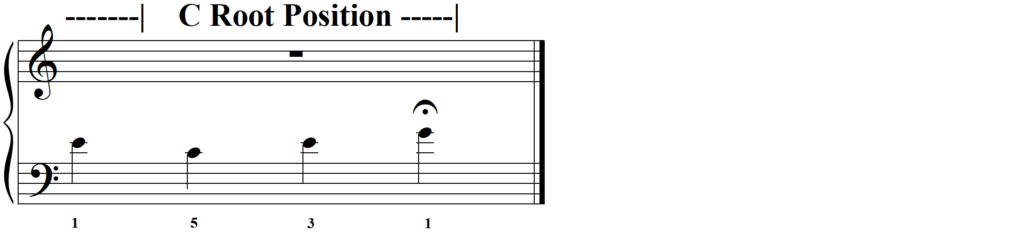
Whats the Secret of Playing Arpeggios - Triad Inversions LH line 1
Whats the Secret of Playing Arpeggios - Triad Inversions LH line 2

LH Triad Inversions:

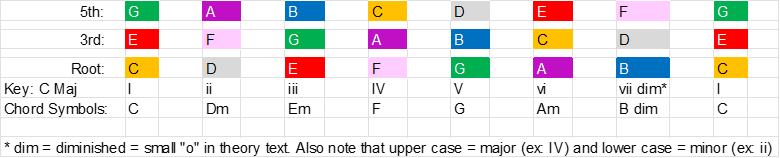
Once you’ve learned the inversions of the C major triad, you can work on the rest of the triads in the key of C major:

  • C Major = C E G
  • D Minor = D F A
  • E Minor = E G B
  • F Major = F A C
  • G Major = G B D
  • A Minor = A C E
  • B Diminished = B D F

Each of these chords will use the same fingerings as above. The graphic below shows all the triads in the key of C major:

Can Someone Explain Roman Numeral Analysis in Layman's Terms for Me - Triads Key of C - Tonic vs. Root in Music Theory - The C Major Scale (Including the C Major Chord Scale) - Whats the Secret of Practicing Arpeggios

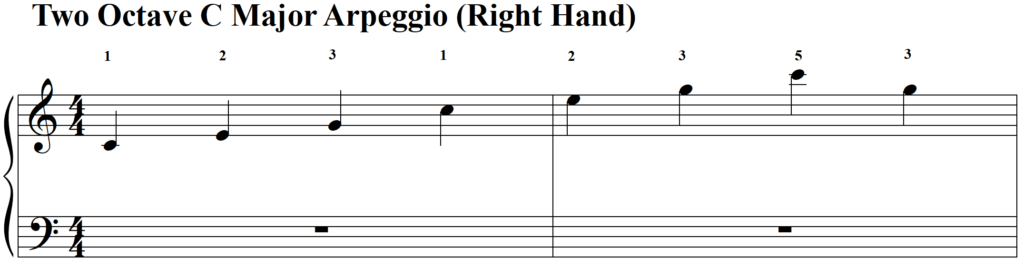
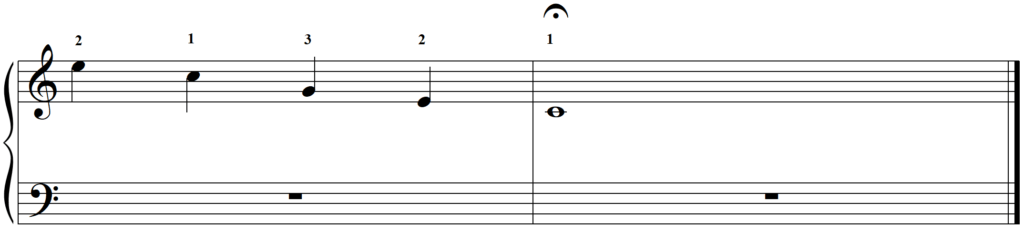
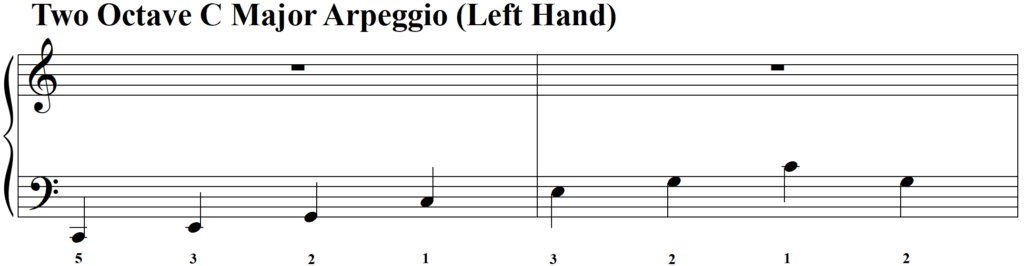
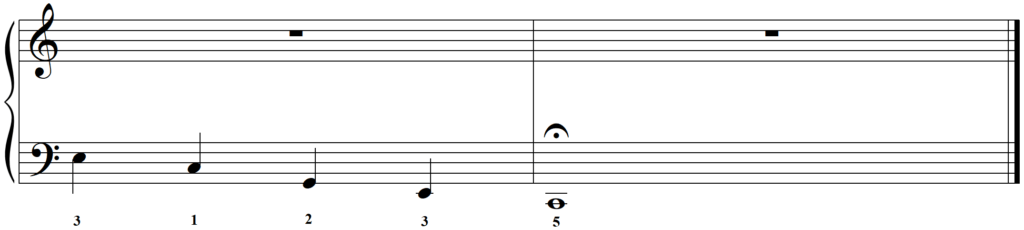
How do you finger arpeggios of two or more octaves?

  • Any chord can be turned into an arpeggio simply by playing the notes melodically.
  • However, multi-octave broken chords need a special fingering.
  • After you’ve gotten this exercise down, you can add extra octaves by substituting fingers. For example, the right hand broken chord can be extended into extra octaves by substituting the 1 finger for the 5 finger at the top of the arpeggio.
Whats the Secret of Playing Arpeggios - Two Octave C Major Arpeggio RH line 1
Whats the Secret of Playing Arpeggios - Two Octave C Major Arpeggio RH line 2

RH Two Octaves:

Whats the Secret of Playing Arpeggios - Two Octave C Major Arpeggio LH line 1
Whats the Secret of Playing Arpeggios - Two Octave C Major Arpeggio LH line 2

LH Two Octaves:

The Secret of Practicing Arpeggios: Where Do You Go from Here?

“What’s the secret of practicing arpeggios?” Once you’ve gotten down the broken chords in the key of C major you can start learning them in other keys, such as:

Can Someone Explain Roman Numeral Analysis in Layman's Terms for Me - Triads Key of G - The G Major Scale (Including the G Major Chord Scale)
Whats the Secret of Practicing Arpeggios - Key of F Major
Do I Really Have to Learn Music Theory to Learn How to Play Piano - Why Do Minor Keys Sound Sad to Me - Color Code Key Signatures - Keyboard Accidentals - What is a Parallel Mode and How Does it Work - What Purpose Do Accidentals Serve in Reading Sheet Music - Reading Music (A Quick Guide to How to Read Music) - How Can I Learn the Basics of Music Theory - What Exactly Do I Do with the Circle of Fifths - An Easy How to Guide to Understanding Triads - 50 Essential Music Symbols Explained in Less Than 5 Minutes - What Exactly Do I Do with The Circle of Fifths - Circle of Fifths - How to Learn Music Theory with a Learning Disability - How to Effectively Use Music Theory to Transpose Music

Final Thoughts on “What’s the Secret of Practicing Arpeggios?”

Here are some extra practice tips:

  1. Start slowly and work up to speed. Always go for accuracy before speed.
  2. Use a metronome, because it’ll help you keep a steady beat.
  3. Focus on smoothly crossing your thumb across your palm as you transition octaves.
  4. Try playing the arpeggios using staccato and legato.
  5. You can make broken chords more interesting by varying the rhythm and mixing up the order of the notes.
  6. Try to keep your hands relaxed as you practice.
  7. Practice regularly and develop good practice habits.

Have fun playing!

Related Posts

© 2024 Geoffrey Keith

Newsletter Signup

Join me for in-person or online lessons today!

Back to the All-Purpose Music Tips and Topics category blogs page

Back to the Successful Music Student Blogs page

Glossary

What’s Dynamic Range Compression and How to Use It - Rack Mount Effects - How to Master Reverb (3 Tips to Tweak Your Mix)

How to Master Reverb (3 Tips to Tweak Your Mix)

Do you need to know what reverb is? Want to know how to use it in a mix? Understanding what reverb is and how to use it effectively is critical for creating a good mix. Keep reading “How to Master Reverb (3 Tips to Tweak Your Mix)” to learn what it is and how it works. Estimated reading time 3 minutes.

Read More
How to Tune Country Blues Guitar - Blues Performance - What Is Your Definition of a Good Musician - Discover Which Notes Are Authentic Blue Notes

How to Tune Country Blues Guitar

Want to get the authentic sound of country blues guitar? Frustrated that your guitar sounds different from your favorite blues artist? The guitar’s tuning impacts the sound. Read more to learn how to tune country blues guitar to achieve an authentic blues sound. Estimated reading time 7 minutes.

Read More
The Top 5 Best Drake Sheet Music Gift Ideas - Music Wrapped Present

The Top 5 Best Drake Sheet Music Gift Ideas

Do you need sheet music gift ideas for a Drake fan? Does your Team Drizzy gift recipient sing or play music? Drake has had sustained success over the last decade or so and is currently getting record breaking download numbers on Spotify. Click to learn the top 5 best Drake sheet music gift ideas. Estimated reading time 4 minutes.

Read More


What Are Some Elegant Examples of Polyphony - Score with Rose - The 5 Best Free Music Notation Apps

What Are Some Elegant Examples of Polyphony?

Are you confused about what polyphony is? Do you want to know how to write counterpoint? Elegant can mean tasteful, but it can also mean well-designed, which these example pieces are. Counterpoint and polyphony appear in arrangements in many different styles and will enhance your writing skills no matter what type of music you write. Keep reading “What Are Some Elegant Examples of Polyphony” to learn what it is and how it works. Estimated reading time 3 minutes.

Read More