




Success Music Studio

Do I Really Have to Learn Music Theory to Learn How to Play Piano - Do You Want Cool Chords for Your Song - Baby Grand - Should I Learn to Play the Piano One Hand at a Time or Simultaneously

Do You Want Cool Chords for Your Song?

Facebook
Twitter

Estimated reading time 4 minutes

Table of Contents

Introduction

Do you have a melody and need chords to go with it? Do you feel clueless when working with harmonies? This post will explain how to find just the right chord for your song. Read more to learn how to find cool chords for your song.

Do You Want Cool Chords for Your Song - Sheet Music with Chords - after they can sight-read what’s left for musicians to learn - Can I Become a Music Teacher if I Have Special Needs - Need Advice for Teaching a First Year High School Jazz Pianist - Tonic vs. Root in Music Theory - What Exactly Does I7-vi7-V7, I-iii-IV-I, and IV-V-I-V Mean - Chord Progression (Including the 12 Bar Blues) - What Is the Precise Meaning of Scaffolding in Teaching - An Easy How to Guide to Understanding Triads - Why Is EADGBE the Unquestioned Standard Guitar Tuning?

Diatonic Harmony and Cool Chords for Your Song

Do You Want Cool Chords for Your Song - Diatonic Triads Key of C - The C Major Scale (Including the C Major Chord Scale)

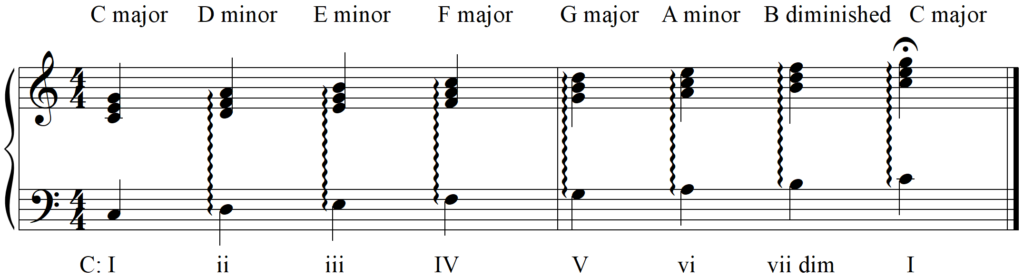
C Major Diatonic Triads:

Do You Want Cool Chords for Your Song - Diatonic 7th Chords Key of C - What Exactly Does I7-vi7-V7, I-iii-IV-I, and IV-V-I-V Mean

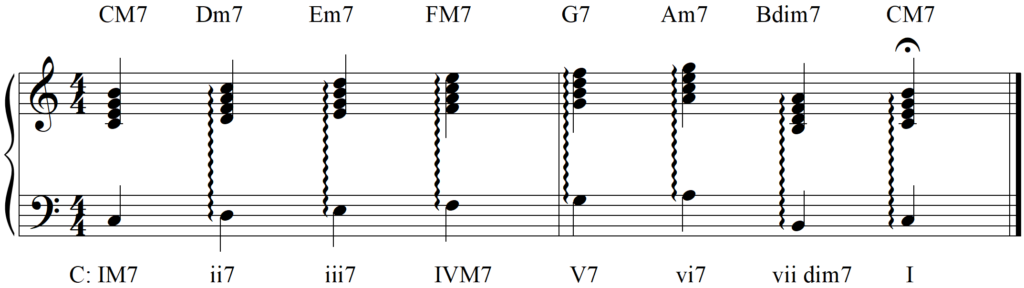
Seventh Chords in C Major:

In order to find cool chords for your song, you need to understand diatonic harmony. (We’ll look at chromatic harmony in later posts.)

A diatonic scale has seven notes all from one key. The first example above shows triads built on each note of the C major scale. (Mobile users: for best results rotate you phones 90o.)

If you put one more note on top of each triad, you create seventh chords. Seventh chords expand your options for harmonizing your melody.

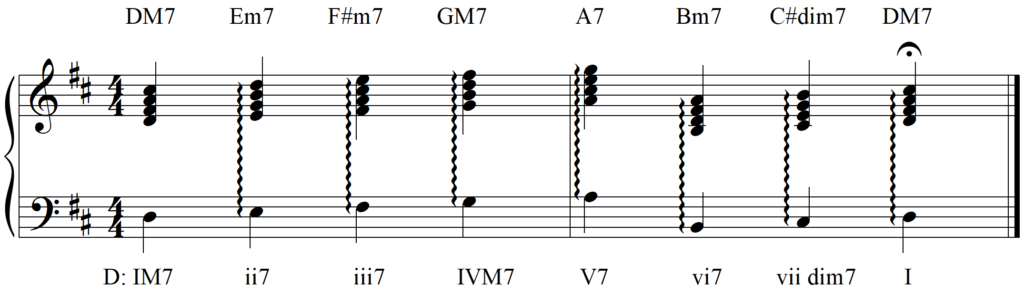
The Seventh Chords in C Major example above can be transposed to the key of D major by changing the key signature and moving all the notes up by one. Also, observe that two notes will now get sharped (F# and C#), and the IM7 chord will be a D major7 instead of a C major7. (For more on roman numeral analysis, click here.)

Do You Want Cool Chords for Your Song - Diatonic 7th Chords Key of D

Seventh Chords in D Major:

Finding the Options for Cool Chords in Your Song

Do You Want Cool Chords for Your Song - Afterimage Melody - Is There a Better Way to Learn Sight Singing

Afterimage:

The first step for putting chords with your melody? Figure out your melody’s key. You do this by counting the sharps and flats.

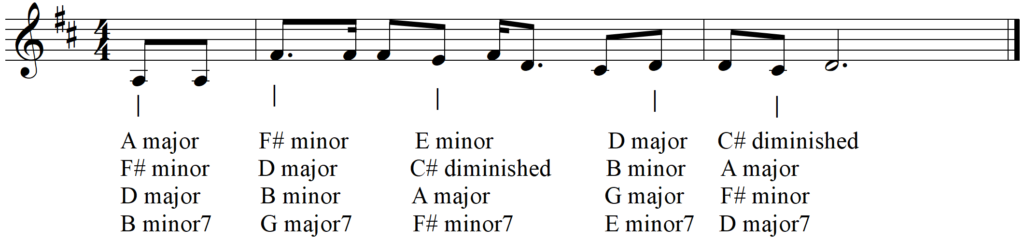
My melody has the same key (D major) as the chords in example 3, which means they’ll work together. Notice that A is the first note in example 4. We can find an A note in the I chord (D major), the iii chord (F# minor), and the V chord (A major). If you use sevenths chords, the ii7 (B minor7) will also be an option.

Use this process on all the melody notes, then make up a chart of potential chords for each pitch in your tune.

Now that you have your options before you, choosing cool chords for your song is just around the corner.

Do You Want Cool Chords for Your Song - Afterimage Chord Selection

Choosing Cool Chords for Your Song

Do You Want Cool Chords for Your Song - Afterimage Arrangement 1 (line 1) - Cadence Meaning and Definition (Examples for Music and Language) - What’re the Basics of an Accompaniment in a Song?
Do You Want Cool Chords for Your Song - Afterimage Arrangement 1 (line 2) - Cadence Meaning and Definition (Examples for Music and Language) - What’re the Basics of an Accompaniment in a Song?

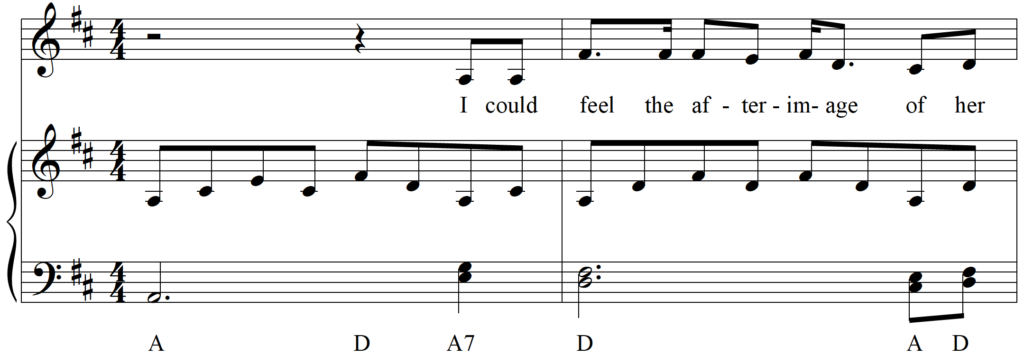
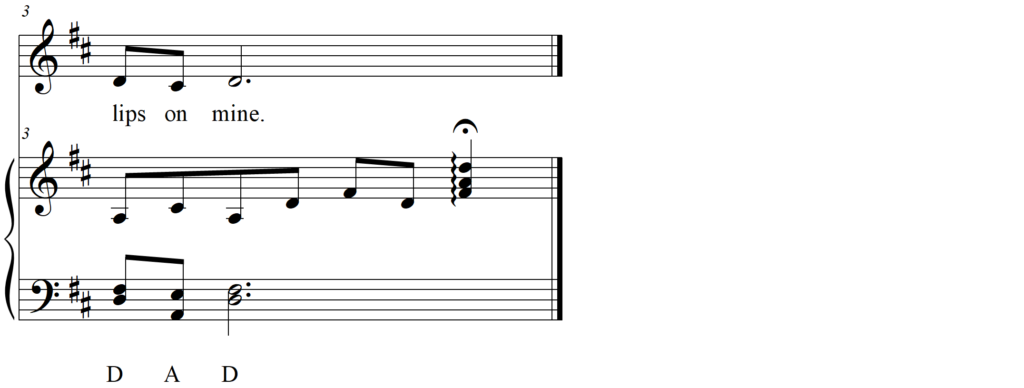
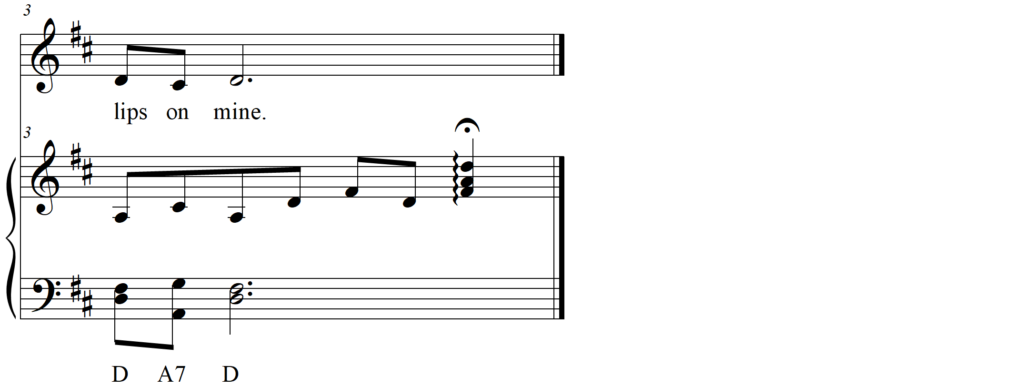
Afterimage 1:

Once you’ve figured out your options, you need to play lots of chords to see which ones work. However, you don’t need to have a chord for every melody note.

The chords you choose will depend on the style of music. However, you own the song, so it’s your choice.

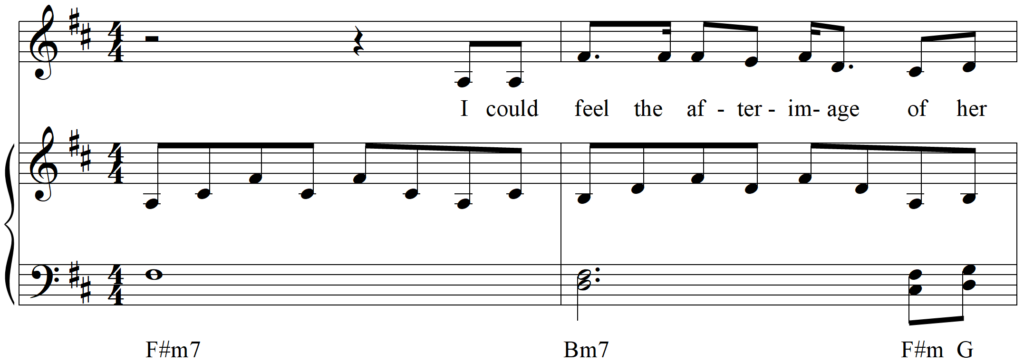
The example above shows a chord progression in a pop ballad arrangement. The arrangement below uses a different chord progression that gives the melody a darker feel. Notice how the chords can help shape the mood of your song. This effect is important to consider when trying to choose cool chords for your song.

Do You Want Cool Chords for Your Song - Afterimage Arrangment 2 (line 1)
Do You Want Cool Chords for Your Song - Afterimage Arrangment 2 (line 2)

Afterimage 2:

Do You Want Cool Chords for Your Song - Piano

Concluding Thoughts on Choosing Cool Chords for Your Song

Take your time and see which chords work best. Sometimes you’ll want chords that stay discreetly in the background. Other times, your chords will jump out front and function as you hook.

Always remember, when messing around with chord progressions, let your ear be your guide when deciding which chords to use and which to exclude.

Have fun choosing cool chords for your song!

© 2022 Geoffrey Keith

Join me for online or in-person lessons today!

Back to The Craft of Songwriting Category Blogs page

Back to the Successful Music Student Blogs page

Singing Rhythm Syllables in 12-8 Time - Heart and Flower on Sheet Music - What Do People Mean by the Term Interpretation in Classical Music

Singing Rhythm Syllables in 12-8 Time

Does 12-8 time signature make your eyes cross? Confused about how rhythm syllables work in compound meters? The sing-along soundtrack below will help! Read more to learn about singing rhythm syllables in 12-8 time. Estimated reading time 3 minutes.

Read More

Best Practices: How to Play a Guitar A Chord

Do you need help learning open A? There’s more than one way to finger the chord. So, we’ll talk about how the context makes a difference and best practices for each fingering. Click to learn how to play a guitar A chord. Estimated reading time 3 minutes.

Read More

How Do I Avoid Tension in My Wrists When Playing Piano Arpeggios - Grand Piano with the Lid Open - 17 Songwriting Ideas to Get You Unstuck - How to Write a Song with a Catchy Chorus (Including Lyrics)

How Do I Avoid Tension in My Wrists When Playing Piano Arpeggios?

“How do I avoid tension in my wrists when playing piano arpeggios?” Piano teachers can yell “Relax!” at you until they turn blue in the face, and it won’t do any good. Tension leads to sore muscles, fatigue, and possibly injury. So, how do you reduce the tension in your wrists? There’s an easy trick that’ll help you learn how to relax on your own. Read more to find out how it works. Estimated reading time 2 minutes.

Read More