Success Music Studio

How to Set Up a Music Teacher’s Percussion Bag - Percussion Box

How to Set Up a Music Teacher’s Percussion Bag

Facebook
Pinterest
LinkedIn

Estimated reading time 4 minutes

Table of Contents

Introduction

Have you been thinking about keeping percussion instruments on hand for your music lessons? Do you want an idea of what should go into your bag? A percussion bag or box is useful for any music instructor. It can make the difference between happy, engaged students and pandemonium. Keep reading How to Set Up a Music Teacher’s Percussion Bag for some tips to get you started.

How Do Musicians Find Enough Time to Practice Their Instruments - Musicians Practicing Outside

This post contains affiliate links, which means I may receive a small commission from purchases made through the links. I’ll only recommend products I use, use in lessons, or ones my students or colleagues have recommended.

How to Set Up a Music Teacher’s Percussion Bag: Who Will Find This Useful?

This is the kind of thing a percussion teacher might bring to a lesson when teaching hand percussion.

However, it’s not just limited to percussionists!

  • Any music teacher will find these instruments a good change of pace. You can give your students microbreaks by allowing them to have fun free play time to explore the instruments.
  • In fact, when working with very young children, these will be your go-to instruments.
  • A box filled with instruments is also useful when working with special needs students.

Here is a list of what I have in my percussion box.

  • Bells
  • Bongos
  • Castanets
  • Claves
  • Drumsticks and beaters
  • Egg Shakers
  • Finger cymbals
  • Hand drums
  • Jingles
  • Maraca
  • Triangle
  • Xylophone

How to Set Up a Music Teacher’s Percussion Bag: What Goes in the Bag?

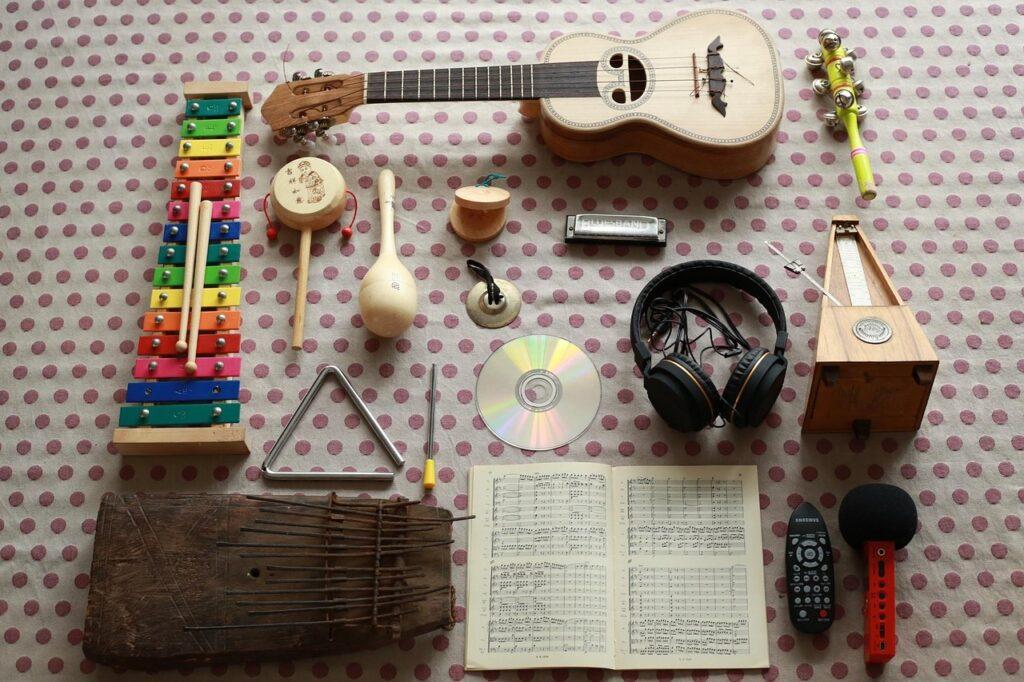
How to Set Up a Music Teacher’s Percussion Bag - Xylophone, Triangle, Maraca, Castanet, Finger Cymbal, Jingle Stick

There are all sorts of instruments you can stock your bag or box with, but here are some of the ones I like.

Xylophone

  • To the left side of the picture above, you can see a xylophone.
  • The xylophone is useful for working on color coded note concepts.
  • Also, you can use the xylophone to work on the concepts of high and low sounds, especially if your tilt the xylophone so the smaller bars are higher than the bigger bars.

Triangle

  • To the right of the xylophone is a triangle with its metal wand.
  • If you damp the triangle, you’ll get a closed sound.
  • If you let the triangle ring, you get an open sound.

Shakers (Maraca and Egg Shaker)

  • Above and to the right of the triangle is a maraca (a.k.a. a shaker).
  • A shaker is a container that has pellets inside it.
  • As the name suggests, you shake it. (Egg shakers are good for little kids.)
  • Traditional maracas are brightly painted oval shakers with a handle.
  • Modern maracas can be either round or oval and are usually sedately decorated.

Finger Cymbals

  • To the right of the maraca is a finger cymbal.
  • Finger cymbals are small cymbals with an elastic band so they can be attached to the forefinger and thumb.
  • A symphonic percussionist holds a finger cymbal band in each hand, striking the cymbal edges together.

Castanet

  • Above the finger cymbal is a castanet.
  • Castanets are small wooden or plastic clickers used by traditional Spanish dancers.
  • Finger castanets are squeezed between the fingers, and hand castanets are held in one hand and struck against the palm of the other hand.

Jingle Stick

  • In the upper right corner of the picture, you’ll find a jingle stick. A jingle stick has a handle from which small bells or cymbals are suspended.
  • You play it by holding the jingle stick in one hand while tapping it against the other or by shaking it.
  • It’s good for playing a steady beat while singing Jingle Bells.
How to Set Up a Music Teacher’s Percussion Bag - Jingle Bells

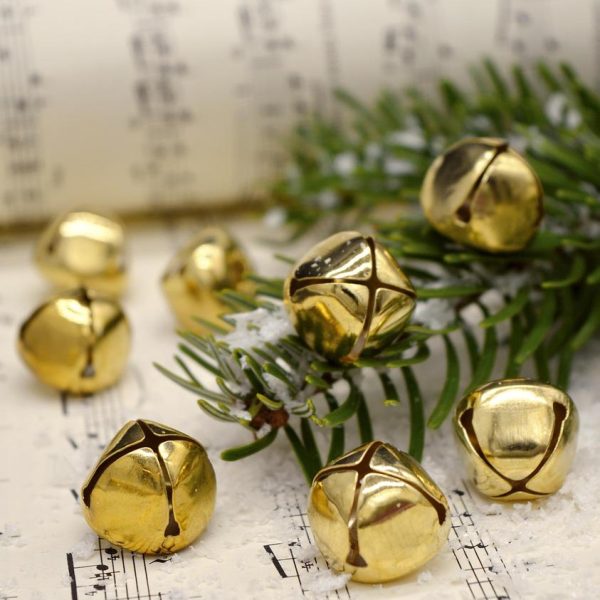
Bells

  • Bells have a definite pitch and can be used in tuned groups or singly.
  • Bells come in any size from tiny Christmas tree ornaments to huge church bells and can be made from a wide variety of materials: metal, wood, ceramic, or glass.
  • Pellet bells are ideal to use for accompanying the song Jingle Bells.

Any pellet bell will do – I have even used G clef shaped Christmas ornaments.

Claves

  • Claves consist of two sticks about an inch in diameter and approximately eight inches long.
  • Claves appear in Latin music but can also be heard in the Beatle’s song And I Love Her.
  • In addition, claves make good rhythm sticks for very young children.

How to Set Up a Music Teacher’s Percussion Bag: Hand Drums and Beaters (Drumsticks)

Hand Drums

Bongos are a paired set of small drums.

  • Bongos are one of the most used hand drums.
  • The smaller bongo drum goes on the player’s left, but that is not critical for young children.
  • Bongos are usually played with the middle three fingers on either or both hands. However, Bongos also sound good when beaters are used.
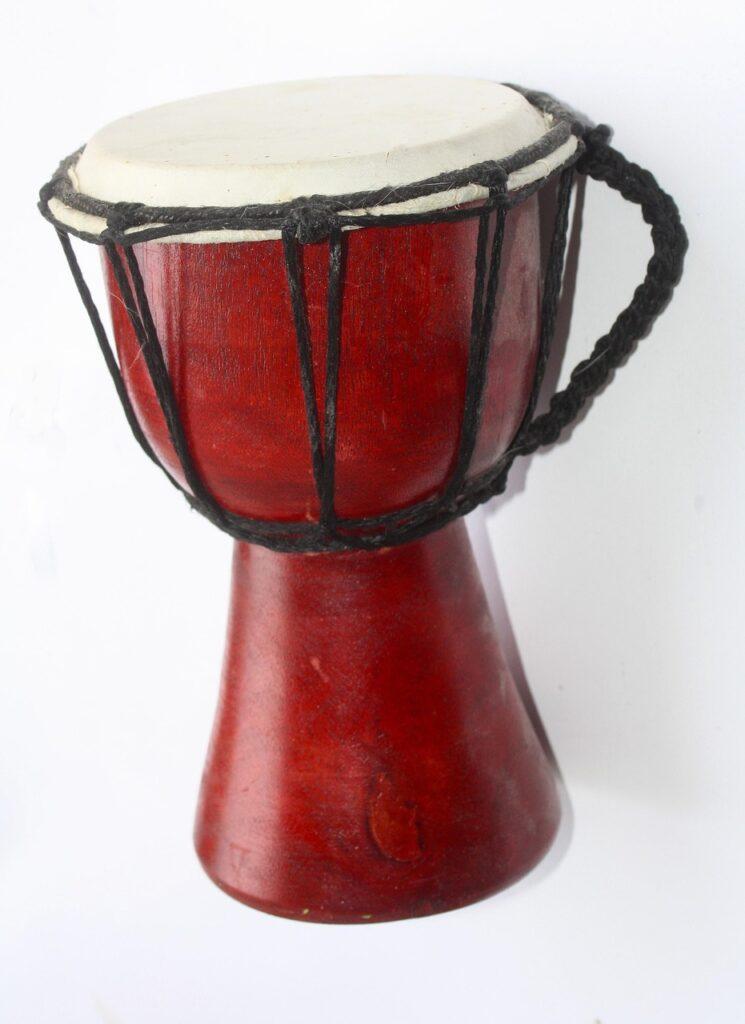
How to Set Up a Music Teacher’s Percussion Bag - Djembe

There are lots of small hand drums:

  • Goblet drums (djembe pictured above)
  • Cylindrical drums
  • Conical drums
  • Barrel drums
  • Waisted drums
  • Vessel drums
  • Frame drums
  • Footed drums (such as the bongos)

All these names describe the different shapes of the drums. There are a staggering number of ethnic names attached to each type of drum.

How to Set Up a Music Teacher’s Percussion Bag - Beaters and Drumsticks

Drumsticks and Beaters

  • Drumsticks and beaters aren’t usually used as instruments but rather are used to play an instrument. However, drumsticks can be struck together when working on the steady beat.
  • Also, drumsticks can be used for counting games where you pick a random number that the student must count to while simultaneously tapping the drumsticks together.
  • Alternatively, you can use the claves for these activities with younger students.
Video: Music Therapy Hand Percussion Box

Final Thoughts

  1. A percussion bag is not just limited to percussionists.
  2. Any teacher will find these instruments a good change of pace in lessons.
  3. A box filled with instruments is also useful when working with very young children and with special needs children.

Have fun teaching!

How Do I Find the Key of a Song with Accidentals - Sheet Music and Accordion Key Chain - Song Structure, Musical Phrases, Musical Structures and Forms

How Do I Find the Key of a Song with Accidentals?

Do you need to figure out the key for a song? Whether you have sheet music or figure out a song by ear, it’ll be useful to know the key of a song. This will help when adding harmonies, improvising, memorizing, or for just generally understanding the music. Plus, you can find out if the music changes keys during the song. Keep reading to answer the question, “How do I find the key of a song with accidentals?” Estimated reading time 2 minutes.

Read More

Singing Beethoven’s Beautiful Ode to Joy - Joy Tiles and a Rose

Singing Beethoven’s Beautiful Ode to Joy

Are you looking for the beautiful song “Ode to Joy?” In this post, you’ll get the essentials: 1) a sing-along video of the song, 2) a popular version of the lyrics in English, 3) and sheet music with easy-to-read shape notes and a sing along soundtrack. Keep reading “Singing Beethoven’s Beautiful Ode to Joy” to learn more. Estimated reading time 2 minutes.

Read More
How to Figure Out Your Voice Type - Tenor

How to Figure Out Your Voice Type

Do you want to know what your voice type is? Why is it important to know your voice type? When you know what notes you’re most comfortable singing, it helps you pick appropriate songs. Click “How to Figure Out Your Voice Type” to learn what type of singer you are. Estimated reading time 3 minutes.

Read More