

Success Music Studio

Explore Beethoven’s Beautiful Music in Less Than Four Minutes - Cello Bow on Music

Explore Beethoven’s Beautiful Music in Less Than Four Minutes

Facebook
Twitter

Estimated reading time 3 minutes

Table of Contents

Introduction

Would you like to know more about Beethoven’s music but are a busy person? Ludwig van Beethoven is a titanic figure in classical music. Along with Bach and Mozart, Beethoven is one of the composers you’re really going to want to check out. Keep reading to explore Beethoven’s beautiful music in less than four minutes.

How to use the videos:

  1. Listen to 9 seconds (of actual music) of each piece.
  2. Usually this will be enough for you to tell if you want to listen to more.
  3. That way you can vet all the pieces in less than a minute.

This article uses musical terms. For definitions, see the Glossary at the end of the post.

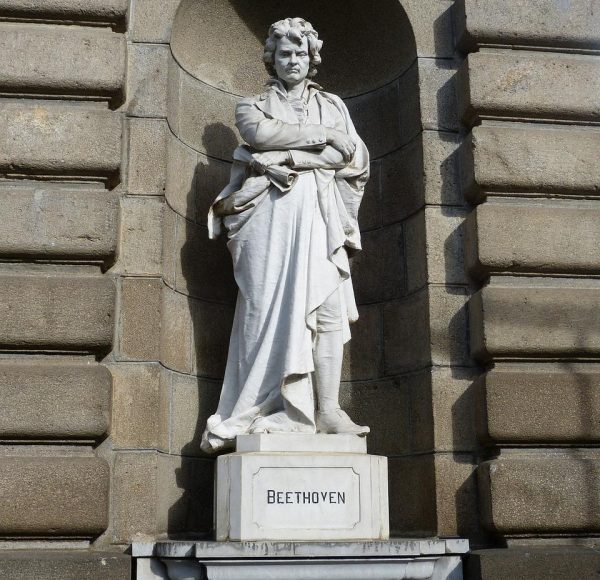
Explore Beethoven’s Beautiful Music in Less Than Four Minutes - Beethoven Statue

Exploring Beethoven’s Beautiful Music: A Quick Look at the Man

Despite going deaf at a relatively young age, Beethoven went on to be a pivotal figure in music history:

Beethoven (Why Did He Keep Composing After Deafness) - Sheet Music - Singing Beethoven’s Beautiful Ode to Joy - Explore Beethoven’s Beautiful Music in Less Than Four Minutes - The Top 10 Best Iconic Classical Music Compositions

Exploring Beethoven’s Beautiful Music: A Quick Look at His Compositions

Here’s a quick guide to Beethoven’s compositions categorized by genre:

Symphonies

Beethoven greatly expanded the symphony’s scope, both in its length and in its formal structure (e.g., Symphony No. 5). In addition, Symphony No. 9 is the first symphony to add vocalists, which became a wildly popular option with later classical composers. (However, Symphony No. 9 was not the first orchestral work to add a chorus.)

Popular Works Today:

  • Symphony No. 3
  • Symphony No. 7
  • Symphony No. 9
Video: Symphony No. 5, Mvt. 1

Solo Piano

Beethoven’s piano sonatas are some of his most important solo piano pieces. They mark his transition from the classical tradition into a more personal style (e.g., Moonlight Sonata and Sonata No. 8). Likewise, his piano variations represent another important part of his keyboard repertoire. They show his ingenious ability to work with motifs – the most famous being his Diabelli Variations. In addition, his short piano pieces (e.g., Fur Elise and Rage Over a Lost Penny) still charm and delight audiences to this day.

Popular Works Today:

  • Moonlight Sonata
  • Diabelli Variations
  • Fur Elise
Video: Fur Elise

Concertos

A classical concerto is basically a symphony that features a solo instrument, such as a piano, violin, or cello. During a concerto, the solo instrument will put on a virtuosic display of technique, especially during the cadenzas. Of Beethoven’s five piano concertos, the Emperor Concerto is his most popular.

Popular Works Today:

  • Violin Concerto
  • Concerto No. 5 (Emperor)
  • Piano Concerto No. 1
Video: Emperor Concerto, Mvt. 1

Vocal Works

Though Beethoven only wrote one opera, it’s an important and unique addition to the operatic tradition. It tells a tale of courage in the pursuit of freedom. In addition, he wrote seventeen choral works, including two masses (e.g., Missa Solemnis and Mass in C Major). Conversely, he wrote almost 100 lieder and arranged over 150 folksongs.

Popular Works Today:

  • Fidelio (Opera)
  • Missa Solemnis (Choral Work)
  • Adelaide (Lieder)
Video: Fidelio's Final Chorus

Chamber Music

Chamber ensembles perform compositions for small groups of instruments, such as trios, quartets, quintets, etc. They can be for string, woodwind, or brass instruments. Beethoven’s string quartets contain some of his most experimental music. Today’s video is a piano trio.

Popular Works Today:

  • Trio for Piano and Strings, Op. 70, No. 2
  • String Quartet No. 14, Op. 131
  • Quintet Op. 16
Video: Trio for Piano and Strings, Mvt. 2

Overtures

Originally, opera and ballet overtures were the opening music before the dramatic portion of the show began. However, overtures eventually broke off from these stage works to become stand-alone concert overtures. Did Beethoven write the first concert overture? Short answer: maybe. Regardless, his overtures constitute an important part of his orchestral legacy.

Popular Works Today:

  • Egmont Overture
  • Leonore Overture
  • Fidelio Overture
Video: Egmont Overture

Final Thoughts on “Explore Beethoven’s Beautiful Music in Less Than Four Minutes”

Takeaway points:

  1. Despite going deaf at a relatively young age, Beethoven went on to become a pivotal figure in music history.
  2. Though he’s best known for his orchestral and piano pieces, he also made significant contributions to the chamber and vocal repertoire.
  3. Whatever styles of music he wrote, he left a lasting creative imprint on those musical genera, strongly influencing the following generations of classical composers.

Have fun listening!

Related Posts

© 2024 Geoffrey Keith

Newsletter Signup

Join me for in-person or online lessons today!

Back to the All-Purpose Music Tips and Topics category blogs page

Back to the Successful Music Student Blogs page

Glossary

Success Music Studio Has Been Blogging for 600 Days - Balloons - Hail the New Year with the Popular Old Lang Syne Song - Milestone 300 Posts of Thought-Provoking Musical Advice

Success Music Studio Has Been Blogging for 600 Days

Today marks a milestone for me: 600 days of blogging “The Successful Music Student!” If you want to read or sight sing music, sing in tune, write better songs, or finally get your guitar or keyboard in tune, the blog has just what you need. Estimated reading time 1 minute.

Read More

How to Color Code Musical Diagrams - Guitar Chords - The G Major Scale (Including the G Major Chord Scale) - The C Major Scale (Including the C Major Chord Scale) - What Exactly Is a Chord and What Does the Term Harmony Mean - How to Play the Easy Beginner Guitar F Chord Without a Barre

The G Major Scale (Including the G Major Chord Scale)

Do you want to know what notes and chords are in the G major scale? Do you find the theory behind the G major chord scale confusing? To truly understand music, you must know how to construct scales and how to build chords from the scale tones. Read “The G Major Scale (Including the G Major Chord Scale)” to learn how they work. Estimated reading time 3 minutes.

Read More

memory and songwriting - young woman remembering - brainstorming your song titles - Learning Differences and Spatial Ability - after they can sight-read what’s left for musicians to learn - How Long Do You Take to Memorize a Piece of Piano Music - The Gifted Dyslexic and Insight Learning

Memory and Songwriting

Do you want your song to be catchy? If people can't remember your song, you’ve got a problem. Therefore, you need know how humans remember things. Read more to understand the connection between memory and songwriting. Estimated reading time 4 minutes.

Read More

How to Graduate from the Color Coded Music Score - Graduation Choir

How to Graduate from the Color Coded Music Score: Part 3

Do your students get confused by space note D at the bottom of the treble staff? Or do they have a problem with space note B on the top of the bass staff? Read more to learn how to switch from color coded notes to special mnemonics, allowing students to graduate from the color coded music score. Estimated reading time 4 minutes.

Read More