


Success Music Studio

sing in tune with synth settings - man singing while playing a synth - Can Somebody Explain Why Power Chords Sound Powerful?

Sing in Tune with Synth Settings

Facebook
Twitter

Estimated reading time 4 minutes

Table of Contents

Why Use the Supplemented Equal Temperament Tuned Keyboard to Learn to Sing in Tune with Synth Settings?

Does your chorus or choir have pitch problems? After years of hearing pianos tuned to equal temperament, many singers cannot sing harmony accurately. The piano is a bad model for how well-tuned chords should sound. Solution: retune the keyboard to make a good sound model. Read more to learn how to sing in tune with synth settings.

Using harmonics to tune the guitar to open D creates an audible example of what well-tuned chords sound like. Similarly, tuning the keyboard to Supplemented Equal Temperament (SET) allows us to recreate this powerful ear training tool on the keyboard.

Singers who struggle to sing in tune can use it as a good sound model for properly tuned chords.

Sing in Tune with Synth Settings - Synth and Headphones - Can I Learn to Play Piano with a Mini Key Keyboard

Sing in Tune with Synth Settings: How to Tune the Keyboard to Supplemented Equal Temperament

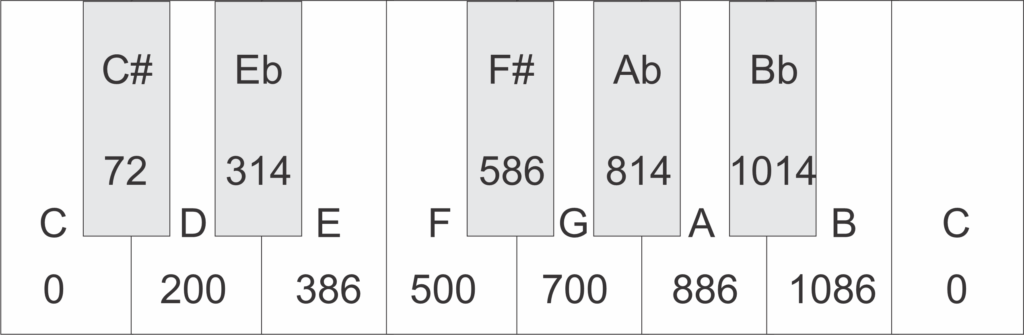
To tune Supplemented Equal Temperament, you need a microtonal capable keyboard. SET is designed to play chords that sound more in tune than the regular piano tuning: equal temperament.

The following diagram shows how to tune SET to scales centered around C major.

For a definition of cents see the post: How to Retune the Keyboard to Make the Chords Sound Amazing. The post contains a complete discussion of how SET synth settings work which we will use to learn how to sing in tune.

Mobile users: for best results reading the examples, tilt your screen 90o to the right.

How to Micro Tune the Keyboard to Make the Chords Sound Awesome - Keyboard (Supplemented Equal Temperament)

How Keyboard Chords in Supplemented Equal Temperament Work and Singing in Tune with Synth Settings

When using the retuned guitar as a harmonic sound model, the ability to easily change keys is a big advantage over the keyboard. The big advantage of the retuned keyboard over the guitar is that it has flexible voice leading.

However, the SET tuned keyboard has a limited number of keys it can play without being retuned again. How Chords in Supplemented Equal Temperament Works discusses chords in SET.

Tips for Singing in Tune with Synth Settings

A tip that works with singing-in-tune-with-synth-settings comes from a vocal intonation study by Ternstrom and Sundberg. They give this piece of advice for practicing harmonic tuning.

When working on getting the harmonies in tune, you need to sing without vibrato. You can use vibrato during performances, but always practice harmonic intonation without vibrato.

Vibrato obscures beating. Beating is the “wah-wah-wah” sound between two or more simultaneously sounding notes. Beating creates a cue that singers use to tune-up chords. Obscure the beating with vibrato, and the harmonies become less accurate.

Similarly, Charles Shackford advises that you should take your time tuning up harmonies. The longer a harmony is held, the more in-tune it becomes. Joe Wolf says that taking enough time to accurately tune allows the waveform sufficient time to develop.

Therefore, when using the keyboard as a harmonic sound model, you should pick a synth sound that has a sustained tone. Furthermore, it needs to have as little vibrato as possible.

It may not be possible to find keyboard programs without any vibrato, just pick the best option. (The audio example below has some vibrato.)

Notice that the example below has long rhythmic note values at a slow tempo.

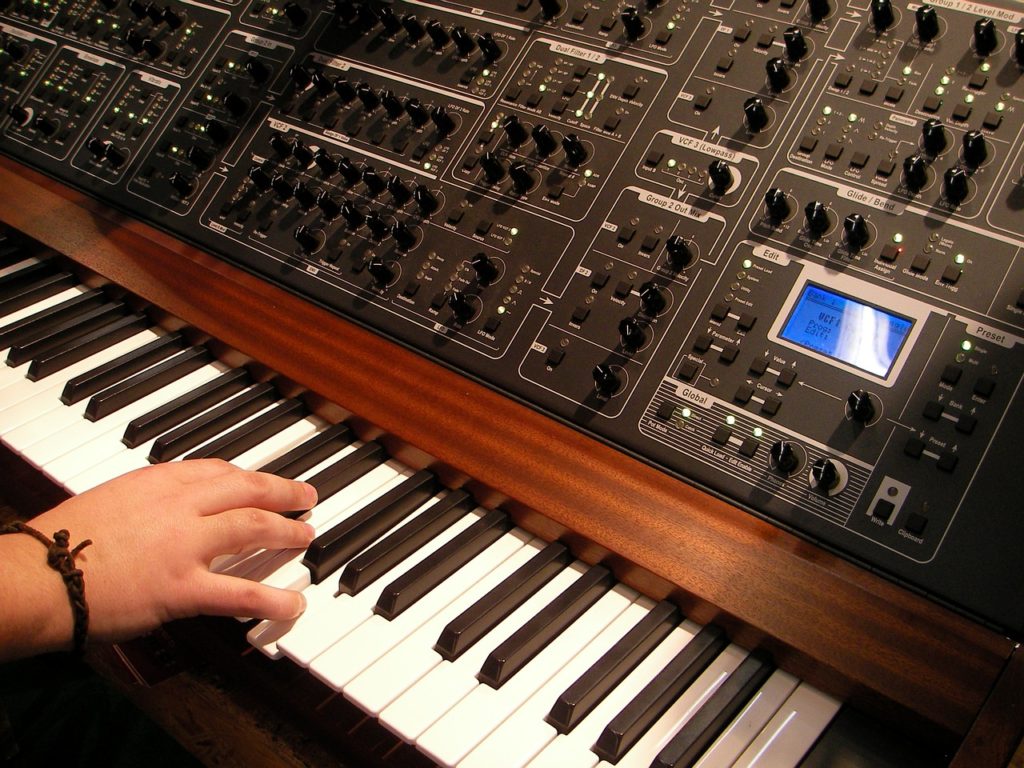
supplemented equal temperament minor keys - synthesizer.jpg

How to Use the Supplemented Equal Temperament Tuned Synth to Learn to Sing in Tune

Sing in Tune with Synth Settings - Supplemented Equal Temperament Keyboard and SATB - Singing Exercises with Harmony

© 2020 Geoffrey Keith

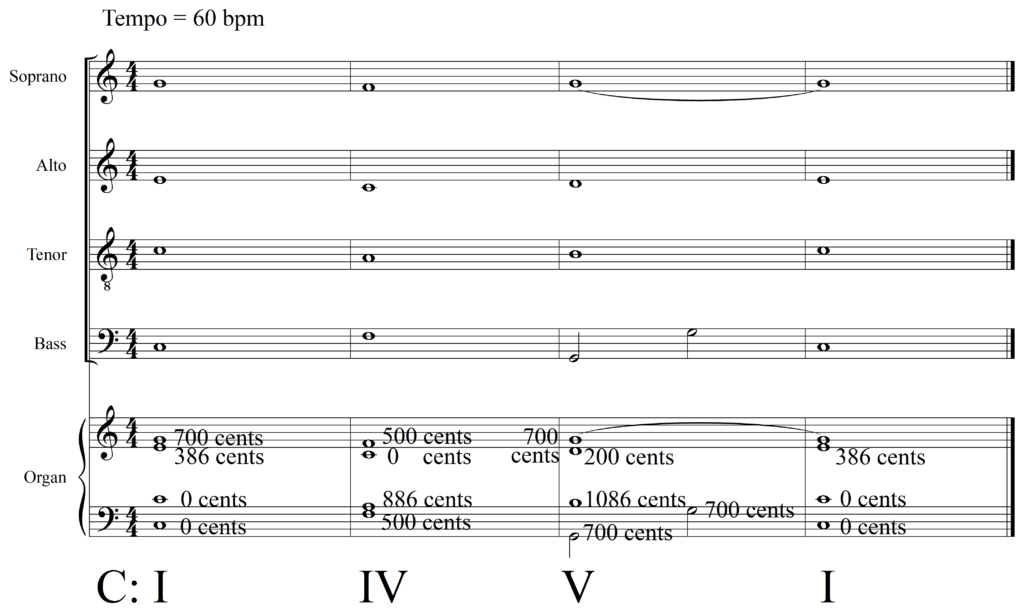
SET SATB Sing-Along Song Example:

Here is an example of Supplemented Equal Temperament applied to an SATB arrangement.

Use this type of arrangement with your singers after first working on harmonic intervals and individual triads.

I voiced the keyboard part to be the same as the vocal parts in order to support the singers.  However, it is not absolutely necessary to arrange the keyboard part this way. 

Using music sequencing or notation software driving a microtonal keyboard, you can feature different parts, such as:

  • The soprano with the alto part
  • The tenor with the organ
  • just the organ so the students can sing along with it

This gives teachers and chorus directors a lot of flexibility for organizing a chorus or choir practice.

Conclusion

Being able to hear what a chord should sound like gives you the tools your singers need to learn to hear harmonies accurately. Once they can hear chords accurately, they can sing them accurately. The synth settings help them to learn to sing in tune. Singing slow harmonies with no vibrato also helps.

To learn how to retune the synth to access more keys, see the post How to Change Keys in Supplemented Equal Temperament.

For those people who are not comfortable retuning instruments, see Singing Exercises with Harmony. This post has sing-along music examples!

© 2020 Geoffrey Keith

Newsletter Signup

Join me for in-person or online lessons!

Back to the Singing in Tune Blogs Page

Back to the Successful Music Student Blogs Page

Why Doesnt My Hands-Separate Piano Practice Help with Hands-Together Playing - Grand Piano - Help Me! How Do I Improve My Touch on Piano?

Why Doesn’t My Hands-Separate Piano Practice Help with Hands-Together Playing?

Do you get frustrated when your hands-separate playing doesn’t seem to help with playing piano with both hands? Find out what determines how hard it’ll be to play with both hands and what you can do about it. Click to answer the question, “Why doesn’t my hands-separate piano practice help with hands-together playing?” Estimated reading time 4 minutes.

Read More

What is a Parallel Mode and How Does it Work - Sheet Music Keyboard - Is the Suzuki Music Methodology Bad for Learning Piano - How Can I Learn the Basics of Music Theory - What Exactly Is a Chord and What Does the Term Harmony Mean - What Exactly Do I Do with the Circle of Fifths

What is a Parallel Mode and How Does it Work?

“What is a parallel mode and how does it work? And how does a parallel mode differ from a relative mode?” Many musicians find the concept of modes confusing. I can help! Click to answer the question, “What is a parallel mode and how does it work?” Estimated reading time 3 minutes.

Read More

What Do People Mean by the Term Interpretation in Classical Music - Don Quixote - Stage Fear, How to Deal with Performance Anxiety

What Do People Mean by the Term Interpretation in Classical Music? Part 2

Do you want to move your audience to tears as you perform? Do you need suggestions for how to interpret your songs? Interpretation is when you put your personal stamp on a song. Today’s interpretation tip can help you craft powerful performances. Click to answer the question, “What do people mean by the term interpretation in classical music?” Estimated reading time 2 minutes.

Read More

Basic Music Notation Explained in Less Than 4 Minutes

Does music notation seem to be one big mystery? Do you want to be able to read music? Music notation can sometimes seem counterintuitive. However, you too can learn to read music. This post will help give you a quick overview of how music notation works. Keep reading “Basic Music Notation Explained in Less Than 4 Minutes” to learn what it is and how it works. Estimated reading time 3 minutes.

Read More