
Success Music Studio

How to Play Musical Tempos from Adagio to Allegro - Metronome and Recorder

How to Play Musical Tempos from Adagio to Allegro

Facebook
Pinterest
LinkedIn

Estimated reading time 3 minutes

Table of Contents

Introduction

Do you want to know what the word tempo means? Do you need to understand how tempos work? Understanding how tempos work in music is a critical skill, because picking the right speed can breathe life into your music. Keep reading to learn how to play musical tempos from adagio to allegro.

Today we’ll cover:

  • Adagio
  • Allegretto
  • Allegro
  • Andante
  • Andantino
  • Largo
  • Moderato
  • Prestissimo
  • Presto
The Top 10 Best Iconic Classical Music Compositions - Conductor Andrea Vitello - How to Play Musical Tempos from Adagio to Allegro

This post contains affiliate links, which means I may receive a small commission from purchases made through the links. I’ll only recommend products I use, use in lessons, or ones my students or colleagues have recommended.

How to Play Musical Tempos from Adagio to Allegro: Tempo Defined

What does it mean?

  • In music, tempo is defined by how fast you’re playing.
  • This is commonly indicated by tempo marks, which are usually Italian words that describe the speed of the music.
  • The speed you play is important for setting the mood and feel of a piece of music.

Where do I find tempo marks?

  • You’ll find them in the upper left corner on the first page of the score.
  • However, pieces can change speed as a song progresses, so there can be tempo marks sprinkled throughout a piece.
  • Do all pieces change tempo? No, usually you’ll find only the one tempo mark at the beginning of a piece.
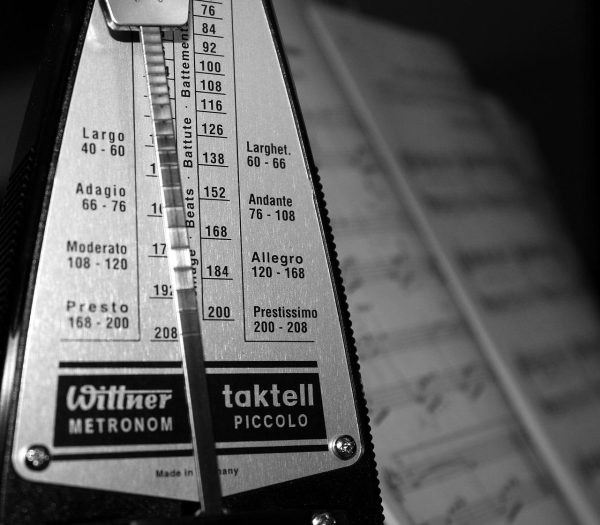
The 5 Best Effortlessly Easy Metronome Practice Tips - Metronome Face - How to Play Musical Tempos from Adagio to Allegro

How to Play Musical Tempos from Adagio to Allegro: Meet the Tempo Marks

Adagio

  • Adagio is a slow, dignified speed – falling between 65-75 bpm.
  • Metronome speeds are measured in bpm (beats per minute).
  • Also, tempo marks existed before the metronome was invented, which is why there are a range of bpm that will fit adagio.

Andante

  • The word andante comes from Italian and literally means walking speed.
  • Andante is faster than adagio but slower than moderato – about 75 to 105 bpm.
  • It’s associated with calm, flowing music.

Andantino

  • The strange thing about andantino is that it can be slightly faster or slower than andante – about 65-75 or 100-110 bpm.
  • In contemporary music, you’ll play andantino faster than andante.
  • However, in historical music (i.e., classical music), it would be played slower.

Moderato

  • Moderato translates as moderate, so you’ll take the music at medium speed – 105-120 bpm.
  • However, moderato isn’t a leisurely pace.
  • Instead, it moves along quickly.

Allegretto

  • The word allegretto sounds like it should be a salad dressing.
  • However, it indicates a speed slower than allegro – approximately 115-120 bpm.
  • Allegretto is good for bold, animated music.

Allegro

  • The word allegro means happily, but we interpret it to mean fast – usually 120-170 bpm.
  • It works for spirited, upbeat pieces.
What Does Dissonance Mean for Basic Seventh Chords - Sheet Music - How to Play Musical Tempos from Adagio to Allegro

How to Play Musical Tempos from Adagio to Allegro: Largo, Presto, and Prestissimo

Here are some other common tempo marks.

  • Largo = very slow (40-60 bpm)
  • Presto = very fast (170-200 bpm)
  • Prestissimo = extremely fast (208+ bpm)

Largo, presto, and prestissimo are not nearly as common as the tempo marks in the previous section.

  • However, you do run into them, which is why I’ve included them here. Be aware that all the beats per minutes ranges in this post are just suggestions.
  • Although they’re similar to what you’ll find on most metronomes, bpm ranges aren’t standardized, so don’t feel like you must follow them strictly.
  • Instead, listen as you play or sing to find out what works best for the piece.
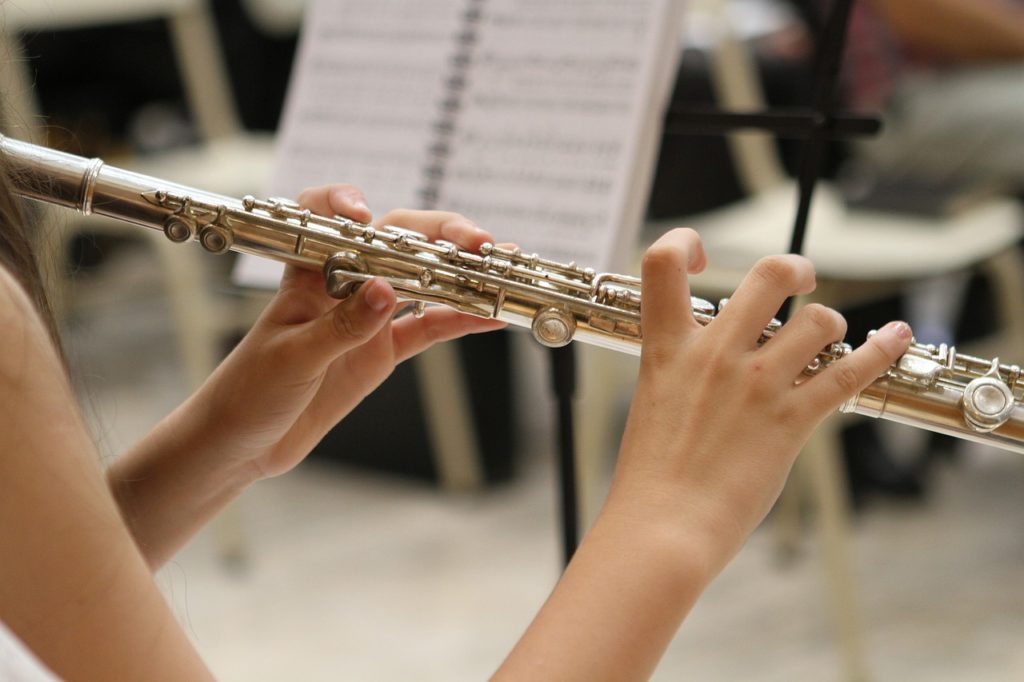
How to Graduate from the Color Coded Sheet Music - Part II - Girl Playing Flute - after they can sight-read what’s left for musicians to learn - What Does it Mean for Me to Interpret a Piece of Music - Music Therapy vs Music Lessons - BPM (Using the Metronome to Get the Music Beat) - What Does Intonation Mean and Why Is It Essential in Music

Final Thoughts

Takeaway points:

  1. In music, tempo is defined by how fast you’re playing.
  2. This is commonly indicated by tempo marks, which are usually Italian words that describe the speed of the music.
  3. The speed you play is important for setting the mood and feel of a piece of music.

Have fun playing!

How to Inject the Power of Distortion into Music - Pro Audio Gear

How to Inject the Power of Distortion into Music

Do you want to know what distortion is? Do you need to know how it’s used in music. The most obvious use of distortion is as an effect for guitar. However, there’s another, and more subtle, use when you’re recording music. Click “How to Inject the Power of Distortion into Music” to learn what it is and how it works. Estimated reading time 4 minutes.

Read More

Singing Shape Note Solfege Mixolydian Melodies - Computer Mouse on Sheet Music -Do People with ADHD Have Difficulty Playing from Sheet Music?

Singing Shape Note Solfege Mixolydian Melodies

Do you want to sing blues, gospel, or even mediaeval melodies? Are you confused about how modes work? Modes have the exotic feel of world music and music from ancient times. "Singing Shape Note Solfege Mixolydian Melodies" helps you discover the sound of the modes. Estimated reading time 4 minutes.

Read More
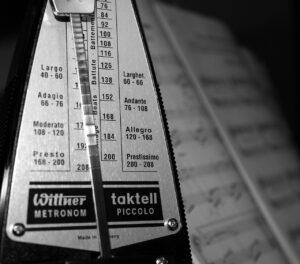
The 5 Best Effortlessly Easy Metronome Practice Tips - Metronome Face - How to Play Musical Tempos from Adagio to Allegro

The 5 Best Effortlessly Easy Metronome Practice Tips

Do you want to know the best way to practice with a metronome? Do you want to know what a metronome even is? A metronome is one of the best practice tools invented for musicians, because it helps you play with a steady beat. Nothing will make you sound like a professional faster than playing with a steady beat, and nothing will make you sound terrible faster than playing with a choppy beat. Keep reading “The 5 Best Effortlessly Easy Metronome Practice Tips" to learn how to play with a steady beat. Estimated reading time 2 minutes.

Read More