
Success Music Studio

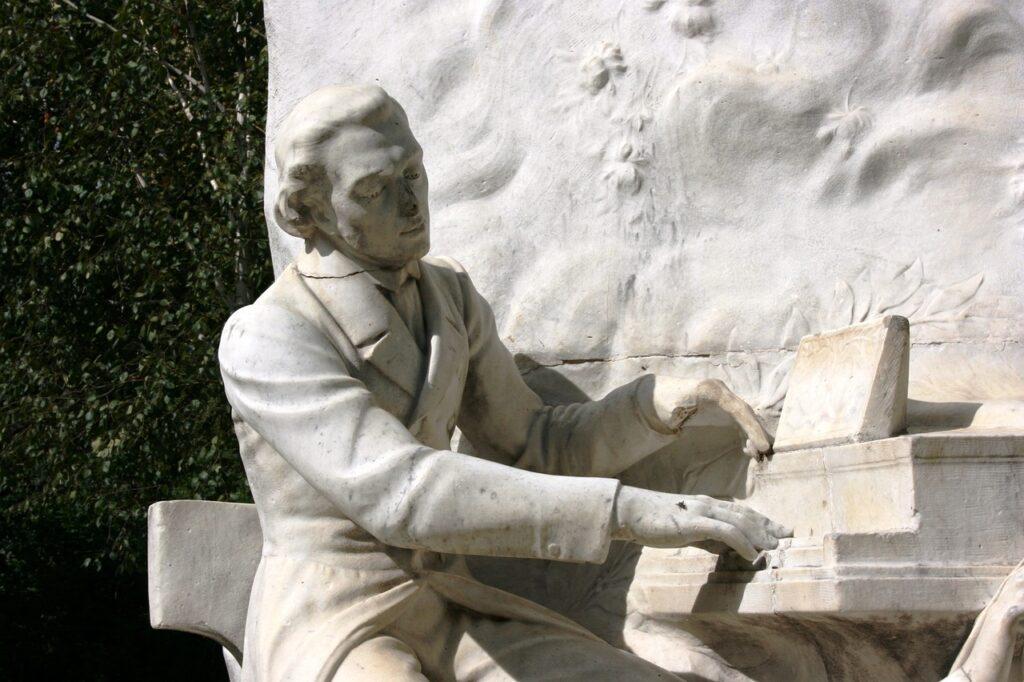
The Top Ten Best Enchanting Chopin Masterpieces - Chopin Statue

The Top 10 Best Enchanting Chopin Masterpieces

Facebook
Twitter

Estimated reading time 4 minutes

Table of Contents

Introduction

Curious to learn about Chopin’s music? Frederic Chopin (1810 – 1849) was a classical composer who wrote during the Romantic period (1820 – 1910). He’s best known for his hypnotic piano music. Keep reading to learn about and listen to the top 10 best enchanting Chopin masterpieces.

This article uses musical terms. For definitions, see the Glossary at the end of the post.

Do I Really Have to Learn Music Theory to Learn How to Play Piano - Understanding Prosody in Your Songwriting - piano - Learn How to Play Beethoven’s Beautiful Fur Elise

The Top 10 Best Chopin Masterpieces: Do You Want to Meet the Man?

Chopin was a musical prodigy who pushed the boundaries of piano technique.

  • He moved to Paris at age 21 where he lived and worked for the rest of his life.
  • He gave relatively few public concerts, preferring instead the intimacy of the salon to showcase his piano music, which is ideal for this performance setting.
  • He made his living by composing for the piano sheet music market. Also, he was a popular piano teacher.

As you listen to his piano music, you can hear the Eastern European influence on his musical phrasing:

  • Eastern Europe is known for its interesting rhythms, which you can hear in Chopin’s music.
  • His pieces typically start in lockstep with the meter signature. Then, it will suddenly break away, quickly returning again to its metrical boundaries.
  • This adds excitement and gives his pieces a free, flowing quality.

Though Chopin did write some orchestral music (such as Piano Concerto No. 1 below) he wrote no symphonies, because he didn’t feel that he could write them to Beethoven’s standard.

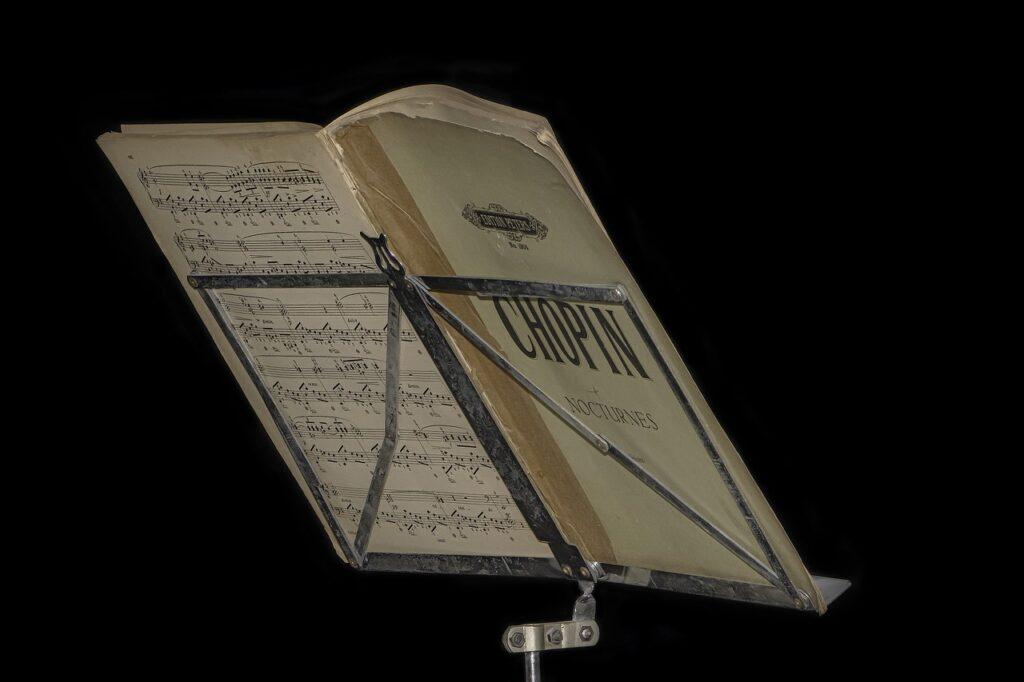
The Top 10 Best Enchanting Chopin Masterpieces - Sheet Music

The Top 10 Best Chopin Masterpieces: Do You Want to Hear His Music?

Here are the top 10 best enchanting Chopin masterpieces. They’re listed in no particular order as they’re all noteworthy piano compositions.

Fantasy-Impromptu, Op. 66

Chopin’s Fantasy-Impromptu was composed in 1834 and published after his death. It juxtaposes lively, virtuosic sections with tranquil and subdued sections, making this piece a fan favorite. It requires both exacting fingering and emotional sensitivity to perform.

Video: Fantasy-Impromptu, Op. 66

Nocturne, Op. 9 No. 2 in E Flat Major

This poplar Nocturne contrasts with the previous piece in that it’s not a study of extremes. It features lyrical, flowing melodies with just a touch of ornamentation to add sparkle.

Video: Nocturne, Op. 9 No. 2

Etude, Op. 10 No. 1

Etudes are musical studies designed to help a student master a technical aspect of playing. However, Chopin’s Etudes are actually masterworks that display the performer’s virtuosity.

Video: Etude, Op. 10 No. 1

Piano Concerto, Op. 11 No. 1 in E Minor, Mvt. 2 Romance (Larghetto)

Piano Concerto No. 1 showcases Chopin’s command of orchestral forces. This masterpiece creates an intricate dialogue between the piano and orchestra.

Video: Piano Concerto, Op. 11 No. 1 Mvt. 2

Prelude, Op. 28 No. 15 in D Flat Major "Raindrop"

Preludes originally started as compositions that introduced another piece of music. However, they eventually broke off and became standalone works. The following prelude is famous for its placid melodies. It starts by evoking the image of a light shower of raindrops and builds in intensity as the composition progresses.

Video: Prelude Op. 15, No. 28 “Raindrop”

Ballade, Op. 23 No. 1 in G Minor

A ballade is a lyrical composition that has dramatic, story-like qualities that are inspired by narrative ballads. This Ballade has sophisticated musical themes and builds to a stunning climax.

Video: Ballade, Op. 23 No. 1

Fantasy, Op. 49 in F Minor

Like the first composition that we looked at (Fantasy-Impromptu), this is a piece with bold contrasts. It starts with gently subdued themes, but later Chopin adds dramatic piano flourishes. The Fantasy in F Minor showcases his groundbreaking use of harmony and form.

Video: Fantasy, Op. 49

Mazurka, Op. 24 No. 4 in B Flat Minor

A Mazurka is a work that is based on the Polish folk dance of the same name. They feature triple meter with an accent on either the second or third beat. Chopin helped introduce Mazurkas to the classical concert repertoire. Like many of the compositions we looked at earlier, this piece starts softly and builds in intensity.

Video: Mazurka, Op. 24 No. 4

Piano Sonata, Op. 58 No. 3 in B Minor, Mvt. 1 Allegro Maestoso

The piano sonata genre is a major classical form. The first movement has a very specific format called the Sonata Allegro Form, which can be found in the first movement of other works such as symphonies, classical concertos, and most chamber music. Chopin wrote this piece just as he was coming into his mature style. It features his usual technical brilliance along with dense chordal textures and intricate polyphony.

Video: Piano Sonata, Op. 58 No. 3 Mvt. 1

Polonaise-Fantasy, Op. 6 in A Flat Major

Like a Mazurka, a Polonaise is in the style of a polish dance. This piece is a mashup of a Polonaise and a Fantasy (which has an improvisatory feel). It has an introspective quality and features lush chord progressions that influenced later generations of piano composers.

Video: Polonaise-Fantasy, Op. 6

Final Thoughts on “The Top 10 Best Enchanting Chopin Masterpieces”

Takeaway points:

  1. Chopin is a historically significant classical composer who primarily wrote piano music. He worked in Paris during the Romantic period.
  2. His compositions feature striking technical demands as well as innovative harmonies and form. Also, they reflect his Polish origins in their use of rhythm, and how he drew inspiration from Polish dances for his writing.
  3. Each of the top 10 compositions display his mastery of piano music.

Have fun listening!

Related Posts

© 2024 Geoffrey Keith

Newsletter Signup

Join me for in-person or online lessons today!

Back to the All-Purpose Music Tips and Topics category blogs page

Back to the Successful Music Student Blogs page

Glossary

Whats the Catch with G Guitar Tuning - Guitar in Open G Tuning

What’s the Catch with G Guitar Tuning? (Open G Tuning)

Do you want to try out open G tuning, but don’t know where to start? While G tuning has a wonderfully resonant quality, there are still some things you need to think about before you begin learning these alternate guitar tunings. Keep reading "What’s the Catch with G Guitar Tuning?" to find out what makes it both captivating and challenging at the same time. Estimated reading time 2 minutes.

Read More
sing in tune with synth settings - man singing while playing a synth - Can Somebody Explain Why Power Chords Sound Powerful?

Sing in Tune with Synth Settings

Does your choir have pitch issues? Retune your synth to make examples of good sounding chords. After years of hearing pianos tuned to equal temperament, many singers cannot sing harmony accurately. The piano is a bad model for how well-tuned chords should sound. Read more to learn how to sing in tune with synth settings! Estimated reading time 4 minutes.

Read More

Singing Vocal Exercises - Concert

Singing Vocal Exercises

Do you want to be able to sing better? Do you need some singing vocal exercises? It doesn’t matter if you want to do opera singing, backing vocals, choir singing, or just want to work on your singing voice. The sing along song tracks will help you improve. Keep reading to learn how they work. Estimated reading time 2 minutes.

Read More
7 Songwriting Templates to Get Your Ideas Flowing - Acoustic Guitar with Capo

7 Songwriting Templates to Get Your Ideas Flowing

Are you stuck on how to begin writing your song? Have you been staring at a blank page and need help with structuring your song? You've come to the right place! Read on to learn more about 7 songwriting templates to get your ideas flowing. Estimated reading time 3 minutes.

Read More