

















Success Music Studio

singing rhythm syllables in 3/4 time - woman singing.jpg

Singing Rhythm Syllables in 3-4 Time

Facebook
Twitter

Estimated reading time 3 minutes

Table of Contents

Introduction

Have you gotten the hang of reading rhythm in 4-4 time and want to get a handle on 3-4 time too? 3-4 has a much different feel than 4-4 and expands the types of music you can perform. Read more to learn about singing rhythm syllables in 3-4 time.

This article uses technical musical terms. For definitions, see the Glossary at the end of the post.

Rhythm Chart for Singing Rhythm Syllables in 3-4 Time

Before you start singing rhythm syllables in 3-4 time, you need to understand how they work.

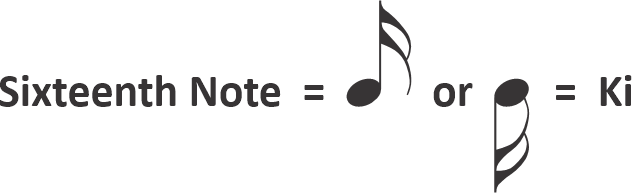
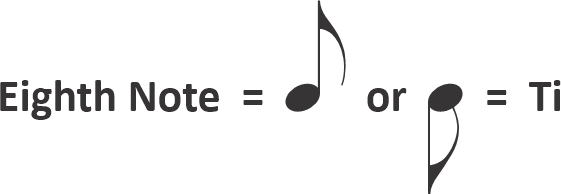
The chart shows: the rhythm symbol, the rhythm value, and the rhythm syllable linked with each rhythm value.

  • The big difference between 3-4 and 4-4 time is that 4-4 has four Tah’s in a measure, while 3-4 has only three. 
  • In addition, the following rhythm syllables video will demonstrate how each syllable sounds.

Mobile users: for best results reading the music, tilt your screen 90o to the right.

Rhythm Chart

Singing Sixteenth Note Rhythmic Syllables - Rhythmic Syllables (Sixteenth Note)
Singing Sixteenth Note Rhythmic Syllables- Rhythmic Syllables (Eighth Note) - Singing Rhythm Syllables in 9-8 Time
Singing Sixteenth Note Rhythmic Syllables - Rhythmic Syllables (Quarter Note) - Singing Rhythm Syllables in 9-8 Time
Singing Sixteenth Note Rhythmic Syllables - Rhythmic Syllables (Quarter Rest)
Singing Dotted Eighth Note Rhythm - Rhythmic Syllables (Dotted Quarter Notes)
Singing Dotted Eighth Note Rhythm - Rhythmic Syllables (Half Notes)

Rhythm Syllables Video

My Country ‘Tis of Thee and Singing Rhythm Syllables in 3-4 Time

Singing Rhythm Syllables in 3-4 Time - America line 1
Singing Rhythm Syllables in 3-4 Time - America line 2
Singing Rhythm Syllables in 3-4 Time - America line 3
Singing Rhythm Syllables in 3-4 Time - America line 4
Singing Rhythm Syllables in 3-4 Time - America line 5
Singing Rhythm Syllables in 3-4 Time - America line 6
Singing Rhythm Syllables in 3-4 Time - America line 7

My Country ‘Tis of Thee:

My Country ‘Tis of Thee will be today’s example for singing rhythm syllables in 3-4 time. This American patriotic song borrows its melody from the British national anthem, God Save the Queen.

Be sure to sing the solfege syllables below each line in the score as you follow along with the sing-along track.

  • For more on shape notes, read Shape Note Sight Singing Success.
  • Make sure you take a breath at the rests. If you don’t have enough breath, your note can drop, making you go flat.
  • Next, try chanting the rhythm. The Kodaly rhythm syllables appear above the score.

The song track creates a sound model for well-tuned melodic intervals.

  • I chose the sing-along song track’s tuning with the objective of working on melodic intonation.
  • When you hear the distance between the pitches, it reinforces your mental schemata for melodic intervals.
  • In addition, the song track uses synthetic voices rather than actual voices.
  • Research has shown that this will help with the ability to identify and produce absolute pitch information.
  • For more info, read Why Use a Synth Voice Instead of Real Voices. 

In addition, I have included a video of My Country ‘Tis of Thee for you to enjoy.

My Country ‘Tis of Thee Video

Singing Rhythm Syllables in 3-4 Time: Quiz

Singing Rhythm Syllables in 3-4 Time - Quiz line 1 (2)
Singing Rhythm Syllables in 3-4 Time - Quiz line 2
Singing Rhythm Syllables in 3-4 Time - Quiz line 3
Singing Rhythm Syllables in 3-4 Time - Quiz line 4

Once you’ve gotten My Country ‘Tis of Thee down, you can try the quiz. Sing the rhythm syllables in 3-4 time, then sing the solfege syllables (not shown).

Singing Rhythm Syllables in 3/4 Time - Fireworks.jpg

Concluding Thoughts on Singing Rhythm Syllables in 3-4 Time

Practicing singing rhythm syllables in 3-4 time with the song track will build your confidence with the new time signature. 

  • Shape notes make for a multisensory learning environment.
  • They will help anyone sight read better, but they’re especially important for ADD, LD, ASD, and other special needs students.

Be sure to practice a little bit every day.

© 2022 Geoffrey Keith

Newsletter Signup

Join me for in-person or online lessons today!

Back to Shape Notes and Solfege category blogs page

Back to the Successful Music Student Blogs page

Glossary

Musical Talent and Giftedness - Kid Playing a Ukulele

Musical Talent and Giftedness

Music teachers: do you have students who show musical talent and giftedness? Do you need some information on how they learn? With musically gifted and talented students, just like any other students, you need to meet them where they’re at, making the adjustments in their playing based on what you see. That way, they can become better students than before they came to you. Keep reading to learn more about musical talent and giftedness. Estimated reading time 4 minutes.

Read More


How to Sing Elegant Opera Arias - Opera Stage

How to Sing Elegant Opera Arias

Do you want to sing opera arias? Do you need help with your vocal technique and diction? To be an opera singer, you’ll need a blend of talent and technical skill. Click to learn how to sing elegant opera arias. Estimated reading time 4 minutes.

Read More

What Are the Advantages of Dyslexia - Episodic Memory (Woman Remembering)

What are the advantages of dyslexia? Episodic Memory

Do you want to know what the advantages of dyslexia are? How can people with dyslexia seem to have terrible memories sometimes, but not others? “He could remember events perfectly, even those that happened when he was an infant” (The Gift of Dyslexia 96). Episodic memory has a central role in the thinking process of many dyslexics which helps explain this puzzling fact. Also, it’s one of the four benefits to dyslexia. Keep reading to learn what the advantages of dyslexia are and how episodic memory plays a part in that. Estimated reading time 3 minutes.

Read More

What’s the Key Difference Between Countertenor, Baritone, etc - Baritone David Serero - What Precisely Is Asperger’s and Its Effect on Learning Music?

What’s the Key Difference Between Countertenor, Baritone, etc?

Do you want to know what voice type you are? All the voice types discussed in this post are from the pool of male singers used in chorus, opera, musical theatre, and pop music. Some of these male vocalists can sing very high, while others can sing very low. However, it’s the quality of his voice that makes a male singer one voice type versus another. Keep reading “What’s the Key Difference Between Countertenor, Baritone, etc?” to learn what makes a singer a countertenor, tenor, baritone, or bass and how to tell them apart. Estimated reading time 2 minutes.

Read More