

Success Music Studio

Writing Great Songs Using Rhythmic Motifs - 45 Vinyl Record - archetypes in songwriting

How to Use Archetypes in Songwriting

Facebook
Twitter

Estimated reading time 2 minutes

Table of Contents

Introduction

Do you want to add depth to the characters in your songs? Writing about a celebrity or historical figure can be a great way to get the lyric crafting juices going. Read more to learn how to use archetypes in songwriting.

This article uses literary terms. For definitions, see the Glossary at the end of the post.

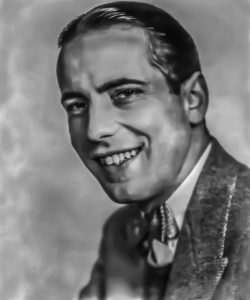
Humphrey Bogart

Archetypes in Songwriting - Humphrey Bogart

Famous People as Archetypes in Your Songwriting

If you had the chance to meet a celebrity or a person from history, who would it be?  Frank Sinatra, Martin Luther King Jr., Princess Di, Albert Einstein, Chadwick Boseman?

What would you talk about?

  • Think about the questions you’d ask, or what you’d like to say to them.
  • Would you admire (or scorn) their work, personal life, or politics? 
  • In other words, what about their lives have moved you? 
  • Your answers to these questions will be the core of your lyric.

The person can be from any walk of life (poet, artist, athlete, musician, scientist, or even a fictional character) from the past or present.

  • You can use him as a passing reference to add spice.
  • For example, the song Mrs. Robinson has the character Joe DiMaggio.
  • Or it could be the focus of the song.
  • In Key Largo the singer compares his romantic relationship with the 1940s film star couple Humphrey Bogart and Lauren Bacall.

Likewise, the lyric can focus in on a physical aspect of the famous person, such as in Betty Davis Eyes. 

  • Like with Key Largo, the celebrity here gets compared to something else. 
  • The chorus (“She has Betty Davis eyes. . .”) compares the character in the song with the striking quality of the actress’ eyes. 

In each case, the celebrities became archetypes. In the same way, you can create archetypes in your songwriting.

Key Largo Video

What’s an Archetype and How Do You Use it in Songwriting?

Before we can talk more about how to use archetypes in your songwriting, we need to define the word.

Merriam-Webster’s Dictionary defines archetype as, “the original pattern or model of which all things of the same type are representations or copies.”

  • Bogart, Bacall, DiMaggio, and Davis become symbols that convey a universal meaning.
  • In other words, they become the model to which other things get compared.
  • In the song, Turn on Your Heartlight, E.T. becomes an archetype for friendship.

Likewise, famous people, by their actions (alleged, perceived, or true), can become popular archetypes for certain behaviors or lifestyles.

  • Napoleon could be an archetype for a dictator.
  • Mozart for musical genius.
  • Mother Teresa for compassion.

Real or not, these become symbols in our minds that can be an excellent source for writing songs.

  • Once you have your famous person chosen, try different point-of-views. 
  • Should the lyric be in first person, second person, or third person perspective?
  • Ask yourself about who the character is, and the best point-of-view should be clear.

Also, try to establish the celebrity’s identity early in the song.

Turn on Your Heartlight Video

Concluding Thoughts on Archetypes in Your Songwriting

Employing archetypes in your songwriting can add to its depth, atmosphere, and memorability.

The celebrity focused lyric remains only one option among many that can be explored. Any object, location, person, or event can be a source of inspiration for your lyric writing.

© 2021 Geoffrey Keith

Newsletter Signup

Join me for in-person or online lessons today!

Back to The Craft of Songwriting Category Blogs page

Back to the Successful Music Student Blogs page

Glossary

How to Color Code Musical Diagrams - Guitar Chords - The G Major Scale (Including the G Major Chord Scale) - The C Major Scale (Including the C Major Chord Scale) - What Exactly Is a Chord and What Does the Term Harmony Mean - How to Play the Easy Beginner Guitar F Chord Without a Barre

The G Major Scale (Including the G Major Chord Scale)

Do you want to know what notes and chords are in the G major scale? Do you find the theory behind the G major chord scale confusing? To truly understand music, you must know how to construct scales and how to build chords from the scale tones. Read “The G Major Scale (Including the G Major Chord Scale)” to learn how they work. Estimated reading time 3 minutes.

Read More
songwriting - let her scream - girl with glasses.jpg

Songwriting – Let Her Scream

Do your lyrics lack powerful emotions? Do you want to learn how to write using stronger images? Take Mark Twain’s advice, “Don't say the old lady screamed. Bring her on and let her scream.” The first of Twain’s sentences uses abstract language, but the second uses concrete images instead. Simply put, when you describe a scene, you need to show it rather than tell it. "Songwriting - Let Her Scream" shows you how. Estimated reading time 3 minutes.

Read More
5 Best Harry Styles Sheet Music Gift Ideas - Music Gifts

5 Best Harry Styles Sheet Music Gift Ideas

Do you need sheet music gift ideas for a Harry Styles fan? Does your Harries gift recipient sing or play a musical instrument? Harry Styles got his start as a member of the extremely popular boy band One Direction. This Grammy Award winner has gone on to have a very successful solo career. Click to learn the 5 best Harry Styles sheet music gift ideas. Estimated reading time 5 minutes.

Read More
Learn How To Get A Killer Sound For Your Band - supplemented equal temperament minor keys - synth, guitar, and lead singer - Is Playing the Piano a Suitable Activity for Autistic People

Learn How to Get a Killer Sound for Your Band

Do you want your band to sound better? Have you ever been frustrated that your guitar or keyboard sounds out of tune when you play chords? Learn how to get a killer sound for your band by retuning your keyboards and guitars using Supplemented Equal Temperament. Supplemented Equal Temperament works with equal tempered instruments. It also works with variable pitch instruments such as voices, violins, and winds. Estimated reading time 5 minutes.

Read More