







Success Music Studio

How to Color Code the Elusive Alto Clef - Viola and Sheet Music - The Top 10 Best Iconic Classical Music Compositions

How to Color Code the Elusive Alto Clef

Facebook
Twitter

Estimated reading time 3 minutes

Table of Contents

Introduction

Do you have a child or a student who struggles to read alto clef? Are you confused about how it works? Why is the alto staff so elusive for most musicians? Because instruments rarely use it. In fact, only one instrument reads from it regularly. Even the closely related tenor clef is used by more instruments (sort of). Keep reading to learn how to color code the elusive alto clef.

This article uses musical terms. For definitions, see the Glossary at the end of the post.

How to Graduate from the Color Coded Music Score - Girl Playing Violin - What's the Difference Between Practice and Play on an Instrument? - How to Color Code the Elusive Alto Clef

How to Color Code the Elusive Alto Clef: What Is It?

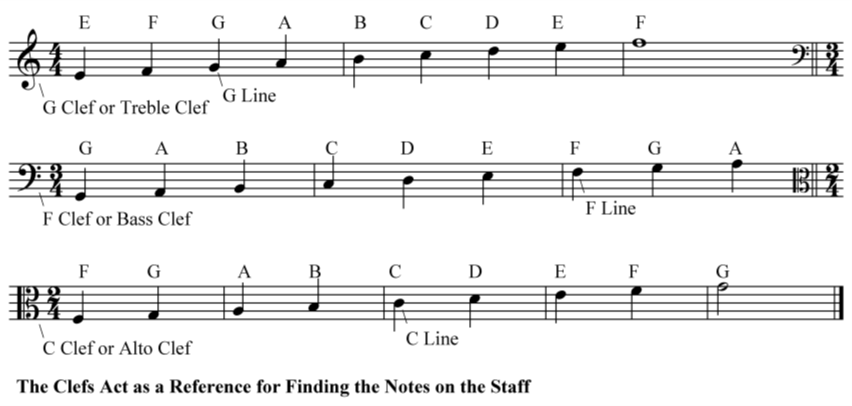
Generally, a clef gives a reference point for the notes on a staff. The three most common are:

(Mobile users: for best results reading the music, rotate your screen 90o to the right.)

Reading Music (A Quick Guide to How to Read Music) - Clefs - Making Sense of Why Treble and Bass Clef Are So Different - How to Color Code the Elusive Alto Clef - 50 Essential Music Symbols Explained in Less Than 5 Minutes - Basic Music Notation Explained in Less Than 4 Minutes

Most players and singers read notes from either the treble or bass staff:

  • Instruments that play high notes (e.g., violins, flutes, and trumpets) get notated on the treble staff.
  • While instruments that play lower notes (e.g., cellos, bassoons, or trombones) get the bass staff.
  • 99% of instruments read from one of these two staffs.

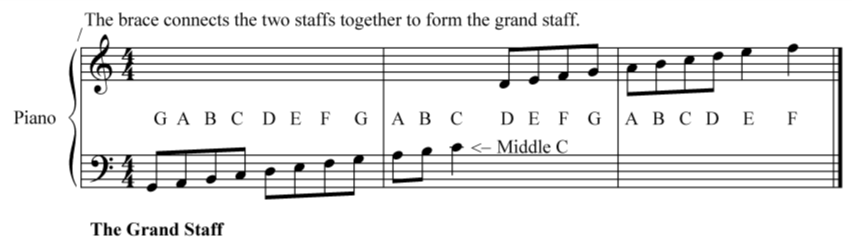
Piano has such a wide range of notes that it uses both the treble and bass staffs and joins them together with middle C.

Reading Music (A Quick Guide to How to Read Music) - Grand Staff - Making Sense of Why Treble and Bass Clef Are So Different - How to Color Code the Elusive Alto Clef - 50 Essential Music Symbols Explained in Less Than 5 Minutes - Basic Music Notation Explained in Less Than 4 Minutes

Alto clef is a stylized C that points to the middle C between the treble and bass staffs:

  • You can have a C clef point to any line of the staff, but only the alto and tenor clefs even come close to being commonly used.
  • Viola is the only instrument that regularly reads from the alto clef.
  • The viola’s role in string ensembles is to play the notes between the higher violin part (treble) and lower cello part (bass).

If the viola were to use the treble staff or the bass staff, the violist would have to read too many ledger lines, so it needed its own clef.

What Does Intonation Mean and Why Is It Essential in Music - Violin - How to Color Code the Elusive Alto Clef

How to Color Code the Elusive Alto Clef: How Does the Color Coding Work?

I have provided a color coded example of viola music below. The tune is based upon Mozart’s variations on the tune Twinkle, Twinkle Little Star (the version published in 1878).

The notes are colored:

  • C is Orange
  • D is Gray
  • E is red
  • F is Pink
  • G is Green
  • A is Purple
  • B is Blue
How to Color Code the Elusive Alto Clef - Alto Clef - line 1
How to Color Code the Elusive Alto Clef - Alto Clef - line 2

Color coding will help any student but is especially important for special needs students. For information on music notation software that’ll color code the music for you:

In addition, color coding is a scientifically proven teaching aid. For more information on the research behind color coded music:

Video: How Effective is Color Coded Music?

How to Color Code the Elusive Alto Clef: How Does the Tenor Staff Work?

The tenor clef is also a C clef:

  • It is only used by bassoon, tenor trombone, and cello, and only when playing notes in their upper range.
  • In other words, the bulk of the time these instruments read the notes on the bass staff, and only read tenor clef when playing high notes.
  • Notice that the tenor clef example has all the same notes as the Twinkle, Twinkle Little Star based tune above.
  • However, all the notes are now one line higher on the staff.
  • Why? Because tenor clef points to the second line from the top, so that this line is now middle C.
How to Color Code the Elusive Alto Clef - Tenor Clef - line 1
How to Color Code the Elusive Alto Clef - Tenor Clef - line 2

Final Thoughts on “How to Color Code the Elusive Alto Clef”

To recap:

  1. Only one instrument, the viola, reads from the alto clef.
  2. This is because of its role in string ensembles.
  3. Color coding is a scientifically proven method to help kids to learn to read music, creating a bridge to reading an un-adapted score.

Related Posts:

© 2024 Geoffrey Keith

Newsletter Signup

Join me for in-person or online lessons today!

Back to the Color Coding category blogs page

Back to the Successful Music Student blogs page

How to Graduate from Color Coded Music Notes - Part I – Woman with Mortarboard.jpg

How to Graduate from Color Coded Music Notes: Part 1

Has your student been playing color coded music notes and is ready to graduate? Have you wondered how to get to your student to play a color free score? The "How to Graduate from Color Coded Music Notes" series will show you how. Read more to understand contour lines and how to use them as the first step toward moving on from the colors. Estimated reading time 5 minutes.

Read More
What Do People Mean by the Term Interpretation in Classical Music - Don Quixote - Stage Fear, How to Deal with Performance Anxiety

What Do People Mean by the Term Interpretation in Classical Music? Part 2

Do you want to move your audience to tears as you perform? Do you need suggestions for how to interpret your songs? Interpretation is when you put your personal stamp on a song. Today’s interpretation tip can help you craft powerful performances. Click to answer the question, “What do people mean by the term interpretation in classical music?” Estimated reading time 2 minutes.

Read More
shape note sight singing - Is There a Better Way to Learn Sight Singing - chorus - Is Singing Solfege Helpful for Learning to Hear Intervals by Ear - Singing Shape Notes Solfege Lydian Melodies

Shape Note Sight Singing Success

Have you always wanted to sight sing music, but found it too hard? Shape notes can help. Also, last post centered on singing melodies with a specially tuned synth-organ sound. Namely, we focused on harmonic tuning. This week we will look at the same melodies, but from the angle of melodic tuning. Most of the examples have sing-along sound tracks, but the last example is a shape note sight singing quiz. Read more to experience shape note sight singing success. Estimated reading time 6 minutes.

Read More
What Are Some Signs of a Twice Exceptional (2E) Child - Child at the Piano - Musical Talent and Giftedness

What Are Some Signs of a Twice Exceptional (2E) Child?

“What are some signs of a twice exceptional (2E) child?” Children with both giftedness and learning disabilities are called twice exceptional. In other words, twice exceptional children will pick up some things really quickly - much more quickly than typical learners. However, with other things they will lag way behind their typical learner peers – sometime by a significant amount. Read more to learn the signs of a twice exceptional child. Estimated reading time 4 minutes.

Read More