
Success Music Studio

Geoff

Geoff (pronounce Jeff) Keith has taught instrumental music lessons for over 30 years, and special needs students for over 20 years, accruing over 6,000 hours working with special needs and LD students. In the 1990’s, he developed FBC Sudbury’s Kid’s Music Club program (children’s choir). His articles on teaching music to students with learning disabilities have appeared in the Dyslexic Reader. The information in the blog is similar to the information he presented at Berklee College of Music’s ABLE Assembly, which is a special needs arts conference for teachers. Also, he has been included in Marquis Who’s Who biographies.

Is There a Difference in Difficulty for Singing Specific Vowels - Women Singing - Tips for People Who Can't Sing in Tune

Is There a Difference in Difficulty for Singing Specific Vowels?

Is there a difference in difficulty in singing specific vowels? Yes, some vowels will be easier to sing in tune, and others will be easier to sing with a strong tone. Click to understand why there is a difference in difficulty for singing specific vowels, and how to do something about it. Estimated reading time 5 minutes.

Is There a Difference in Difficulty for Singing Specific Vowels? Read More »

How to Graduate from the Color Coded Sheet Music - Part II - Girl Playing Flute - after they can sight-read what’s left for musicians to learn - What Does it Mean for Me to Interpret a Piece of Music - Music Therapy vs Music Lessons - BPM (Using the Metronome to Get the Music Beat) - What Does Intonation Mean and Why Is It Essential in Music

After They Can Sight-Read What’s Left for Musicians to Learn?

After they can sight-read what’s left for musicians to learn? Lots of thing spring to mind, such as: repertoire, memorized repertoire, interpretation, performance practice, improvisation, composition, music theory, and music history. Click to find out about what’s left for musicians to learn after they can sight-read. Estimated reading time 3 minutes.

After They Can Sight-Read What’s Left for Musicians to Learn? Read More »

Why Do Pianists Occasionally Play Their Hands at Different Times as They Perform - Manhattan Park Pianist

Why Do Pianists Occasionally Play Their Hands at Different Times as They Perform

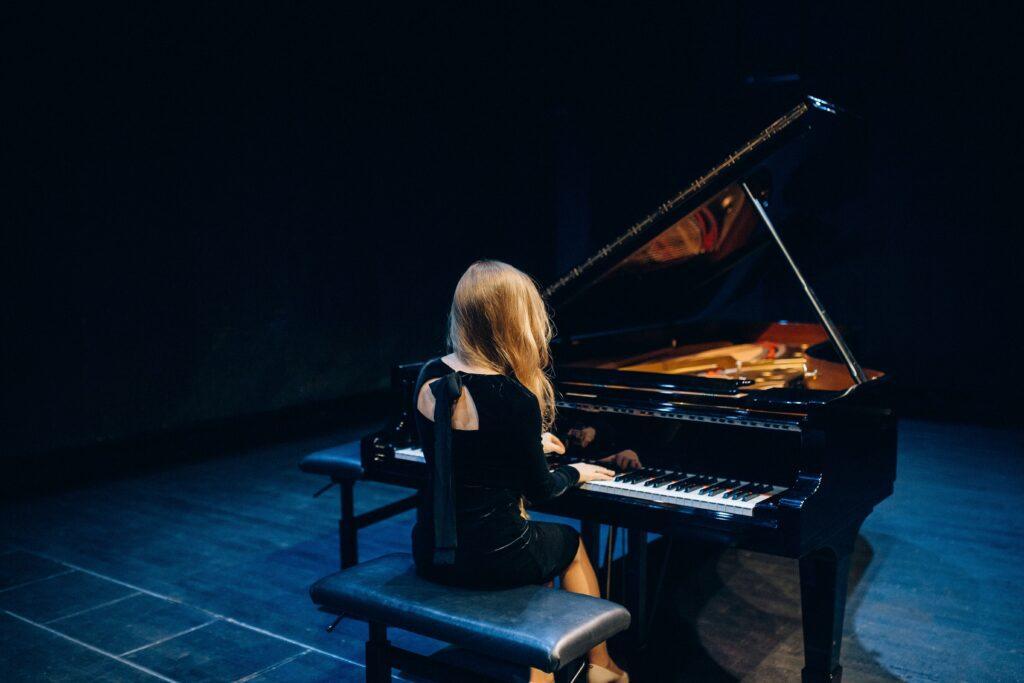
Are you confused by the squiggly lines in the score? Have you ever wondered, “Why do pianists occasionally play their hands at different times as they perform?” Answer: because it makes the music sound sophisticated and plays an important stylistic role in piano music. Click if you’d like to learn how it works. Estimated reading time 2 minutes.

Why Do Pianists Occasionally Play Their Hands at Different Times as They Perform Read More »

How Do I Get the Music and Lyrics to Match Together – Musician Singing

How Do I Get the Music and Lyrics to Match Together in My Songwriting?

Frustrated that you can’t get the mood of your music and lyrics to match? Do you have problems getting the syllables of your lyrics to work with the music? If you answered, “yes,” you have problems with prosody in your songwriting. Read more to answer the question, “How do I get the music and lyrics to match together in my songwriting?” Estimated reading time 3 minutes.

How Do I Get the Music and Lyrics to Match Together in My Songwriting? Read More »

Do I Really Have to Learn Music Theory to Learn How to Play Piano - Understanding Prosody in Your Songwriting - piano - Learn How to Play Beethoven’s Beautiful Fur Elise

Do I Really Have to Learn Music Theory to Learn How to Play Piano?

Do you want to give up on learning music theory? Does it seem pointless to you? Music theory can help with sight reading skills on the piano. It’ll be useful for improvisation and composition. It even helps with performance practice. If you still have an open mind, read “Do I Really Have to Learn Music Theory to Learn How to Play Piano?” to understand the ways it can help you to better play the instrument. Estimated reading time 4 minutes.

Do I Really Have to Learn Music Theory to Learn How to Play Piano? Read More »