



Estimated reading time 2 minutes
Table of Contents
Introduction
Has your child been asking about music lessons? Have you worried about how it will go? Learning how to play an instrument will help build your child’s self-esteem and self-concept. But what types of instruments will work best with your child’s learning style? In today’s post, we’ll discuss what you should consider when selecting an instrument. Read more to answer the question, “What is a good instrument for a dyslexic child to learn?”
This post uses musical terms. For definitions, see the Glossary at the end of the article.
What to Think About When Selecting a Good Instrument for Your Dyslexic Child to Learn
“What is a good instrument for a dyslexic child to learn?” You have a few things you need to think about before making a final decision. Such as:
- What instrument does your child love? If your child hates his (or her) instrument, he won’t want to practice. Therefore, you need to find an instrument that gets him excited about playing. If he loves his instrument, everything becomes easier.
- What kind of instrument can your child succeed at? I’ve found that if you use color coding, there will be few barriers when choosing an instrument. For example, in the beginning stages of learning, guitar will be harder to play than piano. However, if the student loves the guitar and is motivated to practice, color coding will help him to learn the instrument. Having said this, as a first instrument, the piano can be a really good choice. Because in the early stages, it will be really easy to learn if you use color coding.
- A hybrid approach? Another tactic would be to start your child on an easier to learn instrument with the goal of switching to the preferred instrument down the road. (I’ve done this, where I started a student on piano and later he learned guitar.) In practice, the student will sometimes decide to switch to the preferred instrument. Other times he’ll decide to stick with the instrument he started on. So, try to find the balance between the instrument your child loves vs the instrument that will let him succeed.
In addition, the above questions will also be relevant for parents of children with ADD, ASD, LD, autism, and other special needs.
The Adapted Score and Selecting a Good Instrument for Your Dyslexic Child to Learn
“What is a good instrument for a dyslexic child to learn?” In some ways it’ll be less about the instrument and more about the teaching approach.
Over the years, I’ve had a lot of success teaching kids with LD and special needs to read music. Regardless of the instrument, color coding the notes and rhythms will help your child learn music. For more on the adapted score:
- How to Color Code Music Notes
- Playing the Piano with Color Coded Notes
- Playing Piano with Color Coded Left Hand Notes
- How to Color Code Guitar Tab
- Color Coded Quarter Note Clapping
With patience and the right support, your child can have a fun and fulfilling musical experience.
Concluding Thoughts to “What Is a Good Instrument for a Dyslexic Child to Learn?”
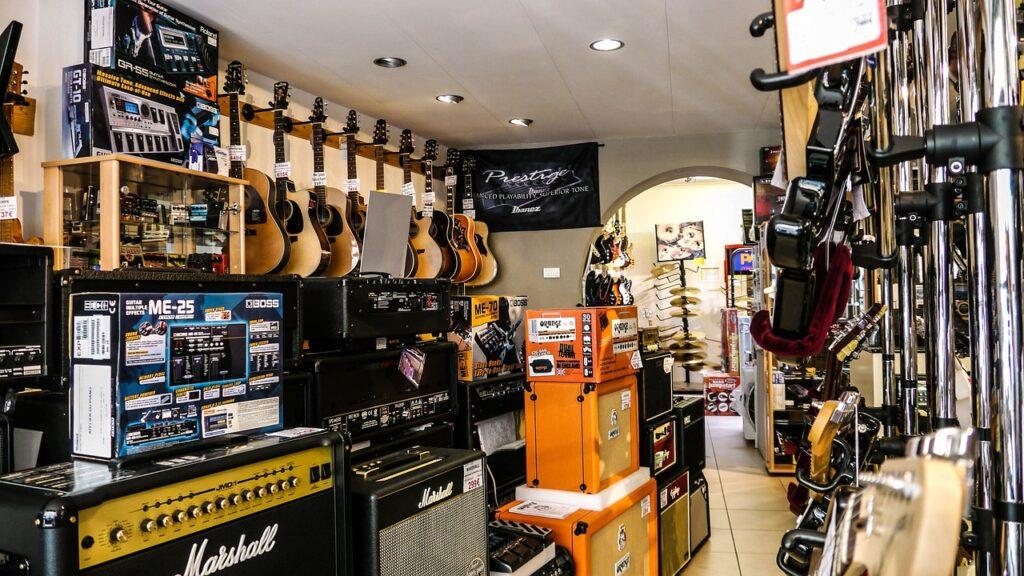
I know you probably hoped I’d tell you the exact instrument your child should learn. However, when it comes to musical instruments a one-size-fits-all answer don’t exist. Sometimes a kid won’t even know what instrument to choose until he gets to the music store and falls in love with one.
When you’ve got an instrument your child loves coupled with multisensory teaching strategies, you’ll have set up your child for success. And that’s how you find the right instrument for your dyslexic child to learn.
© 2023 Geoffrey Keith
Join me for in-person or online lessons today!
Glossary
Basic Music Notation Explained in Less Than 4 Minutes
Does music notation seem to be one big mystery? Do you want to be able to read music? Music notation can sometimes seem counterintuitive. However, you too can learn to read music. This post will help give you a quick overview of how music notation works. Keep reading “Basic Music Notation Explained in Less Than 4 Minutes” to learn what it is and how it works. Estimated reading time 3 minutes.
Read MoreHow to Graduate from the Color Coded Sheet Music: Part 2

Has your child or student shown readiness to move on from color coded music notes? The "How to Graduate from Color Coded Music Notes" series will explain how it works. Read more to learn how to transition from the color coding to the clef mnemonics, empowering students to graduate from the color coded sheet music. Estimated reading time 4 minutes.
Read MoreWhat Precisely Is the Purpose of Solfege?
“What precisely is the purpose of solfege?” Solfege has an important role in music education, allowing vocalists to develop sight singing skills. A solfege syllable acts as a mnemonic device to help you sight read sheet music. Read more to learn why they invented solfege and how the syllables work. Estimated reading time 2 minutes.
Read MoreThe Successful Music Student Celebrates 100 Blog Posts

I’m excited to share that I’ve posted my 100th blog article. My goal is to deliver fun, relevant, and insightful content that’s chock-full of soundtracks, vibrant images, and videos. I hope you like what you’ve seen so far. If you have, please visit again. Estimated reading time 5 minutes.
Read More