
Success Music Studio

Choir Meaning and Examples with Videos, Pictures, and Soundtracks - English Boys Choir

Choir Meaning & Examples with Videos, Pictures, & Soundtracks

Facebook
Twitter

Estimated reading time 3 minutes

Table of Contents

Choir Meaning & Examples #1: Learn How a Choir Works

Do you want to know the meaning of the word choir? In this post, you’ll learn how a choir works, including video and soundtrack examples of choir and chorus music. Keep reading Choir Meaning & Examples with Videos, Pictures, & Soundtracks to learn more.

This article uses musical terms. For definitions, see the Glossary at the end of the post.

Singing Rhythmic Syllables in Cut Time - Church Laser Show - Singing Shape Note Solfege Minor Melodies - Singing in Tune with Vowels - Choir Meaning & Examples with Videos, Pictures, & Soundtracks

Choir Meaning & Examples #2: What is a Choir?

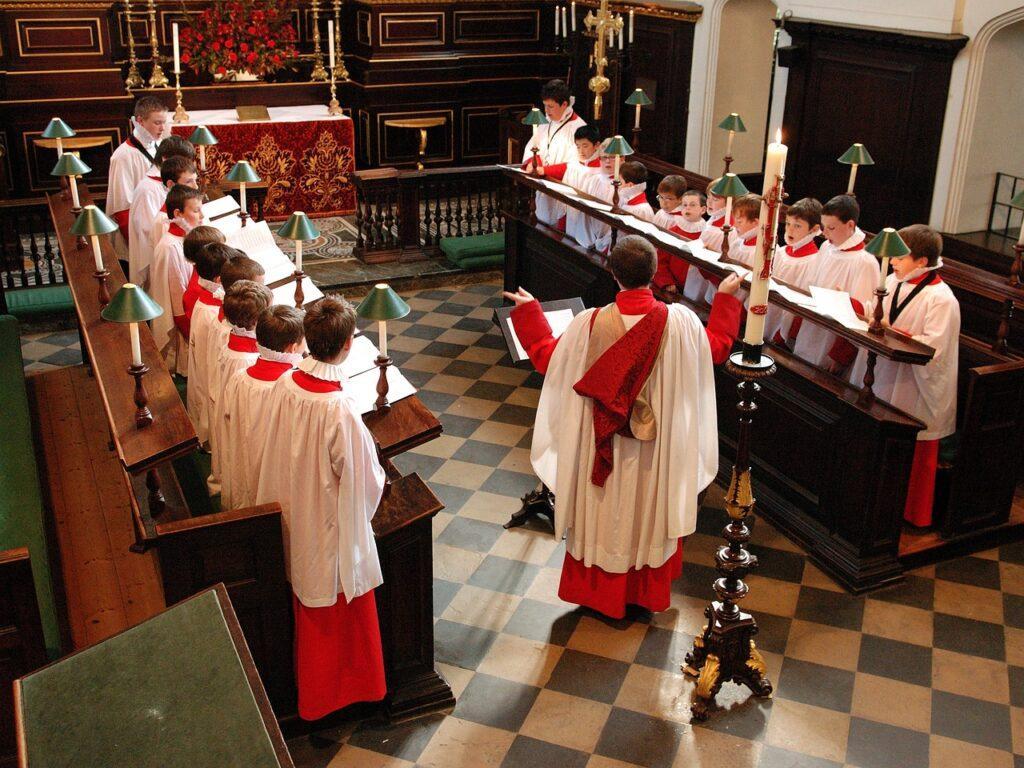
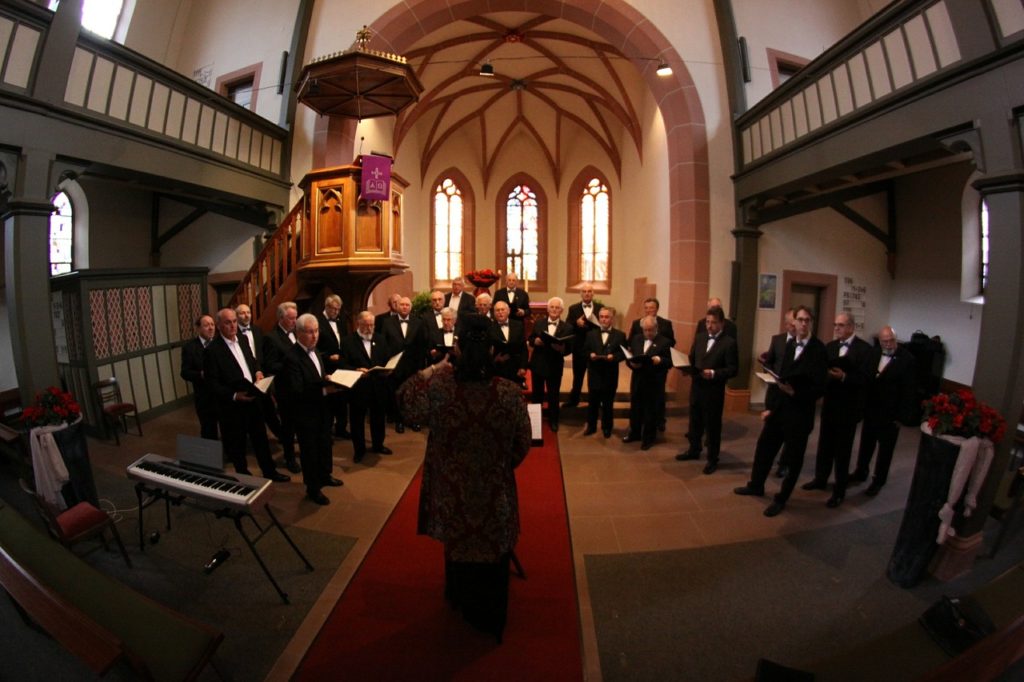
Choir meaning: A choir consists of a group of vocalists who sing together.

  • Usually, they sing hymns and other sacred songs in church services, though secular choirs do exist. However, the label “chorus” or “a cappella group” will normally be applied to secular vocal ensembles.
  • A choir can be any size or arrangement of voice types. However, SATB (i.e., Soprano, Alto, Tenor, Bass) arrangements are most common.
  • The singers work to blend their voices as they harmonize.

Voice types:

  • Sopranos: high women’s voices
  • Altos: low women’s voices
  • Tenors: high men’s voices
  • Basses: low men’s voices

Regarding the middle range voices, the mezzo-sopranos normally sing with the altos and the baritones normally sing with the basses in an SATB arrangement.

Choir members learn:

In the classical tradition, choirs and choruses sing chorales, cantatas, oratorios, operas, and they even sing in symphonies.

  • They can perform a cappella (without instruments) or with instrumental accompaniment.
  • They’re usually led by a director who conducts during performances.
  • Also, they can be either amateur or professional groups.
How Do I Switch from Chromatic Shaped Notes to Standard Notation - Choral Music - Choir Meaning & Examples with Videos, Pictures, & Soundtracks - I'm Confused About These Stupid Vocal Ranges

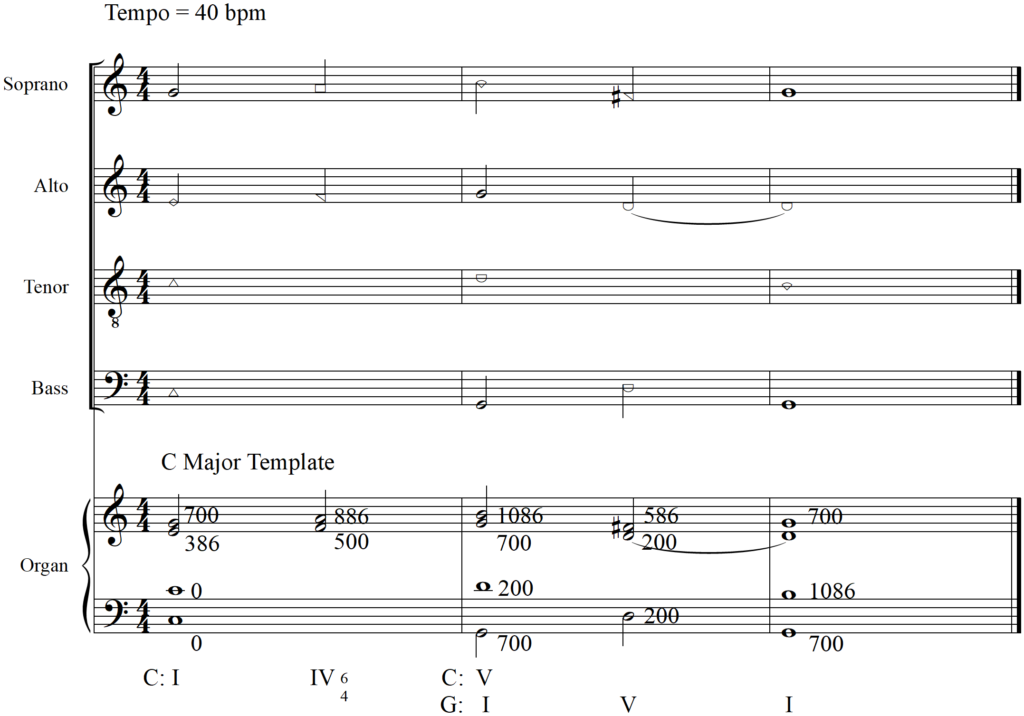
Choir Meaning & Examples #3: The Interactive Simulated SATB Choir

Mobile users: for best results reading the music, tilt your screen 90o to the right.

How to Sing Key Changes in Tune - SATB - Choir Meaning & Examples with Videos, Pictures, & Soundtracks

Soprano:

Alto:

Tenor:

Bass:

The Full Ensemble:

It’s hard to understand the meaning of a choir if you’ve never sung in one:

  • The above simulated SATB choir will give you the experience of singing in an ensemble by using the sing-along song tracks.
  • First, sing with the track for your voice type. Then, sing with the full ensemble track.
  • If you don’t know your voice type, sing with the track that feels the most comfortable.

In addition, the soundtracks for this arrangement have been specially designed to help beginner vocalists learn how to sing in tune through intonation sound models.

For more articles with sing along soundtracks:

To learn how to read the shape note notation used in the above example:

Singing Shape Note Solfege Flats - Choir - Singing Vocal Exercises - Choir Meaning & Examples with Videos, Pictures, & Soundtracks

Choir Meaning & Examples #4: Sacred Choir Examples

The following videos will help you understand the meaning of choir music:

  • Handel’s Messiah is one of the pinnacles of sacred vocal music. The first video has the song For Unto Us a Child is Born (from the Messiah) arranged for SATB and continuo.
  • To get the score: click here.
  • The second video shows the contemporary vocal group Pentatonix singing an (almost) a cappella version of Mary, Did You Know?

Video: For Unto Us a Child is Born

Video: Mary, Did You Know?

Choir Meaning & Examples #5: Secular Chorus Example

The fourth movement of Beethoven’s 9th Symphony gives you a secular vocal ensemble example:

  • Historically, this piece was the first time that vocalists had been added to a symphony orchestra.
  • It’s one of classical music’s most popular works, and yet amazingly, Beethoven was deaf when he wrote it.
  • To get the score: click here.

Video: Ode to Joy (Symphony No. 9)

Choir Meaning & Examples #6: Final Thoughts

To summarize Choir Meaning & Examples with Videos, Pictures, & Soundtracks:

  1. A choir is a collection of singers who harmonize together.
  2. They can be of any size or arrangement but usually perform sacred music.
  3. Also, they can be amateur or professional – with or without instrumental accompaniment.

Relate Posts:

© 2024 Geoffrey Keith

Newsletter Signup

Join me for in-person or online lessons today!

Back to the Singing in Tune category blogs page

Back to the Successful Music Student Blogs page

Glossary

Is There a Color Code for Music Notes - Why it's so hard for someone with a good ear to learn sheet music - colorful guitar music

Is There a Color Code for Music Notes?

Do you have a hard time reading music? Have you ever wondered if color coding the music notes would help? Read more to find out the answer to the question, “Is there a color code for music notes?” Estimated reading time 3 minutes.

Read More


How to Transform a Poem into a Powerful Song - Pen, Paper, and Coffee

How to Transform a Poem into a Powerful Song

Do you want to know how to transform your poem into a song? Do you need help learning how to write a melody? Setting a poem to music is an incredibly cool way to take your poem to the next level. Keep reading “How to Transform a Poem into a Powerful Song” to learn how to set your text to music. Estimated reading time 3 minutes.

Read More
Beethoven (Why Did He Keep Composing After Deafness) - Sheet Music - Singing Beethoven’s Beautiful Ode to Joy - Explore Beethoven’s Beautiful Music in Less Than Four Minutes - The Top 10 Best Iconic Classical Music Compositions

Why Did Beethoven Keep Composing After Suffering Deafness?

Do you want to know what motivated Ludwig van Beethoven to push through adversity to create some of the best and most influential classical music ever? By the time he turned fifty, he was considered by many to be the world's best living composer. His funeral was attended by 10,000 people. However, to achieve this level of fame he literally had to suffer for his art. That begs the question, why did Beethoven keep composing after suffering deafness? Keep reading to learn the answer to this and more. Estimated reading time 5 minutes.

Read More