

Success Music Studio

What Are the Advantages of Dyslexia - Episodic Memory (Woman Remembering)

What are the advantages of dyslexia? Episodic Memory

Facebook
Twitter

Estimated reading time 3 minutes

Table of Contents

Introduction

Do you want to know what the advantages of dyslexia are? How can people with dyslexia seem to have terrible memories sometimes, but not others? “He could remember events perfectly, even those that happened when he was an infant” (The Gift of Dyslexia 96). Episodic memory has a central role in the thinking process of many dyslexics which helps explain this puzzling fact. In addition, it’s one of the four benefits of dyslexia. Keep reading to learn what the advantages of dyslexia are and how episodic memory plays a part in that.

This post uses technical terms. For definitions, see the Glossary at the end of the article.

What Are the Advantages of Dyslexia - Episodic Memory (Woman Remembering the Beach) - Insight Meaning and Examples of Insight Problem Solving

The Advantages of Dyslexia: The Four Strengths

Are there advantages of dyslexia beyond episodic memory? Brock and Fernette Eide, in the book The Dyslexic Advantage, describe four areas of strength that people with dyslexia can have:

  1. “Three-dimensional spatial reasoning and mechanical ability…”
  2. “The ability to perceive relationships like analogies, metaphors, paradoxes, similarities, differences, implications, gaps, and imbalances…”
  3. The ability to remember important personal experiences and to understand abstract information in terms of specific examples…”
  4. “The ability to perceive and take advantage of subtle patterns in complex and constantly shifting systems and data sets” (5).

Having dyslexia doesn’t guarantee that you’ll have all these strengths:

  • However, if you have dyslexia, you’ll have at least one of the strengths.
  • We’ll look at the third strength in today’s post.

Brock and Fernette Eide talk about how one of the dyslexic strengths will be the ability to remember events that have been directly experienced.

The Advantages of Dyslexia: Personal Memory

As I said above, one of the advantages of dyslexia will be to have a strong episodic memory. So, what does that mean?

  • Episodic memory stores personal experiences as events and encounters.
  • This contrasts with semantic memory which stores abstract facts and impersonal memories.

Episodic memory mainly has a story-based framework, where thoughts get visualized as remembered experiences instead of being stripped down into definitions without context.

  • People who depend on story-based thinking will generally recall information better when specific examples have been used in place of abstract facts.
  • These specific examples can be stories describing events or concepts. Also, they can be visual aids such as pictures, timelines, charts, or graphs.
  • In addition, many dyslexics will learn and remember facts better through case studies instead of by memorizing information out of context.

Not only can people with dyslexia use episodic memory to vividly remember past events, but they can also imagine future or even fictional events.

  • Thus, creative ability and episodic memory are directly related.
  • This means that many dyslexics will have a talent for storytelling despite having problems with academic writing.
  • However, narrative abilities can be useful for other jobs beyond just creative writing.

For example, the person with narrative reasoning will be able to take bare facts and reimagine them as story-like narratives.

  • This can be seen in the character of Abraham Lincoln in the movie Lincoln.
  • President Lincoln would convey information through inspiring stories.

Abraham Lincoln Talks Euclid

Final Thoughts on “What Are the Advantages of Dyslexia? Episodic Memory”

The ability to use episodic memory to remember facts and think creatively is one of the advantages of dyslexia. This shows how a person with dyslexia can have a good memory for personal experiences, but a poor one for information stripped of context.

Things to keep in mind when teaching students with dyslexia:

  1. Adding context to academic facts will help students remember them better.
  2. Give information in a story format, such as the Math Matters books do.
  3. Find an engaging video on the topic, such as watching a historical fiction video (for example Liberty’s Kids) when studying history.
  4. Use charts, graphs, or illustrations to add context, such as The Cartoon Guide to Physics does.
  5. Use manipulatives and real-world examples when working on music concepts or math facts.
  6. Use clay to model numbers and letters to help with reading, writing, and math the way The Gift of Dyslexia does. 
  7. Look for and foster story telling ability in students, even if they struggle with reading and writing.

This will help people with dyslexia to learn more effectively.

Related Posts:

© 2023 Geoffrey Keith

Newsletter Signup

Join me for in-person or online lessons today!

Back to the Color Coding category blogs page

Back to the Successful Music Student blogs page

Glossary

Learn Some Super Useful Beginner Ukulele Chords - Ukulele Player

Learn Some Super Useful Beginner Ukulele Chords

Are you learning the instrument for the first time? Do you want to know the best chords to learn first? The guitar was introduced to Hawaii by Spanish cowboys, and the ukulele developed from it. This means guitarists have an edge learning these chords. However, they’re still super useful for any beginner, and we’ll start with the easiest ones. Click “Learn Some Super Useful Beginner Ukulele Chords” to learn them. Estimated reading time 3 minutes.

Read More
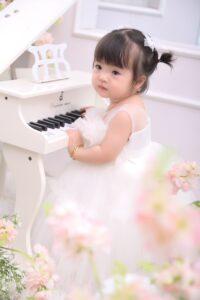
Is the Suzuki Music Methodology Bad for Learning Piano - Little Girl at Toy Piano - Best Music Program for Three-Year-Olds

Is the Suzuki Music Methodology Bad for Learning Piano?

“Is the Suzuki music methodology bad for learning piano?” Well, it really depends on what you want out of lessons. Like with many things, Suzuki music does some things well, and others poorly. Keep reading to learn the pros and cons of the Suzuki methodology when teaching children music. Estimated reading time 3 minutes.

Read More
Lyric Writing Tools for You - Sleeping Baby - Lyric Writing Tools for You

15 Fun Lullabies (So Your Children Finally Fall Asleep)

Are you looking for songs to lull your children to sleep? The first, and most important lesson parents learn is – don’t wake the baby! However, despite your best efforts, sometimes your baby wakes up in the middle of the night. This means that your child will need to be lulled back to sleep. Enter the lullaby songs. Keep reading to learn 15 fun lullabies (so your children finally fall asleep). Estimated reading time 3 minutes.

Read More