




Success Music Studio

Which Notes Are Authentic Blue Notes - Guitarist

Discover Which Notes Are Authentic Blue Notes

Facebook
Twitter

Estimated reading time 3 minutes

Table of Contents

Introduction

“Which notes are authentic blue notes?” The following post clears up the confusion around blue notes and has an example of a popular song that uses them. Keep reading to learn how it works.

This article uses musical terms. For definitions, see the Glossary at the end of the post.

How to Tune Country Blues Guitar - Blues Performance - What Is Your Definition of a Good Musician - Discover Which Notes Are Authentic Blue Notes

Which Notes Are Authentic Blue Notes: What’s a Blue Note?

“Which notes are authentic blue notes?” According to Gerhard Kubik:

… blue notes have been described as “a microtonal lowering of the 3rd, 7th, and (to a lesser extent) 5th scale degrees.” (15)

For example, it’s easiest if we begin by comparing the notes in C major, C minor, C minor pentatonic, and C blues:

  • C major: C D E F G A B C
  • C minor: C D Eb F G Ab Bb C
  • C minor pentatonic: C Eb F G Bb C
  • C blues: C Eb F Gb G Bb C

Let’s discuss the scales:

  • When you look at C major and C minor, you can see that C minor lowers (flattens) the third, sixth, and seventh notes in the scale.
  • The minor pentatonic then removes the second and sixth notes, leaving us with five unique notes (“penta-” means “five”).
  • The blues scale then adds a flattened fifth to the pentatonic scale.
  • On flexible pitch instruments such as sax, slide guitar, fretless bass, and vocals, these notes will be microtonally altered from equal temperament.
  • In blues and rock, the blues scale is usually played over major chords. The clash between the major third in the chords and the minor third in the scales is characteristic of these styles.

However, this is a very music theory-ish way to look at the scale. Blues players are usually ear people who don’t really think that much about music theory. Kubik State:

Significantly, in the United States blues musicians do not normally talk about “blue notes” or any other intervals supposed to be special, unless they have adopted the jargon of music critics or musicologists. (15)

How Do Guitar Harmonics Work - Guitarists Playing - after they can sight-read what’s left for musicians to learn - Improvising vs Composing Music -How Do I Find the Key of a Song with Accidentals - Discover Which Notes Are Authentic Blue Notes - 10 Amazing Elite Virtuoso Guitarists

Which Notes Are Authentic Blue Notes: Can I Play a Guitar Song That Uses the Blues Scale?

Now let’s see how it works in a song:

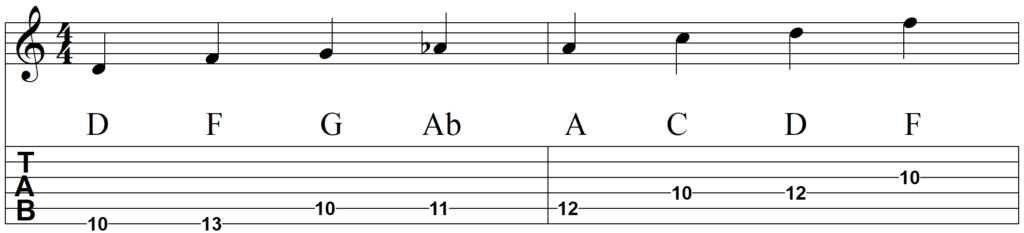
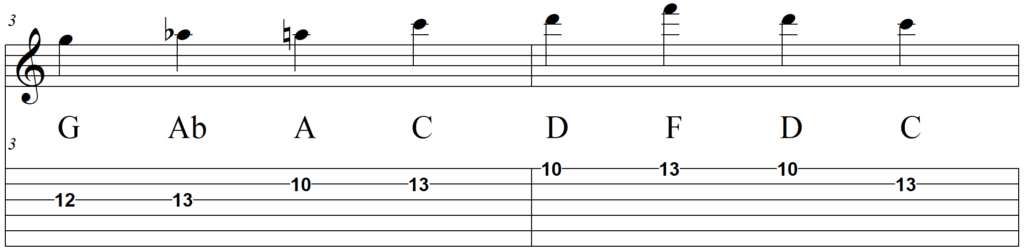
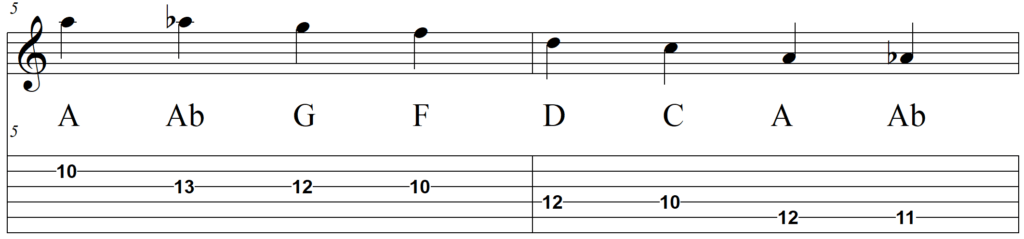
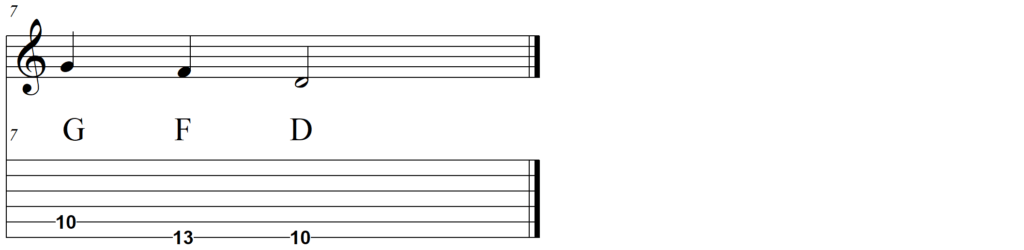
  • Sunshine of Your Love by Cream uses the D blues scale for its main riff.
  • For guitarists, a blues scale is basically a pentatonic scale with flattened fifths. Use the tab example below to solo over the video. You can microtonally alter notes by bending strings or by using a slide.
  • The following link takes you to a transcription of the song. It uses the same notes as the tab example below, but it plays them on a different part of the guitar neck.

For a transcription of Sunshine of Your Love: click here.

Video: Sunshine of Your Love

Mobile users: for best results reading the music, rotate your screen 90o to the right.

Which Notes Are the Authentic Blue Notes - D Blues line 1
Which Notes Are the Authentic Blue Notes - D Blues line 2
Which Notes Are the Authentic Blue Notes - D Blues line 3
Which Notes Are the Authentic Blue Notes - D Blues line 4

Final Thoughts on “Discover Which Notes Are Authentic Blue Notes”

 The takeaway points:

  1. Blue notes are the lowered third, fifth, and seventh notes of the scale. It’s basically a minor pentatonic scale with an added flattened fifth.
  2. Flexible pitch instruments will alter these notes to get the blues sound. The clash between the scale and the major chords is also an essential element of the sound.
  3. Most blues players don’t worry about blue note theory, they just play.

Have fun soloing!

Related Posts

© 2024 Geoffrey Keith

Newsletter Signup

Join me for in-person or online lessons today!

Back to Intonation category blogs page

Back to the Successful Music Student Blogs page

Glossary

Musical Talent and Giftedness - Kid Playing a Ukulele

Musical Talent and Giftedness

Music teachers: do you have students who show musical talent and giftedness? Do you need some information on how they learn? With musically gifted and talented students, just like any other students, you need to meet them where they’re at, making the adjustments in their playing based on what you see. That way, they can become better students than before they came to you. Keep reading to learn more about musical talent and giftedness. Estimated reading time 4 minutes.

Read More


How to Use Kinesthetic Learning in Music Lessons - Music Students

How to Use Kinesthetic Learning in Music Lessons

Do you need to know what kinesthetic learning is? Do you want to be able to integrate it into your music lessons? Kinesthetic learning uses physical activity to improve the learning experience. When done right, it’ll make your lessons more fun, engaging, and effective. Click to learn how to use kinesthetic learning in music lessons. Estimated reading time 3 minutes.

Read More
I’d Like to Know the Meaning of the Word Cadence [Video] - Triangle

I’d Like to Know the Meaning of the Word Cadence [Video]

“I’d like to know the meaning of the word cadence. How does it differ in language vs music?” Candence in music and language both have to do with regulating the flow of sound. However, even though the definitions are related, they’re not the same. Keep reading to learn more. Estimated reading time 3 minutes.

Read More

How to Tune Your Incredibly Cool Microtonal Keyboard - Woman with Keyboard

How to Tune Your Incredibly Cool Microtonal Keyboard

Do you want to know how to tune your microtonal keyboard so that your chords sound incredibly cool? The term microtonal covers a lot of different types of tuning systems. Some which will sound like a cappella music, and others which will sound exotic and otherworldly. Keep reading “How to Tune Your Incredibly Cool Microtonal Keyboard” to learn how to have beautiful sounding harmonies. Estimated reading time 5 minutes.

Read More